
Established 2005 Registered Charity No. 1110656
Scottish Charity Register No. SC043760
DONATE
RECENT TWEETS
Read about a new Crisis service for women experiencing homelessness. By Hazel Buontempo and Joy Chan of the Crisis team
Every December, hundreds of people facing homelessness come to Crisis at Christmas hotels and day centres in London. Volunteers offer a warm welcome, safety, food and companionship, making Christmas a time that genuinely changes lives.
While we feel incredibly proud of this work, a few years back we started to recognise a gap: too few women were accessing the offer, even though referral numbers showed this wasn’t due to a lack of need. We therefore knew barriers must exist, making the provision feel inaccessible. Women in our year-round services consistently tell us how dangerous rough sleeping can be, with many experiencing violence, exploitation and abuse. Homelessness services are often male-dominated and can feel intimidating to women, meaning they avoid them altogether or leave soon after arriving.
It was clear we needed to create something different: a space where women could feel safe, comfortable and able to work at their own pace. A place grounded in dignity, where they could begin their journey out of homelessness.
In late 2024, I was asked to help bring together a women-led group (with one honorary male – our Head of Christmas, Ian!) to design a new offer.
Crucially, the group included women with lived experience of homelessness, including someone who had used our Christmas services before. Their insights were essential in shaping what the service should look and feel like.
Over 14 months, I co-led this work with my colleague Sarah, who leads our Impact, Research and Practice team. We worked closely with the Christmas team to design a service that prioritised accessibility, inclusion and safety. We considered every detail – from referral routes to on-site support – to ensure women would feel safe, relaxed and comfortable enough to begin their journey out of homelessness.
On 23 December, we opened the doors to our new Women-Led Pathway in east London. The service offered two weeks of safe, comfortable respite accommodation for 41 women. A key priority for me had been ensuring the service was accessible to trans women and non-binary people so they could also feel safe and welcomed, and this too was achieved.
Seeing it come to life during my visit on Christmas Eve, after more than a year of planning, felt incredible. The venue had tranquil enclosed grounds and outdoor space, welcoming communal areas where guests could connect with each other, volunteers and case managers.
Learning that by the first morning, every place had been filled brought mixed feelings. In some ways it was a relief: our efforts to make the service more accessible had worked. We had opened referral routes to more partners supporting women and removed the requirement for guests to be ‘verified’ rough sleepers. We also made it more personal – staff contacted guests in advance, helped plan travel and shared clear information about what to expect. Yet alongside this was a sobering reality: it being full so quickly drove home the immense level of need.
From the outset, however, it was great to see guests relaxing and chatting – something which had previously taken time. People were socialising, using the lounges and engaging with health and wellbeing support from day one. Activities and services had been shaped by what women told us they wanted, including healthcare, creative sessions, IT access and wellbeing activities, which this year included a sauna trip! Volunteers supported with everything from clothing to games, while hotel staff provided delicious meals. On-site psychological support for both guests and our team ensured it felt safe.
The outcomes from the pathway were significant: 78% of guests did not return to rough sleeping after their stay and almost all remained for the full two weeks. For those who did return to homelessness, we have at least begun their support and will continue working with them towards long-term solutions.
Planning is already underway for Christmas 2026, when we aim to extend the offer to three weeks. While our ultimate goal is to end homelessness altogether, we know this requires broader systemic change – including a significant increase in social housing, investment in welfare and in support services.
In the meantime, we will build on the success of the women-led pathway, both at Christmas and across our wider services. We look forward to supporting more women to begin their journey out of homelessness in the years ahead.
- Learn more about Crisis and its services online at: www.crisis.org.uk
June – July 2026 : Labels
CONTENTS
BACK ISSUES
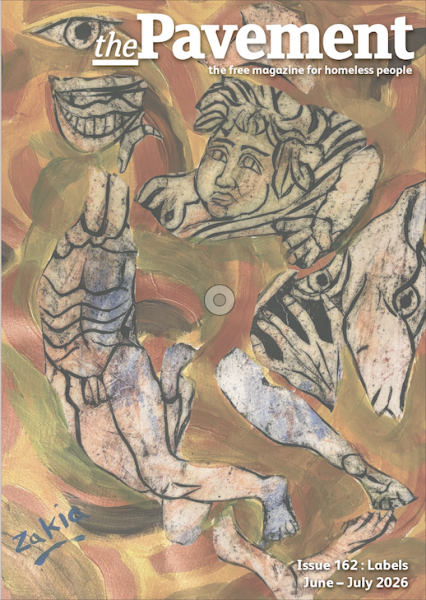
- Issue 162 : June – July 2026 : Labels
- Issue 161 : April – May 2026 : Working together
- Issue 160 : February – March 2026 : Progress
- Issue 159 : December 2025 – January 2026 : Resolutions
- Issue 158 : October – November 2025 : Making a difference
- Issue 157 : August – September 2025 : Caring about care
- Issue 156 : June – July 2025 : Resilience
- Issue 155 : April – May 2025 : Second Chances
- Issue 154 : February – March 2025 : Time
- Issue 153 : December 2024 – January 2025 : Solidarity
- Issue 152 : October – November 2024 : Change
- Issue 151 : August – September 2024 : Being Heard
- Issue 150 : June – July 2024 : Reflections
- Issue 149 : April – May 2024 : Compassion
- Issue 148 : February – March 2024 : The little things
- Issue 147 : December 2023 – January 2024 : Next steps
- Issue 146 : October 2023 – November 2023 : Kind acts
- Issue 145 : August 2023 – September 2023 : Mental health
- Issue 144 : June 2023 – July 2023 : Community
- Issue 143 : April 2023 - May 2023 : Hope springs
- Issue 142 : February 2023 - March 2023 : New Beginnings
- Issue 141 : December 2022 - January 2023 : Winter Homeless
- Issue 140 : October - November 2022 : Resolve
- Issue 139 : August - September 2022 : Creativity
- Issue 138 : June - July 2022 : Practical advice
- Issue 137 : April - May 2022 : Connection
- Issue 136 : February - March 2022 : RESPECT
- Issue 135 : Dec 2021 - Jan 2022 : OPPORTUNITY
- Issue 134 : September-October 2021 : Losses and gains
- Issue 133 : July-August 2021 : Know Your Rights
- Issue 132 : May-June 2021 : Access to Healthcare
- Issue 131 : Mar-Apr 2021 : SOLUTIONS
- Issue 130 : Jan-Feb 2021 : CHANGE
- Issue 129 : Nov-Dec 2020 : UNBELIEVABLE
- Issue 128 : Sep-Oct 2020 : COPING
- Issue 127 : Jul-Aug 2020 : HOPE
- Issue 126 : Health & Wellbeing in a Crisis
- Issue 125 : Mar-Apr 2020 : MOVING ON
- Issue 124 : Jan-Feb 2020 : STREET FOOD
- Issue 123 : Nov-Dec 2019 : HOSTELS
- Issue 122 : Sep 2019 : DEATH ON THE STREETS
- Issue 121 : July-Aug 2019 : INVISIBLE YOUTH
- Issue 120 : May-June 2019 : RECOVERY
- Issue 119 : Mar-Apr 2019 : WELLBEING
- Issue 118 : Jan-Feb 2019 : WORKING HOMELESS
- Issue 117 : Nov-Dec 2018 : HER STORY
- Issue 116 : Sept-Oct 2018 : TOILET TALK
- Issue 115 : July-Aug 2018 : HIDDEN HOMELESS
- Issue 114 : May-Jun 2018 : REBUILD YOUR LIFE
- Issue 113 : Mar–Apr 2018 : REMEMBRANCE
- Issue 112 : Jan-Feb 2018
- Issue 111 : Nov-Dec 2017
- Issue 110 : Sept-Oct 2017
- Issue 109 : July-Aug 2017
- Issue 108 : Apr-May 2017
- Issue 107 : Feb-Mar 2017
- Issue 106 : Dec 2016 - Jan 2017
- Issue 105 : Oct-Nov 2016
- Issue 104 : Aug-Sept 2016
- Issue 103 : May-June 2016
- Issue 102 : Mar-Apr 2016
- Issue 101 : Jan-Feb 2016
- Issue 100 : Nov-Dec 2015
- Issue 99 : Sept-Oct 2015
- Issue 98 : July-Aug 2015
- Issue 97 : May-Jun 2015
- Issue 96 : April 2015 [Mini Issue]
- Issue 95 : March 2015
- Issue 94 : February 2015
- Issue 93 : December 2014
- Issue 92 : November 2014
- Issue 91 : October 2014
- Issue 90 : September 2014
- Issue 89 : July 2014
- Issue 88 : June 2014
- Issue 87 : May 2014
- Issue 86 : April 2014
- Issue 85 : March 2014
- Issue 84 : February 2014
- Issue 83 : December 2013
- Issue 82 : November 2013
- Issue 81 : October 2013
- Issue 80 : September 2013
- Issue 79 : June 2013
- Issue 78 : 78
- Issue 77 : 77
- Issue 76 : 76
- Issue 75 : 75
- Issue 74 : 74
- Issue 73 : 73
- Issue 72 : 72
- Issue 71 : 71
- Issue 70 : 70
- Issue 69 : 69
- Issue 68 : 68
- Issue 67 : 67
- Issue 66 : 66
- Issue 65 : 65
- Issue 64 : 64
- Issue 63 : 63
- Issue 62 : 62
- Issue 61 : 61
- Issue 60 : 60
- Issue 59 : 59
- Issue 58 : 58
- Issue 57 : 57
- Issue 56 : 56
- Issue 56 : 56
- Issue 55 : 55
- Issue 54 : 54
- Issue 53 : 53
- Issue 52 : 52
- Issue 51 : 51
- Issue 50 : 50
- Issue 49 : 49
- Issue 48 : 48
- Issue 47 : 47
- Issue 46 : 46
- Issue 45 : 45
- Issue 44 : 44
- Issue 43 : 43
- Issue 42 : 42
- Issue 5 : 05
- Issue 4 : 04
- Issue 2 : 02
- Issue 1 : 01
- Issue 41 : 41
- Issue 40 : 40
- Issue 39 : 39
- Issue 38 : 38
- Issue 37 : 37
- Issue 36 : 36
- Issue 35 : 35
- Issue 34 : 34
- Issue 33 : 33
- Issue 10 : 10
- Issue 9 : 09
- Issue 6 : 06
- Issue 3 : 03
- Issue 32 : 32
- Issue 31 : 31
- Issue 30 : 30
- Issue 29 : 29
- Issue 11 : 11
- Issue 12 : 12
- Issue 13 : 13
- Issue 14 : 14
- Issue 15 : 15
- Issue 16 : 16
- Issue 17 : 17
- Issue 18 : 18
- Issue 19 : 19
- Issue 20 : 20
- Issue 21 : 21
- Issue 22 : 22
- Issue 23 : 23
- Issue 24 : 24
- Issue 25 : 25
- Issue 8 : 08
- Issue 7 : 07
- Issue 26 : 26
- Issue 27 : 27
- Issue 28 : 28
- Issue 1 : 01