
Established 2005 Registered Charity No. 1110656
Scottish Charity Register No. SC043760
DONATE
RECENT TWEETS
 Emdad (in white shirt) volunteering in London. © Emdad Rahman
Why we need to start seeing the person, not the tag. Thoughts by Emdad Rahman
We are all given labels at some point in our lives. Some are harmless, some helpful. Others quietly shape how we see ourselves and how the world sees us. When those labels turn negative, repetitive and deeply personal, they don’t just describe a person. They define them, limit them, and, for many, slowly push them to the margins of society.
Nowhere is this more visible and more damaging than in the story of homelessness.
Words like “homeless,” or “addict” are often used casually, even carelessly. But behind every label is a human being with a story, a history, and a set of circumstances that rarely begin with the street. Labels can become a self-fulfilling prophecy. When someone is told often enough that they are worthless, troublesome, or beyond help, it becomes harder for them to believe anything else.
In community outreach work this pattern appears again and again. People are not born into homelessness. Many are pushed there through a combination of hardship and trauma.
Community outreach at grassroots level reflects this reality. Whether engaging with individuals on the street, supporting older people, or working with young people, the approach is simple: meet people as they are, not as they’ve been labelled. Through initiatives like food distribution, mentoring and community engagement, the emphasis is always on dignity and connection. It’s not about “fixing” people but about listening to them, restoring confidence and helping them rediscover their own value.
Labels often begin early in life. A child who is called “difficult,” or “trouble” may start to internalise that identity. At school, bullying reinforces it. At home, if there is instability or criticism, it deepens. Over time, these labels help shape a mindset and can erode mental health. By the time that child becomes an adult, the label is no longer external, it’s internal.
Jenny’s story is one of many: “I was called everything growing up: ‘useless, awkward, not good enough’. At home, at school, even by people I trusted. After a while, you just believe it. I still struggle to trust people. I move around a lot. Sometimes I end up on the streets. I want to help others, I really do, but it’s hard when your mind keeps telling you you’re not worth it.”
Her words are not dramatic, they are real. They highlight how labels don’t disappear with time – they evolve, embedding themselves into behaviour and life choices. For Jenny, homelessness is also about healing.
Research supports this lived experience. Studies in the UK suggest that a significant proportion of people experiencing homelessness have faced childhood trauma, including abuse, neglect, or sustained bullying. Mental health challenges are also disproportionately high among this group, often linked to long-term exposure to negative environments and labels. In 2014, around 80% of people sleeping rough in England reported mental health issues. Many sleeping rough still face barriers accessing consistent support. This is where the system often falls short.
Recently, in conversation with a senior politician, the issue of rough sleeping figures came up. The response was dismissive. The figures were described as inaccurate and exaggerated. It was a moment that revealed a deeper problem: not just disagreement over data, but a lack of empathy.
Public service should be rooted in understanding, compassion and responsibility. Passing the blame or questioning lived realities does not solve homelessness, it distances decision-makers from those they are meant to serve.
Solutions must go beyond surface level interventions.
Community outreach plays a vital role, offering immediate support and building a bridge between individuals and services.
A simple conversation, a moment of recognition can begin to change how someone sees themselves – it can challenge the label.
But outreach alone is not enough. Without strong partnerships with professional services, progress cannot be sustained.
People need consistent, structured support alongside community care. One without the other creates gaps where individuals fall through.
The most effective approach is joined-up. Compassion with structure. Listening with action.
We also need to challenge the language we use. Labels should not define people. By changing how we speak about homelessness, we begin to change how we respond to it.
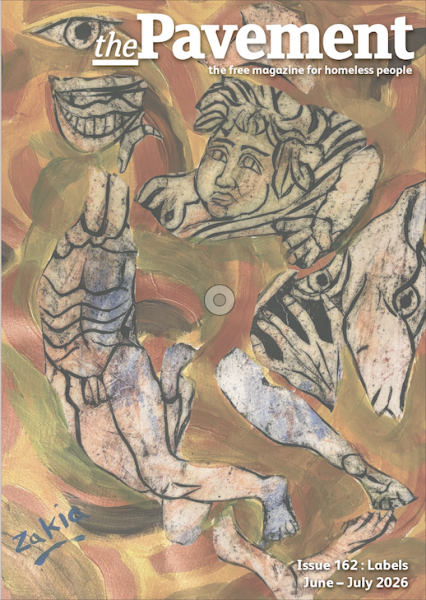
June – July 2026 : Labels
CONTENTS
BACK ISSUES
- Issue 162 : June – July 2026 : Labels
- Issue 161 : April – May 2026 : Working together
- Issue 160 : February – March 2026 : Progress
- Issue 159 : December 2025 – January 2026 : Resolutions
- Issue 158 : October – November 2025 : Making a difference
- Issue 157 : August – September 2025 : Caring about care
- Issue 156 : June – July 2025 : Resilience
- Issue 155 : April – May 2025 : Second Chances
- Issue 154 : February – March 2025 : Time
- Issue 153 : December 2024 – January 2025 : Solidarity
- Issue 152 : October – November 2024 : Change
- Issue 151 : August – September 2024 : Being Heard
- Issue 150 : June – July 2024 : Reflections
- Issue 149 : April – May 2024 : Compassion
- Issue 148 : February – March 2024 : The little things
- Issue 147 : December 2023 – January 2024 : Next steps
- Issue 146 : October 2023 – November 2023 : Kind acts
- Issue 145 : August 2023 – September 2023 : Mental health
- Issue 144 : June 2023 – July 2023 : Community
- Issue 143 : April 2023 - May 2023 : Hope springs
- Issue 142 : February 2023 - March 2023 : New Beginnings
- Issue 141 : December 2022 - January 2023 : Winter Homeless
- Issue 140 : October - November 2022 : Resolve
- Issue 139 : August - September 2022 : Creativity
- Issue 138 : June - July 2022 : Practical advice
- Issue 137 : April - May 2022 : Connection
- Issue 136 : February - March 2022 : RESPECT
- Issue 135 : Dec 2021 - Jan 2022 : OPPORTUNITY
- Issue 134 : September-October 2021 : Losses and gains
- Issue 133 : July-August 2021 : Know Your Rights
- Issue 132 : May-June 2021 : Access to Healthcare
- Issue 131 : Mar-Apr 2021 : SOLUTIONS
- Issue 130 : Jan-Feb 2021 : CHANGE
- Issue 129 : Nov-Dec 2020 : UNBELIEVABLE
- Issue 128 : Sep-Oct 2020 : COPING
- Issue 127 : Jul-Aug 2020 : HOPE
- Issue 126 : Health & Wellbeing in a Crisis
- Issue 125 : Mar-Apr 2020 : MOVING ON
- Issue 124 : Jan-Feb 2020 : STREET FOOD
- Issue 123 : Nov-Dec 2019 : HOSTELS
- Issue 122 : Sep 2019 : DEATH ON THE STREETS
- Issue 121 : July-Aug 2019 : INVISIBLE YOUTH
- Issue 120 : May-June 2019 : RECOVERY
- Issue 119 : Mar-Apr 2019 : WELLBEING
- Issue 118 : Jan-Feb 2019 : WORKING HOMELESS
- Issue 117 : Nov-Dec 2018 : HER STORY
- Issue 116 : Sept-Oct 2018 : TOILET TALK
- Issue 115 : July-Aug 2018 : HIDDEN HOMELESS
- Issue 114 : May-Jun 2018 : REBUILD YOUR LIFE
- Issue 113 : Mar–Apr 2018 : REMEMBRANCE
- Issue 112 : Jan-Feb 2018
- Issue 111 : Nov-Dec 2017
- Issue 110 : Sept-Oct 2017
- Issue 109 : July-Aug 2017
- Issue 108 : Apr-May 2017
- Issue 107 : Feb-Mar 2017
- Issue 106 : Dec 2016 - Jan 2017
- Issue 105 : Oct-Nov 2016
- Issue 104 : Aug-Sept 2016
- Issue 103 : May-June 2016
- Issue 102 : Mar-Apr 2016
- Issue 101 : Jan-Feb 2016
- Issue 100 : Nov-Dec 2015
- Issue 99 : Sept-Oct 2015
- Issue 98 : July-Aug 2015
- Issue 97 : May-Jun 2015
- Issue 96 : April 2015 [Mini Issue]
- Issue 95 : March 2015
- Issue 94 : February 2015
- Issue 93 : December 2014
- Issue 92 : November 2014
- Issue 91 : October 2014
- Issue 90 : September 2014
- Issue 89 : July 2014
- Issue 88 : June 2014
- Issue 87 : May 2014
- Issue 86 : April 2014
- Issue 85 : March 2014
- Issue 84 : February 2014
- Issue 83 : December 2013
- Issue 82 : November 2013
- Issue 81 : October 2013
- Issue 80 : September 2013
- Issue 79 : June 2013
- Issue 78 : 78
- Issue 77 : 77
- Issue 76 : 76
- Issue 75 : 75
- Issue 74 : 74
- Issue 73 : 73
- Issue 72 : 72
- Issue 71 : 71
- Issue 70 : 70
- Issue 69 : 69
- Issue 68 : 68
- Issue 67 : 67
- Issue 66 : 66
- Issue 65 : 65
- Issue 64 : 64
- Issue 63 : 63
- Issue 62 : 62
- Issue 61 : 61
- Issue 60 : 60
- Issue 59 : 59
- Issue 58 : 58
- Issue 57 : 57
- Issue 56 : 56
- Issue 56 : 56
- Issue 55 : 55
- Issue 54 : 54
- Issue 53 : 53
- Issue 52 : 52
- Issue 51 : 51
- Issue 50 : 50
- Issue 49 : 49
- Issue 48 : 48
- Issue 47 : 47
- Issue 46 : 46
- Issue 45 : 45
- Issue 44 : 44
- Issue 43 : 43
- Issue 42 : 42
- Issue 5 : 05
- Issue 4 : 04
- Issue 2 : 02
- Issue 1 : 01
- Issue 41 : 41
- Issue 40 : 40
- Issue 39 : 39
- Issue 38 : 38
- Issue 37 : 37
- Issue 36 : 36
- Issue 35 : 35
- Issue 34 : 34
- Issue 33 : 33
- Issue 10 : 10
- Issue 9 : 09
- Issue 6 : 06
- Issue 3 : 03
- Issue 32 : 32
- Issue 31 : 31
- Issue 30 : 30
- Issue 29 : 29
- Issue 11 : 11
- Issue 12 : 12
- Issue 13 : 13
- Issue 14 : 14
- Issue 15 : 15
- Issue 16 : 16
- Issue 17 : 17
- Issue 18 : 18
- Issue 19 : 19
- Issue 20 : 20
- Issue 21 : 21
- Issue 22 : 22
- Issue 23 : 23
- Issue 24 : 24
- Issue 25 : 25
- Issue 8 : 08
- Issue 7 : 07
- Issue 26 : 26
- Issue 27 : 27
- Issue 28 : 28
- Issue 1 : 01