
Established 2005 Registered Charity No. 1110656
Scottish Charity Register No. SC043760
DONATE
RECENT TWEETS
What does Jimmy Carter’s death tells us about time and how can homelessness be consigned to the history books? These and other questions answered – or at least pondered – by
André Rostant
The death of Jimmy Carter just before Christmas reminds us that much of history is not as long ago as it may seem: some alive today personally knew people born into Confederate slavery, the last confirmed survivor of which died in 1972. My Irish grandmother, teller of the scariest ghost stories to us as children, was born at the end of the 19th century and grew up among survivors of the famine of the 1840s.
Of course, history is still happening: our grandchildren will learn about the Los Angeles fires, of floods and of wars that are displacing whole neighbourhoods, whole peoples, even as you read this article. Perhaps you are street homeless right now, fishing through the directory in this magazine for a clue about where to eat, where to wash, how to survive. Even if the circumstances that find you sleeping rough are not the stuff of news headlines, remember you are one of over 9,000 people in the same situation, and among over 300,000 homeless people in the UK today. Consider that when anybody has the cheek to suggest your situation is in some way your fault, some flaw in your personal nature. It is not.
In 1824, the Vagrancy Act criminalised veterans of the Napoleonic war and those displaced during a period of massive industrialisation and social upheaval. Nor is the Vagrancy Act history: to this day it is the bane of rough sleepers. The number of people involved and the persistence of homelessness make it plain that this is a systemic issue, rationalised by wilful denial in the form of blaming the dispossessed. Regardless, no matter who you are, what you have done or gone through, there is no justifiable reason for you to go without shelter.
It has been somewhat fresh this winter; even in London the temperature dropped to minus four. This is potentially lethal weather: during the winter of 2023/24 at least two homeless people are known to have frozen to death in England, one in Manchester, the other in Beeston. As always, many organisations and ad hoc helpers have been out on the streets doing what they can. One such group is the charity Under One Sky – founded on Christmas Day 2012, when Mikkel Juel Iversen and some friends spontaneously walked about central London “to let those affected by street homelessness know that they hadn’t been forgotten, and to distribute Christmas presents”.
Now, Under One Sky has thousands of volunteers and operates year-round. During the cold January nights, teams distributed sleeping bags, bivvy bags, hand and foot warmers, hats, gloves and hot drinks all around central London to people like Howard, whom they encountered in a doorway not far from 10 Downing Street. He “didn’t even have a jacket” and had not slept for two days, walking around to stay warm. When I texted Mikkel, a bit before midnight, seeking a quote for this article, he replied, “I will send you a quote tomorrow. I just got home from another round on the streets”.
But this is nothing new. One example: renowned chef Alexis Soyer fed over 22,000 souls in Soho during the winter of 1851. So many good people, so much good will, so little change. Even Prince William sallied forth like a latter day Wenceslas to sell the Big Issue. William has established the Homewards venture to “demonstrate that together it’s possible to end homelessness”. Homewards seeks to develop a number of socially balanced communities. I do not for one moment doubt his sincerity. Though not escaping the paradigm, Homewards, with its inclusive, holistic approach, represents a step up from his father’s famous housing scheme, Poundbury. In all earnestness, with no sense of irony, Prince Charles keenly endorsed the ornamentation of Dorchester with an exemplar of those model villages, idyllic communities established by landowners deeply concerned with the aesthetic. His own pet town, as it were.
Such ideas are not peculiar to the gentry. Bourneville was established in the 1890s as a modern company town for workers at Cadbury’s. Others such as Guinness and Peabody went even further, founding social housing empires and improving living conditions for tens of thousands. Jimmy Carter famously actually set to building houses with his own hands. If the law allowed, you or I could walk into the woods and build our own shelter. But it does not.
Ultimately, only large-scale government planning and home building can solve this problem, such that we might tell our astonished grandchildren we were alive in the days when street homelessness ceased to be a thing.
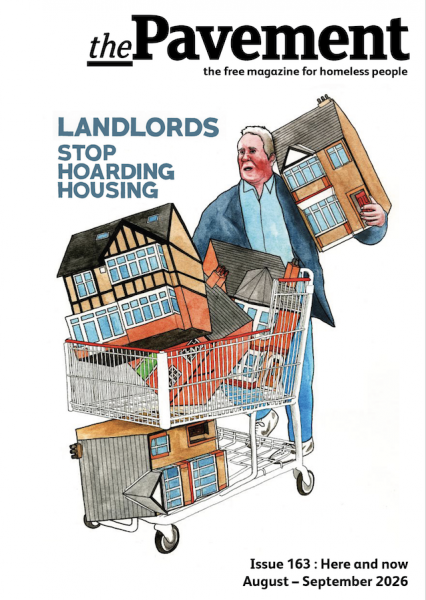
August – September 2026 : Here and now
CONTENTS
BACK ISSUES
- Issue 163 : August – September 2026 : Here and now
- Issue 162 : June – July 2026 : Labels
- Issue 161 : April – May 2026 : Working together
- Issue 160 : February – March 2026 : Progress
- Issue 159 : December 2025 – January 2026 : Resolutions
- Issue 158 : October – November 2025 : Making a difference
- Issue 157 : August – September 2025 : Caring about care
- Issue 156 : June – July 2025 : Resilience
- Issue 155 : April – May 2025 : Second Chances
- Issue 154 : February – March 2025 : Time
- Issue 153 : December 2024 – January 2025 : Solidarity
- Issue 152 : October – November 2024 : Change
- Issue 151 : August – September 2024 : Being Heard
- Issue 150 : June – July 2024 : Reflections
- Issue 149 : April – May 2024 : Compassion
- Issue 148 : February – March 2024 : The little things
- Issue 147 : December 2023 – January 2024 : Next steps
- Issue 146 : October 2023 – November 2023 : Kind acts
- Issue 145 : August 2023 – September 2023 : Mental health
- Issue 144 : June 2023 – July 2023 : Community
- Issue 143 : April 2023 - May 2023 : Hope springs
- Issue 142 : February 2023 - March 2023 : New Beginnings
- Issue 141 : December 2022 - January 2023 : Winter Homeless
- Issue 140 : October - November 2022 : Resolve
- Issue 139 : August - September 2022 : Creativity
- Issue 138 : June - July 2022 : Practical advice
- Issue 137 : April - May 2022 : Connection
- Issue 136 : February - March 2022 : RESPECT
- Issue 135 : Dec 2021 - Jan 2022 : OPPORTUNITY
- Issue 134 : September-October 2021 : Losses and gains
- Issue 133 : July-August 2021 : Know Your Rights
- Issue 132 : May-June 2021 : Access to Healthcare
- Issue 131 : Mar-Apr 2021 : SOLUTIONS
- Issue 130 : Jan-Feb 2021 : CHANGE
- Issue 129 : Nov-Dec 2020 : UNBELIEVABLE
- Issue 128 : Sep-Oct 2020 : COPING
- Issue 127 : Jul-Aug 2020 : HOPE
- Issue 126 : Health & Wellbeing in a Crisis
- Issue 125 : Mar-Apr 2020 : MOVING ON
- Issue 124 : Jan-Feb 2020 : STREET FOOD
- Issue 123 : Nov-Dec 2019 : HOSTELS
- Issue 122 : Sep 2019 : DEATH ON THE STREETS
- Issue 121 : July-Aug 2019 : INVISIBLE YOUTH
- Issue 120 : May-June 2019 : RECOVERY
- Issue 119 : Mar-Apr 2019 : WELLBEING
- Issue 118 : Jan-Feb 2019 : WORKING HOMELESS
- Issue 117 : Nov-Dec 2018 : HER STORY
- Issue 116 : Sept-Oct 2018 : TOILET TALK
- Issue 115 : July-Aug 2018 : HIDDEN HOMELESS
- Issue 114 : May-Jun 2018 : REBUILD YOUR LIFE
- Issue 113 : Mar–Apr 2018 : REMEMBRANCE
- Issue 112 : Jan-Feb 2018
- Issue 111 : Nov-Dec 2017
- Issue 110 : Sept-Oct 2017
- Issue 109 : July-Aug 2017
- Issue 108 : Apr-May 2017
- Issue 107 : Feb-Mar 2017
- Issue 106 : Dec 2016 - Jan 2017
- Issue 105 : Oct-Nov 2016
- Issue 104 : Aug-Sept 2016
- Issue 103 : May-June 2016
- Issue 102 : Mar-Apr 2016
- Issue 101 : Jan-Feb 2016
- Issue 100 : Nov-Dec 2015
- Issue 99 : Sept-Oct 2015
- Issue 98 : July-Aug 2015
- Issue 97 : May-Jun 2015
- Issue 96 : April 2015 [Mini Issue]
- Issue 95 : March 2015
- Issue 94 : February 2015
- Issue 93 : December 2014
- Issue 92 : November 2014
- Issue 91 : October 2014
- Issue 90 : September 2014
- Issue 89 : July 2014
- Issue 88 : June 2014
- Issue 87 : May 2014
- Issue 86 : April 2014
- Issue 85 : March 2014
- Issue 84 : February 2014
- Issue 83 : December 2013
- Issue 82 : November 2013
- Issue 81 : October 2013
- Issue 80 : September 2013
- Issue 79 : June 2013
- Issue 78 : 78
- Issue 77 : 77
- Issue 76 : 76
- Issue 75 : 75
- Issue 74 : 74
- Issue 73 : 73
- Issue 72 : 72
- Issue 71 : 71
- Issue 70 : 70
- Issue 69 : 69
- Issue 68 : 68
- Issue 67 : 67
- Issue 66 : 66
- Issue 65 : 65
- Issue 64 : 64
- Issue 63 : 63
- Issue 62 : 62
- Issue 61 : 61
- Issue 60 : 60
- Issue 59 : 59
- Issue 58 : 58
- Issue 57 : 57
- Issue 56 : 56
- Issue 56 : 56
- Issue 55 : 55
- Issue 54 : 54
- Issue 53 : 53
- Issue 52 : 52
- Issue 51 : 51
- Issue 50 : 50
- Issue 49 : 49
- Issue 48 : 48
- Issue 47 : 47
- Issue 46 : 46
- Issue 45 : 45
- Issue 44 : 44
- Issue 43 : 43
- Issue 42 : 42
- Issue 5 : 05
- Issue 4 : 04
- Issue 2 : 02
- Issue 1 : 01
- Issue 41 : 41
- Issue 40 : 40
- Issue 39 : 39
- Issue 38 : 38
- Issue 37 : 37
- Issue 36 : 36
- Issue 35 : 35
- Issue 34 : 34
- Issue 33 : 33
- Issue 10 : 10
- Issue 9 : 09
- Issue 6 : 06
- Issue 3 : 03
- Issue 32 : 32
- Issue 31 : 31
- Issue 30 : 30
- Issue 29 : 29
- Issue 11 : 11
- Issue 12 : 12
- Issue 13 : 13
- Issue 14 : 14
- Issue 15 : 15
- Issue 16 : 16
- Issue 17 : 17
- Issue 18 : 18
- Issue 19 : 19
- Issue 20 : 20
- Issue 21 : 21
- Issue 22 : 22
- Issue 23 : 23
- Issue 24 : 24
- Issue 25 : 25
- Issue 8 : 08
- Issue 7 : 07
- Issue 26 : 26
- Issue 27 : 27
- Issue 28 : 28
- Issue 1 : 01