
Established 2005 Registered Charity No. 1110656
Scottish Charity Register No. SC043760
DONATE
RECENT TWEETS
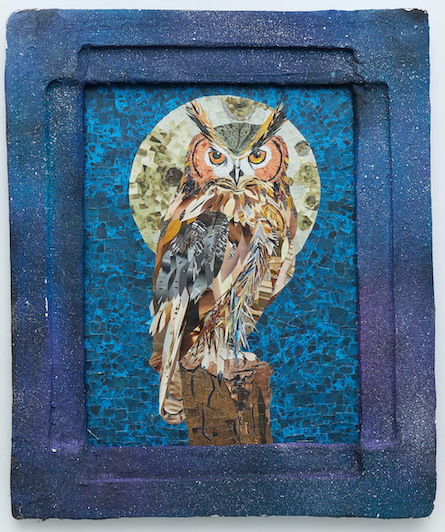 Night Owl, by an unnamed artist at HM Prison Lowdham Grange, featured in the Koestler Awards show last year. © Tom Carter
On the problem of public perception, political choices and the stigma and hypocrisy rife in our society. Words by Chris Sampson
“Actually,” you tell friends, “It’s the drugs I feel sorry for: they’re smuggled into Britain up one arsehole, and then snorted by another one once they get here.”
Of course, if said Class A’s are imbibed by a rich person, they’ll go to rehab to get clean. Not so much if you’re on the streets or in a hostel.
But you, you’re tarred with the same brush as the druggies, aren’t you? Even if you don’t touch the stuff. You must have become homeless due to your own fecklessness, surely? Didn’t you?
Yes, you’re likely high on spice or some other dodgy concoction of random chemicals that someone mashed up on their kitchen table, aren’t you? Of course you are, because you’re homeless.
Ever defecated into a flask of cold tea, then swilled the resulting mixture around and sipped it like James Bond suavely savouring a cocktail?
Of course you have! You must have, because you’re homeless.
Actually, you haven’t done any such thing. Of course not. But that’s the sort of image of homeless folk that some people have. An impression placed into their tiny minds by the tabloid press and – increasingly – its online equivalents. That’s the sort of brush they tar you with.
At least, when they’re not decrying swan-scoffing migrants, that is; swarthy refugees who can’t even whistle cheerily, like forelock-tugging, cap-doffing proles will be forced to do in the warped fantasy version of 1950s Britain that they want everyone to live in. Where lower-order oiks know their place again; where Johnny Foreigner is sent back to the Colonies, to toil in the plantations of his British masters. And not ever, ever answer back.
How many times have you heard something like this said about rough sleepers: “Oh, don’t give ‘em cash! They’ll only spend it on drugs!”
Well, some homeless folk do, of course. Some blow it on booze. Others spend it on food, or other means of staying alive.
Yet what consumers never hear when shopping in a supermarket is this: “Oh, don’t give them money! They’re a multinational! They’ll only spend it on dodgy finance deals. Or fleecing the third world of charity funds. Or donating it to the political party of the owner’s choice." Of course, they could spend your money on more stock, or on raising staff wages. But, more likely, they make their shareholders richer. But customers give them the benefit of the doubt; trust that they’ll spend your money in ways you’ll approve of.
Shoppers don’t buy them the meal that you think the corporate entity should have, to ensure that your hard-earned isn’t frittered away, do they? They wouldn’t dream of taking away their choice of what to spend it on. So why not extend the same courtesy to homeless people?
We are people, aren’t we? I mean, you do think of us as human beings… don’t you?
Cast your mind back, to before you were made homeless. To when you had a television. Remember? How many comic dramas did you see, featuring brief cameos from a “tramp”?
And, oh, weren’t they always jolly, those homeless folk? Loveable figures of fun. Their plight all-too-briefly skimmed over, human beings reduced to warm props in the background of the main story, patted on the head like a puppy or kitten. And fed just about as many scraps of food.
Well, you don’t miss that sort of telly show, do you? Don’t really think of it in the day-to-day, hand-to-mouth existence you lead. Waiting for the council to find you somewhere, hoping it’ll be your turn, at last, for the limited resources they can afford: they’re sorry, but their funding has been squeezed, yet again, or cut entirely.
Then, finally, if you’re lucky, you get a room in a hostel! A roof over your head at last! Sleep in a real bed again! Go to the toilet indoors again! Wash or shower when you like! Eat food out of a fridge or cupboard! Brush your teeth properly! Lock your door against the dangers and insanities of the outside world.
But what about peace and quiet? Ah! Not with the crackheads and junkies shouting and screaming all night; not with the mentally vulnerable shrieking, with the alkies belting out sub-karaoke versions of half-forgotten songs: maim that tune. No, there’s no ASMR here. No crystal harps or singing bowls, no zen-like calm to soothe you.
But at least there’s always poetry. Fittingly for the poor, a notoriously difficult creative format to earn money from. Yet it’s often seen as the best way for homeless folk to express themselves – but best for whom?
Giving homeless people a creative voice, without intruding on the rest of the arts, perhaps? Can’t have them writing novels or TV screenplays, they might start sleeping on the set or swigging white spirit from the set builders’ toolbox! No, best that they mumble incoherently about their wretched lives, in dubious rhymes that are usually once heard, instantly forgotten:
“I met a chronic alcoholic
In a Borstal in St Austell
He died doing what he loved best
Down the docks
Sucking cocks in a phone box.”
Erm, thank you, street bard. Some of it even rhymes. Sort of.
That’s nearly your lot. Change can come. Unfair systems can be overturned. When the electorate vote out the governing party, it’s democracy flushing a turd, isn’t it? And you wouldn’t un-flush a floater, would you? Yet if you vote for a different party with the same old attitude towards homeless people, aren’t you doing just that?
Support
This article challenges lazy, harmful stereotypes surrounding homeless people in our society, often promoted by papers and politicians.
Substance abuse affects many people across the UK and support is available. If you are looking for support, advice or information, these groups can help:
- Alcoholics Anonymous is a free self-help group offering support meetings across the UK. Find your nearest meeting here: www.alcoholics-anonymous.org.uk
- FRANK provides information, help and advice on drugs. Visit its website to learn more: talktofrank.com or call its 24/7 phone line 0300 123 6600
- Please see the List of services in the centre pages of the magazine for details on a range of helpful local services.
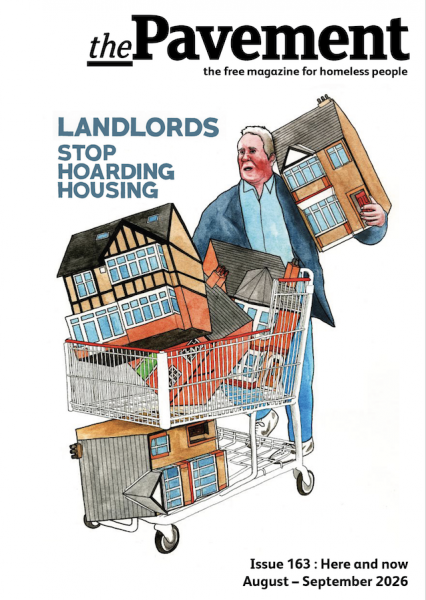
August – September 2026 : Here and now
CONTENTS
BACK ISSUES
- Issue 163 : August – September 2026 : Here and now
- Issue 162 : June – July 2026 : Labels
- Issue 161 : April – May 2026 : Working together
- Issue 160 : February – March 2026 : Progress
- Issue 159 : December 2025 – January 2026 : Resolutions
- Issue 158 : October – November 2025 : Making a difference
- Issue 157 : August – September 2025 : Caring about care
- Issue 156 : June – July 2025 : Resilience
- Issue 155 : April – May 2025 : Second Chances
- Issue 154 : February – March 2025 : Time
- Issue 153 : December 2024 – January 2025 : Solidarity
- Issue 152 : October – November 2024 : Change
- Issue 151 : August – September 2024 : Being Heard
- Issue 150 : June – July 2024 : Reflections
- Issue 149 : April – May 2024 : Compassion
- Issue 148 : February – March 2024 : The little things
- Issue 147 : December 2023 – January 2024 : Next steps
- Issue 146 : October 2023 – November 2023 : Kind acts
- Issue 145 : August 2023 – September 2023 : Mental health
- Issue 144 : June 2023 – July 2023 : Community
- Issue 143 : April 2023 - May 2023 : Hope springs
- Issue 142 : February 2023 - March 2023 : New Beginnings
- Issue 141 : December 2022 - January 2023 : Winter Homeless
- Issue 140 : October - November 2022 : Resolve
- Issue 139 : August - September 2022 : Creativity
- Issue 138 : June - July 2022 : Practical advice
- Issue 137 : April - May 2022 : Connection
- Issue 136 : February - March 2022 : RESPECT
- Issue 135 : Dec 2021 - Jan 2022 : OPPORTUNITY
- Issue 134 : September-October 2021 : Losses and gains
- Issue 133 : July-August 2021 : Know Your Rights
- Issue 132 : May-June 2021 : Access to Healthcare
- Issue 131 : Mar-Apr 2021 : SOLUTIONS
- Issue 130 : Jan-Feb 2021 : CHANGE
- Issue 129 : Nov-Dec 2020 : UNBELIEVABLE
- Issue 128 : Sep-Oct 2020 : COPING
- Issue 127 : Jul-Aug 2020 : HOPE
- Issue 126 : Health & Wellbeing in a Crisis
- Issue 125 : Mar-Apr 2020 : MOVING ON
- Issue 124 : Jan-Feb 2020 : STREET FOOD
- Issue 123 : Nov-Dec 2019 : HOSTELS
- Issue 122 : Sep 2019 : DEATH ON THE STREETS
- Issue 121 : July-Aug 2019 : INVISIBLE YOUTH
- Issue 120 : May-June 2019 : RECOVERY
- Issue 119 : Mar-Apr 2019 : WELLBEING
- Issue 118 : Jan-Feb 2019 : WORKING HOMELESS
- Issue 117 : Nov-Dec 2018 : HER STORY
- Issue 116 : Sept-Oct 2018 : TOILET TALK
- Issue 115 : July-Aug 2018 : HIDDEN HOMELESS
- Issue 114 : May-Jun 2018 : REBUILD YOUR LIFE
- Issue 113 : Mar–Apr 2018 : REMEMBRANCE
- Issue 112 : Jan-Feb 2018
- Issue 111 : Nov-Dec 2017
- Issue 110 : Sept-Oct 2017
- Issue 109 : July-Aug 2017
- Issue 108 : Apr-May 2017
- Issue 107 : Feb-Mar 2017
- Issue 106 : Dec 2016 - Jan 2017
- Issue 105 : Oct-Nov 2016
- Issue 104 : Aug-Sept 2016
- Issue 103 : May-June 2016
- Issue 102 : Mar-Apr 2016
- Issue 101 : Jan-Feb 2016
- Issue 100 : Nov-Dec 2015
- Issue 99 : Sept-Oct 2015
- Issue 98 : July-Aug 2015
- Issue 97 : May-Jun 2015
- Issue 96 : April 2015 [Mini Issue]
- Issue 95 : March 2015
- Issue 94 : February 2015
- Issue 93 : December 2014
- Issue 92 : November 2014
- Issue 91 : October 2014
- Issue 90 : September 2014
- Issue 89 : July 2014
- Issue 88 : June 2014
- Issue 87 : May 2014
- Issue 86 : April 2014
- Issue 85 : March 2014
- Issue 84 : February 2014
- Issue 83 : December 2013
- Issue 82 : November 2013
- Issue 81 : October 2013
- Issue 80 : September 2013
- Issue 79 : June 2013
- Issue 78 : 78
- Issue 77 : 77
- Issue 76 : 76
- Issue 75 : 75
- Issue 74 : 74
- Issue 73 : 73
- Issue 72 : 72
- Issue 71 : 71
- Issue 70 : 70
- Issue 69 : 69
- Issue 68 : 68
- Issue 67 : 67
- Issue 66 : 66
- Issue 65 : 65
- Issue 64 : 64
- Issue 63 : 63
- Issue 62 : 62
- Issue 61 : 61
- Issue 60 : 60
- Issue 59 : 59
- Issue 58 : 58
- Issue 57 : 57
- Issue 56 : 56
- Issue 56 : 56
- Issue 55 : 55
- Issue 54 : 54
- Issue 53 : 53
- Issue 52 : 52
- Issue 51 : 51
- Issue 50 : 50
- Issue 49 : 49
- Issue 48 : 48
- Issue 47 : 47
- Issue 46 : 46
- Issue 45 : 45
- Issue 44 : 44
- Issue 43 : 43
- Issue 42 : 42
- Issue 5 : 05
- Issue 4 : 04
- Issue 2 : 02
- Issue 1 : 01
- Issue 41 : 41
- Issue 40 : 40
- Issue 39 : 39
- Issue 38 : 38
- Issue 37 : 37
- Issue 36 : 36
- Issue 35 : 35
- Issue 34 : 34
- Issue 33 : 33
- Issue 10 : 10
- Issue 9 : 09
- Issue 6 : 06
- Issue 3 : 03
- Issue 32 : 32
- Issue 31 : 31
- Issue 30 : 30
- Issue 29 : 29
- Issue 11 : 11
- Issue 12 : 12
- Issue 13 : 13
- Issue 14 : 14
- Issue 15 : 15
- Issue 16 : 16
- Issue 17 : 17
- Issue 18 : 18
- Issue 19 : 19
- Issue 20 : 20
- Issue 21 : 21
- Issue 22 : 22
- Issue 23 : 23
- Issue 24 : 24
- Issue 25 : 25
- Issue 8 : 08
- Issue 7 : 07
- Issue 26 : 26
- Issue 27 : 27
- Issue 28 : 28
- Issue 1 : 01