
Established 2005 Registered Charity No. 1110656
Scottish Charity Register No. SC043760
DONATE
RECENT TWEETS
A perception-warping, thought-provoking piece on the different challenges people face across our society. By André Rostant
Jonathan is married, with a five-year-old child. He and his wife struggle to cope due to an unfortunate condition they share. Jennifer is a specialist who provides support, she lives in and helps around the house, largely managing the care of little Matilda. Never a quitter, Jonathan works three hours a day, four days a week, with the aid of Sharon who organises his schedule, assists him with admin and correspondence and makes sure he eats at the right times. Jonathan inherited his condition, so his parents knew what to expect. Fortunately, they found a place in a charitable school with small classes, supplemented by extracurricular and pastoral provision.
Like many in his predicament, Jonathan’s lifestyle is underpinned by state support, a significant proportion of which comes in the form of housing benefit paid to his tenants. The condition in question is Unchallenged Entitlement Syndrome. His main income comes as dividends from investments anchored against the rentable value of a largely residential property portfolio. Jonathan proudly tells people he is a self-made man. He describes the money he gets as ‘passive income’.
Cally is one of those tenants by means of whom Jonathan obtains his housing benefit. She lives in poverty, along with over two million fellow Londoners. Her rent is £515 a week, £490 of which is paid by the DSS. Like many of Jonathan’s residential lettings, Cally’s home is a former local authority property, snapped up during Thatcher’s buy-to-let blitzkrieg on council housing. Cally occasionally skips meals and often sits in the cold with no heating.
Cally is a single mother with a three-year-old child, Kevin, but she cannot afford to stay at home to care for and raise him because the government would consider her economically inactive and stop her benefits. Consequently, she is obliged to send him to a nursery where economically active strangers scrape a living looking after him while she squeezes as much work as she can from a zero-hours contract as a barista in a local coffee shop. Her employer is subsidised by taxpayers to the extent that Universal Credit chips in much of the difference between the amount she actually needs to live on and what they pay her. The economically active nursery workers also need to claim Universal Credit, which is means-tested and doles out the bare minimum income needed to get by.
Cally does not vote and is not interested in politics. Jonathan and his wife are enthusiastic supporters of their local Conservative Party branch. Cally does not believe in unions and has no time for hobbies. Jonathan is a Rotarian, a member of the National Residential Landlords Association and of the British Chamber of Commerce.
Why should we be tempted to blame either of them? Cally is not apathetic, she is just busy, addled by scrambling to make ends meet. There is no inference to be drawn from her being a single parent: reflect on the scenarios and impressions that information conjures in your mind, because they tell everything about you and nothing about Cally. Likewise, Jonathan is largely a product of the circumstance and opportunity he grew up with. Attributes with which we are born are beyond our control. Neither Jonathan nor Cally had any say in their background, their families. Each merely plays the cards life deals them as best they can, from their perspective.
What they have in common is the economic system in which we are all entangled. In this system it makes sense for Jonathan in London, whose friend Fred is in hospital with cancer, to go to Manchester and run a marathon, or travel thousands of miles to Africa and climb Mount Kilimanjaro to raise funds toward Fred’s care. Our government thinks it also makes sense to cut disability payments while holding the tax on Jonathan’s dividend income over £125,140 at 39.35%, instead of the 45% he would pay had he worked conventionally for the money. Had he made a mere £30,000 in dividends, his tax rate would be 8.75%, as opposed to 20% if he had been employed by someone else.
Jonathan has other challenges, though: the tax axe fell on his old primary school, and little Matilda’s attendance will be £6,500 dearer this year, thanks to VAT.
It’s all about money: what should be a simple emollient to trade and commerce has become the object of all activity. We need things like food, shelter, education, health. All our current economy is geared to offer are employment and investment opportunities, neither of which can cure Jonathan’s condition.
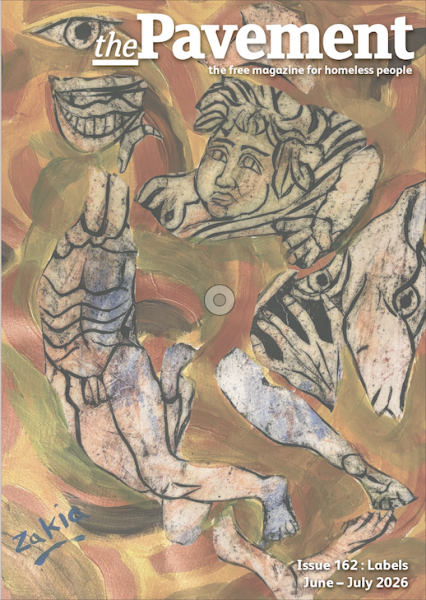
June – July 2026 : Labels
CONTENTS
BACK ISSUES
- Issue 162 : June – July 2026 : Labels
- Issue 161 : April – May 2026 : Working together
- Issue 160 : February – March 2026 : Progress
- Issue 159 : December 2025 – January 2026 : Resolutions
- Issue 158 : October – November 2025 : Making a difference
- Issue 157 : August – September 2025 : Caring about care
- Issue 156 : June – July 2025 : Resilience
- Issue 155 : April – May 2025 : Second Chances
- Issue 154 : February – March 2025 : Time
- Issue 153 : December 2024 – January 2025 : Solidarity
- Issue 152 : October – November 2024 : Change
- Issue 151 : August – September 2024 : Being Heard
- Issue 150 : June – July 2024 : Reflections
- Issue 149 : April – May 2024 : Compassion
- Issue 148 : February – March 2024 : The little things
- Issue 147 : December 2023 – January 2024 : Next steps
- Issue 146 : October 2023 – November 2023 : Kind acts
- Issue 145 : August 2023 – September 2023 : Mental health
- Issue 144 : June 2023 – July 2023 : Community
- Issue 143 : April 2023 - May 2023 : Hope springs
- Issue 142 : February 2023 - March 2023 : New Beginnings
- Issue 141 : December 2022 - January 2023 : Winter Homeless
- Issue 140 : October - November 2022 : Resolve
- Issue 139 : August - September 2022 : Creativity
- Issue 138 : June - July 2022 : Practical advice
- Issue 137 : April - May 2022 : Connection
- Issue 136 : February - March 2022 : RESPECT
- Issue 135 : Dec 2021 - Jan 2022 : OPPORTUNITY
- Issue 134 : September-October 2021 : Losses and gains
- Issue 133 : July-August 2021 : Know Your Rights
- Issue 132 : May-June 2021 : Access to Healthcare
- Issue 131 : Mar-Apr 2021 : SOLUTIONS
- Issue 130 : Jan-Feb 2021 : CHANGE
- Issue 129 : Nov-Dec 2020 : UNBELIEVABLE
- Issue 128 : Sep-Oct 2020 : COPING
- Issue 127 : Jul-Aug 2020 : HOPE
- Issue 126 : Health & Wellbeing in a Crisis
- Issue 125 : Mar-Apr 2020 : MOVING ON
- Issue 124 : Jan-Feb 2020 : STREET FOOD
- Issue 123 : Nov-Dec 2019 : HOSTELS
- Issue 122 : Sep 2019 : DEATH ON THE STREETS
- Issue 121 : July-Aug 2019 : INVISIBLE YOUTH
- Issue 120 : May-June 2019 : RECOVERY
- Issue 119 : Mar-Apr 2019 : WELLBEING
- Issue 118 : Jan-Feb 2019 : WORKING HOMELESS
- Issue 117 : Nov-Dec 2018 : HER STORY
- Issue 116 : Sept-Oct 2018 : TOILET TALK
- Issue 115 : July-Aug 2018 : HIDDEN HOMELESS
- Issue 114 : May-Jun 2018 : REBUILD YOUR LIFE
- Issue 113 : Mar–Apr 2018 : REMEMBRANCE
- Issue 112 : Jan-Feb 2018
- Issue 111 : Nov-Dec 2017
- Issue 110 : Sept-Oct 2017
- Issue 109 : July-Aug 2017
- Issue 108 : Apr-May 2017
- Issue 107 : Feb-Mar 2017
- Issue 106 : Dec 2016 - Jan 2017
- Issue 105 : Oct-Nov 2016
- Issue 104 : Aug-Sept 2016
- Issue 103 : May-June 2016
- Issue 102 : Mar-Apr 2016
- Issue 101 : Jan-Feb 2016
- Issue 100 : Nov-Dec 2015
- Issue 99 : Sept-Oct 2015
- Issue 98 : July-Aug 2015
- Issue 97 : May-Jun 2015
- Issue 96 : April 2015 [Mini Issue]
- Issue 95 : March 2015
- Issue 94 : February 2015
- Issue 93 : December 2014
- Issue 92 : November 2014
- Issue 91 : October 2014
- Issue 90 : September 2014
- Issue 89 : July 2014
- Issue 88 : June 2014
- Issue 87 : May 2014
- Issue 86 : April 2014
- Issue 85 : March 2014
- Issue 84 : February 2014
- Issue 83 : December 2013
- Issue 82 : November 2013
- Issue 81 : October 2013
- Issue 80 : September 2013
- Issue 79 : June 2013
- Issue 78 : 78
- Issue 77 : 77
- Issue 76 : 76
- Issue 75 : 75
- Issue 74 : 74
- Issue 73 : 73
- Issue 72 : 72
- Issue 71 : 71
- Issue 70 : 70
- Issue 69 : 69
- Issue 68 : 68
- Issue 67 : 67
- Issue 66 : 66
- Issue 65 : 65
- Issue 64 : 64
- Issue 63 : 63
- Issue 62 : 62
- Issue 61 : 61
- Issue 60 : 60
- Issue 59 : 59
- Issue 58 : 58
- Issue 57 : 57
- Issue 56 : 56
- Issue 56 : 56
- Issue 55 : 55
- Issue 54 : 54
- Issue 53 : 53
- Issue 52 : 52
- Issue 51 : 51
- Issue 50 : 50
- Issue 49 : 49
- Issue 48 : 48
- Issue 47 : 47
- Issue 46 : 46
- Issue 45 : 45
- Issue 44 : 44
- Issue 43 : 43
- Issue 42 : 42
- Issue 5 : 05
- Issue 4 : 04
- Issue 2 : 02
- Issue 1 : 01
- Issue 41 : 41
- Issue 40 : 40
- Issue 39 : 39
- Issue 38 : 38
- Issue 37 : 37
- Issue 36 : 36
- Issue 35 : 35
- Issue 34 : 34
- Issue 33 : 33
- Issue 10 : 10
- Issue 9 : 09
- Issue 6 : 06
- Issue 3 : 03
- Issue 32 : 32
- Issue 31 : 31
- Issue 30 : 30
- Issue 29 : 29
- Issue 11 : 11
- Issue 12 : 12
- Issue 13 : 13
- Issue 14 : 14
- Issue 15 : 15
- Issue 16 : 16
- Issue 17 : 17
- Issue 18 : 18
- Issue 19 : 19
- Issue 20 : 20
- Issue 21 : 21
- Issue 22 : 22
- Issue 23 : 23
- Issue 24 : 24
- Issue 25 : 25
- Issue 8 : 08
- Issue 7 : 07
- Issue 26 : 26
- Issue 27 : 27
- Issue 28 : 28
- Issue 1 : 01