
Established 2005 Registered Charity No. 1110656
Scottish Charity Register No. SC043760
DONATE
RECENT TWEETS
Teflon mofo
May 01 2025 A leafy scene captured by Mat Amp © Mat Amp
We are all deserving of support and helpful services, no matter how resilient and tough we are. By Mat Amp
If you want to know what it means to be truly resilient, then go and live on the streets or in a homeless hostel. Try and cope with mental health issues or battle addiction when you don’t have a safe and secure place to call home.
Until it happened to me, I had very little personal experience of what it is like to live without the basic resources that are part and parcel of having a home.
Saying that, I had seen other people dealing with acute poverty. At the age of eight I moved to Lagos, Nigeria – the biggest and busiest black city in the world – from the parochial market town of Hereford. It was in Nigeria where I discovered the true meaning of the word resilience. Many people there struggle to survive, with no access to social security and very little in the way of an effective or affordable healthcare system.
When I was expelled from school for the third time, at the age of 15, my dad made me get a job so that I wasn’t sitting around the house doing jack shit. That was how I found myself welding the joins on oil tankers under a corrugated metal roof for fuck all squared a month. The intense humidity could be brutal and I only made the mistake of turning up for work with a hangover once. It was an apprenticeship, so I was only working for four hours a day, but it felt like 10. And the amount people were earning stunned me. I couldn’t understand how the hell people were supporting their families on the amount they were getting paid.
In Nigeria I saw a lot of people struggle hard day-to-day. There is a palpable buzz in the air in Lagos, which gives the city an atmosphere like nowhere else. People there are incredibly resilient, and they have to be, just to survive.
The stigma around people who have experienced homelessness can sometimes include the view that we are to be pitied because we are not capable of keeping a roof over our own heads. The Daily Mail-reading moral majority have a tendency to load any kindness they may deem us worthy of with a brand of self-righteous judgement, designed to give themselves an ‘aren’t we good people for giving to this pitiful mob’ award.
But when you’ve had to struggle just to fill your stomach or get a decent night’s sleep, when you’ve had to cope with the stress and anxiety of having to survive on the street, it can give you a kind of resilience.
This is quote from a bit of a wanky intellectual paper, but you get the point:
“The findings revealed that resiliency in homelessness is an inherent quality and a developed response shaped by the interplay of innate capacities and environmental challenges. It uncovered a need to reassess societal value judgements. Resiliency among people without housing suggests strengths that go unrecognised by conventional measures.” – From Resiliency in Persons Experiencing Homelessness: A Concept Analysis Using the Evolutionary Framework, written by Christian Ketel and Samereh Abdoli.
In other words, having to cope with challenging shit in difficult circumstances gives us the ability to deal with things in a way that goes largely unnoticed and unmeasured.
Somewhere deep down in my subconscious I must have told myself that the type of homeless services I hated were designed to engage “the typical homeless type of person”. I used to go into homeless services thinking “I don’t belong here…” but now I realise that nobody does. I realise that these type of services aren’t really designed for anybody. In other words, they aren’t fit for purpose if that purpose is to help people to recover from homelessness.
The type of services I’m talking about are places where the staff are burnt out, everything is broken and scabby looking and people look like they’re living in a country that is going through a civil war. Confronted with this type of service, we understandably shut down, going into ourselves in order to shut out the challenging reality we are confronted with.
For the last six months I’ve been visiting services as an inreach worker. One of the boroughs we work in is Westminster, a place that is notorious for these type of services. I won’t mention names but one of the services we go to has improved dramatically over the past six months. It has installed several computers and employed a few health professionals to deliver podiatry, homeopathy and dental support. Previously, staff tended to remain behind their glass petition in the hallway, but recently there has always been someone ‘on the floor’ with us. The impact has been dramatic. When I started working there the atmosphere crackled with hopelessness. It wasn’t conducive to open communication, especially when you’re encouraging people to talk about their health issues. Now people generally greet us with a smile and are far more open to talking with us about accessing primary health care.
I can remember how it felt to walk into a service that feels like it has given up on all hope of trying to help you in the long-term. At the time I already felt hopeless and ashamed and it exacerbated those feelings. At some point I started to think that the shame I felt over finding myself homeless was driven by the fact that somewhere deep down inside, I must have judged people for being homeless. If I hadn’t, in some shape or form, have looked down on people experiencing homelessness, why the fuck would I be ashamed of being homeless myself?
But I have realised that the shame and hopelessness I felt wasn’t just the result of my own preconceived prejudice. It is difficult to have any faith in yourself when the services you have to use just to survive give you the impression that society has given up on you.
What I have learned over the past 15 years from being homeless myself and working for a charity that is fuelled by our voice – the voice of those with experience of the issues we are talking about – is that I am not different, but I am unique. We all are. None of us end up homeless because we deserve it and none of us are ‘the type’ of people who end up homeless. We may have issues in common, but we are all individuals with our own stories and none of us deserve to be homeless.
No matter what anybody tells us, we are individuals with our own stories and our resilience means that they are stories that cannot be erased.
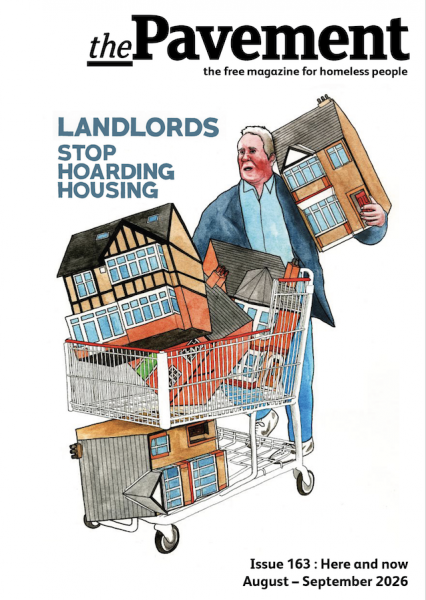
August – September 2026 : Here and now
CONTENTS
BACK ISSUES
- Issue 163 : August – September 2026 : Here and now
- Issue 162 : June – July 2026 : Labels
- Issue 161 : April – May 2026 : Working together
- Issue 160 : February – March 2026 : Progress
- Issue 159 : December 2025 – January 2026 : Resolutions
- Issue 158 : October – November 2025 : Making a difference
- Issue 157 : August – September 2025 : Caring about care
- Issue 156 : June – July 2025 : Resilience
- Issue 155 : April – May 2025 : Second Chances
- Issue 154 : February – March 2025 : Time
- Issue 153 : December 2024 – January 2025 : Solidarity
- Issue 152 : October – November 2024 : Change
- Issue 151 : August – September 2024 : Being Heard
- Issue 150 : June – July 2024 : Reflections
- Issue 149 : April – May 2024 : Compassion
- Issue 148 : February – March 2024 : The little things
- Issue 147 : December 2023 – January 2024 : Next steps
- Issue 146 : October 2023 – November 2023 : Kind acts
- Issue 145 : August 2023 – September 2023 : Mental health
- Issue 144 : June 2023 – July 2023 : Community
- Issue 143 : April 2023 - May 2023 : Hope springs
- Issue 142 : February 2023 - March 2023 : New Beginnings
- Issue 141 : December 2022 - January 2023 : Winter Homeless
- Issue 140 : October - November 2022 : Resolve
- Issue 139 : August - September 2022 : Creativity
- Issue 138 : June - July 2022 : Practical advice
- Issue 137 : April - May 2022 : Connection
- Issue 136 : February - March 2022 : RESPECT
- Issue 135 : Dec 2021 - Jan 2022 : OPPORTUNITY
- Issue 134 : September-October 2021 : Losses and gains
- Issue 133 : July-August 2021 : Know Your Rights
- Issue 132 : May-June 2021 : Access to Healthcare
- Issue 131 : Mar-Apr 2021 : SOLUTIONS
- Issue 130 : Jan-Feb 2021 : CHANGE
- Issue 129 : Nov-Dec 2020 : UNBELIEVABLE
- Issue 128 : Sep-Oct 2020 : COPING
- Issue 127 : Jul-Aug 2020 : HOPE
- Issue 126 : Health & Wellbeing in a Crisis
- Issue 125 : Mar-Apr 2020 : MOVING ON
- Issue 124 : Jan-Feb 2020 : STREET FOOD
- Issue 123 : Nov-Dec 2019 : HOSTELS
- Issue 122 : Sep 2019 : DEATH ON THE STREETS
- Issue 121 : July-Aug 2019 : INVISIBLE YOUTH
- Issue 120 : May-June 2019 : RECOVERY
- Issue 119 : Mar-Apr 2019 : WELLBEING
- Issue 118 : Jan-Feb 2019 : WORKING HOMELESS
- Issue 117 : Nov-Dec 2018 : HER STORY
- Issue 116 : Sept-Oct 2018 : TOILET TALK
- Issue 115 : July-Aug 2018 : HIDDEN HOMELESS
- Issue 114 : May-Jun 2018 : REBUILD YOUR LIFE
- Issue 113 : Mar–Apr 2018 : REMEMBRANCE
- Issue 112 : Jan-Feb 2018
- Issue 111 : Nov-Dec 2017
- Issue 110 : Sept-Oct 2017
- Issue 109 : July-Aug 2017
- Issue 108 : Apr-May 2017
- Issue 107 : Feb-Mar 2017
- Issue 106 : Dec 2016 - Jan 2017
- Issue 105 : Oct-Nov 2016
- Issue 104 : Aug-Sept 2016
- Issue 103 : May-June 2016
- Issue 102 : Mar-Apr 2016
- Issue 101 : Jan-Feb 2016
- Issue 100 : Nov-Dec 2015
- Issue 99 : Sept-Oct 2015
- Issue 98 : July-Aug 2015
- Issue 97 : May-Jun 2015
- Issue 96 : April 2015 [Mini Issue]
- Issue 95 : March 2015
- Issue 94 : February 2015
- Issue 93 : December 2014
- Issue 92 : November 2014
- Issue 91 : October 2014
- Issue 90 : September 2014
- Issue 89 : July 2014
- Issue 88 : June 2014
- Issue 87 : May 2014
- Issue 86 : April 2014
- Issue 85 : March 2014
- Issue 84 : February 2014
- Issue 83 : December 2013
- Issue 82 : November 2013
- Issue 81 : October 2013
- Issue 80 : September 2013
- Issue 79 : June 2013
- Issue 78 : 78
- Issue 77 : 77
- Issue 76 : 76
- Issue 75 : 75
- Issue 74 : 74
- Issue 73 : 73
- Issue 72 : 72
- Issue 71 : 71
- Issue 70 : 70
- Issue 69 : 69
- Issue 68 : 68
- Issue 67 : 67
- Issue 66 : 66
- Issue 65 : 65
- Issue 64 : 64
- Issue 63 : 63
- Issue 62 : 62
- Issue 61 : 61
- Issue 60 : 60
- Issue 59 : 59
- Issue 58 : 58
- Issue 57 : 57
- Issue 56 : 56
- Issue 56 : 56
- Issue 55 : 55
- Issue 54 : 54
- Issue 53 : 53
- Issue 52 : 52
- Issue 51 : 51
- Issue 50 : 50
- Issue 49 : 49
- Issue 48 : 48
- Issue 47 : 47
- Issue 46 : 46
- Issue 45 : 45
- Issue 44 : 44
- Issue 43 : 43
- Issue 42 : 42
- Issue 5 : 05
- Issue 4 : 04
- Issue 2 : 02
- Issue 1 : 01
- Issue 41 : 41
- Issue 40 : 40
- Issue 39 : 39
- Issue 38 : 38
- Issue 37 : 37
- Issue 36 : 36
- Issue 35 : 35
- Issue 34 : 34
- Issue 33 : 33
- Issue 10 : 10
- Issue 9 : 09
- Issue 6 : 06
- Issue 3 : 03
- Issue 32 : 32
- Issue 31 : 31
- Issue 30 : 30
- Issue 29 : 29
- Issue 11 : 11
- Issue 12 : 12
- Issue 13 : 13
- Issue 14 : 14
- Issue 15 : 15
- Issue 16 : 16
- Issue 17 : 17
- Issue 18 : 18
- Issue 19 : 19
- Issue 20 : 20
- Issue 21 : 21
- Issue 22 : 22
- Issue 23 : 23
- Issue 24 : 24
- Issue 25 : 25
- Issue 8 : 08
- Issue 7 : 07
- Issue 26 : 26
- Issue 27 : 27
- Issue 28 : 28
- Issue 1 : 01