
Established 2005 Registered Charity No. 1110656
Scottish Charity Register No. SC043760
DONATE
RECENT TWEETS
A report on the continued privatisation of the NHS, how damaging this is for homeless health services and what can be done about it. By Shakir Razak
They die in doorways, in hostels, in hospital corridors. The most vulnerable members of our society – those experiencing homelessness – are dying at rates that would likely trigger national emergencies if they affected any other population. Yet their deaths barely register in public consciousness, dismissed by some in power as inevitable consequences of “lifestyle choices”, rather than what they truly are: systematic healthcare failures driven by the stealth privatisation of our NHS.
This is not just another policy debate. This is a moral emergency. Every day that NHS services are carved up and sold off to private profiteers, more homeless people die preventable deaths. Every contract transferred from public to private hands means another vulnerable person losing access to the specialised care that could save their life. The evidence is overwhelming. The time for action is now.
The Soho Square scandal
The story of Soho Square General Practice reads like a horror story of modern healthcare. In 2016, Living Care Medical Services (a private company) took over this crucial practice serving some of London’s most vulnerable populations, including significant numbers of homeless patients requiring specialised care.
Within months, the system began to collapse:
- The practice was losing £10,000 monthly under private management.
- All Chinese-speaking GPs were lost, abandoning vulnerable local migrant populations.
- By 2018, the Care Quality Commission rated the practice as “inadequate”.
- Patients were left without access to essential services.
This wasn’t an isolated incident – it was a preview of what happens when healthcare for the vulnerable becomes a commodity to be bought and sold.
The mortality maths of market medicine
The latest Oxford University research confirms what homeless health advocates have long known: “hospital privatisation almost always results in worse quality care for patients.” But for homeless populations, “worse quality care” can be a death sentence.
The Lancet’s devastating findings reveal the true cost:
- Each percentage point increase in NHS privatisation correlates with a 0.38% increase in preventable deaths.
- For homeless populations – already dying at rates five to eight times higher than the general population – this represents a catastrophic acceleration of mortality.
- Under privatisation, homeless people face an 81% higher risk of death compared to equivalent public services.
What does this mean in human terms?
In cities like Manchester, Birmingham or Leeds, every percentage point of privatisation could mean dozens of additional homeless deaths annually. Across England, we’re talking about hundreds of preventable deaths each year among our most vulnerable citizens.
The American nightmare
The United States offers a chilling preview of where NHS privatisation leads. In American cities:
- Emergency department costs for homeless patients average $18,500 annually.
- Frequent users of emergency services cost $44,400 each per year.
- Homeless mortality rates are three to four times higher than in countries with universal healthcare.
- Medical bankruptcies and healthcare debt trap the most vulnerable in cycles of poverty and homelessness.
This is the future being built for the UK’s homeless population: a system where poverty becomes a death sentence.
The inclusion health crisis
The 2024 Pathway and Crisis “Inclusion Health Barometer” reveals the devastating reality: “those who are most excluded in our society struggle to access health services due to inflexibility, discrimination and stigma.” This isn’t happening by accident, it’s a predictable result of privatisation.
Specialist homeless health services are being systematically dismantled:
- GP practices serving homeless populations are being closed or privatised.
- Specialist mental health services are being cut as “non-profitable”.
- Addiction services are being fragmented across multiple private providers.
- Outreach services are being eliminated as “cost-ineffective”.
The Finnish alternative
While England pursues privatisation, Finland demonstrates what’s possible with proper public investment in services for the vulnerable. Finland’s Housing First programme achieved:
- 75% reduction in homelessness since 2008.
- €15,000 annual savings per person housed.
- Dramatic improvements in health outcomes.
- Reduced strain on emergency services.
The lesson is clear: public investment in comprehensive services costs less than managing crisis after crisis. But privatisation prevents this kind of coordinated, long-term thinking.
The profit motive vs. the Hippocratic oath
Private healthcare companies operate under a simple imperative: maximise profit, minimise cost. For homeless populations, this creates systematic incentives to:
- Avoid complex cases that require expensive, time-intensive care.
- Minimise staffing in areas serving difficult-to-treat populations.
- Focus on profitable procedures while neglecting preventative care.
- Reduce investment in specialised services for vulnerable groups.
The result is predictable: homeless people are systematically excluded from the care they need.
Privatisation by stealth
Recent analysis reveals that Labour’s government has announced “a massive 20%” expansion of private provision within the NHS, yet no political party has ever won an election on a platform of privatising services for the vulnerable. This fundamental transformation of the UK’s healthcare system is happening without public consent or democratic mandate.
The privatisation of homeless health services represents the ultimate democratic betrayal – selling off care for those who have no voice in the political process.
The ripple effect
When homeless people die from preventable causes, the impact extends far beyond the individuals:
- Families lose loved ones who could have been saved with proper care.
- Public health systems become overwhelmed with preventable crises.
- Emergency services are stretched dealing with avoidable emergencies.
- Society becomes less compassionate as vulnerable people become invisible.
The privatisation of homeless health services is not just killing individuals, it’s killing our collective humanity.
A campaign is born
In the face of this crisis, the HSP4NHS campaign stands as a beacon of resistance. This movement recognises that:
- Healthcare is a human right, not a commodity.
- The most vulnerable deserve the best care, not the cheapest.
- Public services must serve public need, not private profit.
- Democratic control over healthcare is essential for social justice.
The campaign demands:
- Immediate moratorium on privatisation of services for vulnerable populations.
- Reinvestment in specialist homeless health services.
- Integrated care models that treat the whole person, not just profitable conditions, and give continuity of care.
- Democratic oversight of all healthcare contracts and decisions.
The moment of truth
We stand at a crossroads. Down one path lies the continued privatisation of healthcare, the abandonment of the vulnerable and the transformation of the UK into a society where your bank balance determines whether you live or die. Down the other path lies a recommitment to the founding principles of the NHS – that healthcare should be free at the point of use, comprehensive in scope and based on need, not ability to pay.
The evidence is clear: privatisation is a false economy that costs everyone who’s not personally invested, just like the water companies. Between April 2019 and March 2024, 74 children died with temporary accommodation as a contributing factor to their vulnerability, ill-health, or death. How many more children must die before we act? The evidence is overwhelming. The moral case is clear. The time for action is now.
- Learn more about the HSP4NHS campaign on its website: HSP4NHS.org
June – July 2026 : Labels
CONTENTS
BACK ISSUES
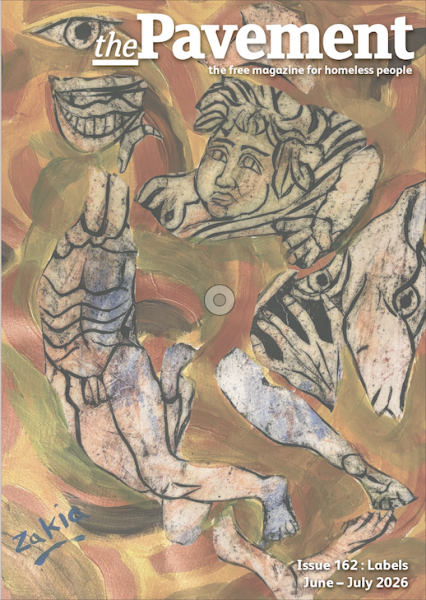
- Issue 162 : June – July 2026 : Labels
- Issue 161 : April – May 2026 : Working together
- Issue 160 : February – March 2026 : Progress
- Issue 159 : December 2025 – January 2026 : Resolutions
- Issue 158 : October – November 2025 : Making a difference
- Issue 157 : August – September 2025 : Caring about care
- Issue 156 : June – July 2025 : Resilience
- Issue 155 : April – May 2025 : Second Chances
- Issue 154 : February – March 2025 : Time
- Issue 153 : December 2024 – January 2025 : Solidarity
- Issue 152 : October – November 2024 : Change
- Issue 151 : August – September 2024 : Being Heard
- Issue 150 : June – July 2024 : Reflections
- Issue 149 : April – May 2024 : Compassion
- Issue 148 : February – March 2024 : The little things
- Issue 147 : December 2023 – January 2024 : Next steps
- Issue 146 : October 2023 – November 2023 : Kind acts
- Issue 145 : August 2023 – September 2023 : Mental health
- Issue 144 : June 2023 – July 2023 : Community
- Issue 143 : April 2023 - May 2023 : Hope springs
- Issue 142 : February 2023 - March 2023 : New Beginnings
- Issue 141 : December 2022 - January 2023 : Winter Homeless
- Issue 140 : October - November 2022 : Resolve
- Issue 139 : August - September 2022 : Creativity
- Issue 138 : June - July 2022 : Practical advice
- Issue 137 : April - May 2022 : Connection
- Issue 136 : February - March 2022 : RESPECT
- Issue 135 : Dec 2021 - Jan 2022 : OPPORTUNITY
- Issue 134 : September-October 2021 : Losses and gains
- Issue 133 : July-August 2021 : Know Your Rights
- Issue 132 : May-June 2021 : Access to Healthcare
- Issue 131 : Mar-Apr 2021 : SOLUTIONS
- Issue 130 : Jan-Feb 2021 : CHANGE
- Issue 129 : Nov-Dec 2020 : UNBELIEVABLE
- Issue 128 : Sep-Oct 2020 : COPING
- Issue 127 : Jul-Aug 2020 : HOPE
- Issue 126 : Health & Wellbeing in a Crisis
- Issue 125 : Mar-Apr 2020 : MOVING ON
- Issue 124 : Jan-Feb 2020 : STREET FOOD
- Issue 123 : Nov-Dec 2019 : HOSTELS
- Issue 122 : Sep 2019 : DEATH ON THE STREETS
- Issue 121 : July-Aug 2019 : INVISIBLE YOUTH
- Issue 120 : May-June 2019 : RECOVERY
- Issue 119 : Mar-Apr 2019 : WELLBEING
- Issue 118 : Jan-Feb 2019 : WORKING HOMELESS
- Issue 117 : Nov-Dec 2018 : HER STORY
- Issue 116 : Sept-Oct 2018 : TOILET TALK
- Issue 115 : July-Aug 2018 : HIDDEN HOMELESS
- Issue 114 : May-Jun 2018 : REBUILD YOUR LIFE
- Issue 113 : Mar–Apr 2018 : REMEMBRANCE
- Issue 112 : Jan-Feb 2018
- Issue 111 : Nov-Dec 2017
- Issue 110 : Sept-Oct 2017
- Issue 109 : July-Aug 2017
- Issue 108 : Apr-May 2017
- Issue 107 : Feb-Mar 2017
- Issue 106 : Dec 2016 - Jan 2017
- Issue 105 : Oct-Nov 2016
- Issue 104 : Aug-Sept 2016
- Issue 103 : May-June 2016
- Issue 102 : Mar-Apr 2016
- Issue 101 : Jan-Feb 2016
- Issue 100 : Nov-Dec 2015
- Issue 99 : Sept-Oct 2015
- Issue 98 : July-Aug 2015
- Issue 97 : May-Jun 2015
- Issue 96 : April 2015 [Mini Issue]
- Issue 95 : March 2015
- Issue 94 : February 2015
- Issue 93 : December 2014
- Issue 92 : November 2014
- Issue 91 : October 2014
- Issue 90 : September 2014
- Issue 89 : July 2014
- Issue 88 : June 2014
- Issue 87 : May 2014
- Issue 86 : April 2014
- Issue 85 : March 2014
- Issue 84 : February 2014
- Issue 83 : December 2013
- Issue 82 : November 2013
- Issue 81 : October 2013
- Issue 80 : September 2013
- Issue 79 : June 2013
- Issue 78 : 78
- Issue 77 : 77
- Issue 76 : 76
- Issue 75 : 75
- Issue 74 : 74
- Issue 73 : 73
- Issue 72 : 72
- Issue 71 : 71
- Issue 70 : 70
- Issue 69 : 69
- Issue 68 : 68
- Issue 67 : 67
- Issue 66 : 66
- Issue 65 : 65
- Issue 64 : 64
- Issue 63 : 63
- Issue 62 : 62
- Issue 61 : 61
- Issue 60 : 60
- Issue 59 : 59
- Issue 58 : 58
- Issue 57 : 57
- Issue 56 : 56
- Issue 56 : 56
- Issue 55 : 55
- Issue 54 : 54
- Issue 53 : 53
- Issue 52 : 52
- Issue 51 : 51
- Issue 50 : 50
- Issue 49 : 49
- Issue 48 : 48
- Issue 47 : 47
- Issue 46 : 46
- Issue 45 : 45
- Issue 44 : 44
- Issue 43 : 43
- Issue 42 : 42
- Issue 5 : 05
- Issue 4 : 04
- Issue 2 : 02
- Issue 1 : 01
- Issue 41 : 41
- Issue 40 : 40
- Issue 39 : 39
- Issue 38 : 38
- Issue 37 : 37
- Issue 36 : 36
- Issue 35 : 35
- Issue 34 : 34
- Issue 33 : 33
- Issue 10 : 10
- Issue 9 : 09
- Issue 6 : 06
- Issue 3 : 03
- Issue 32 : 32
- Issue 31 : 31
- Issue 30 : 30
- Issue 29 : 29
- Issue 11 : 11
- Issue 12 : 12
- Issue 13 : 13
- Issue 14 : 14
- Issue 15 : 15
- Issue 16 : 16
- Issue 17 : 17
- Issue 18 : 18
- Issue 19 : 19
- Issue 20 : 20
- Issue 21 : 21
- Issue 22 : 22
- Issue 23 : 23
- Issue 24 : 24
- Issue 25 : 25
- Issue 8 : 08
- Issue 7 : 07
- Issue 26 : 26
- Issue 27 : 27
- Issue 28 : 28
- Issue 1 : 01