
Established 2005 Registered Charity No. 1110656
Scottish Charity Register No. SC043760
DONATE
RECENT TWEETS
The government’s homeless minister resigned in disgrace in August this year. An update covering what happened, what the job involves and what comes next, by Shakir Razak
For those familiar with Britain's housing crisis, Rushanara Ali's brief tenure as homelessness minister was entirely predictable. The MP for Bethnal Green and Bow lasted barely a month before resigning in August 2025 after reports emerged that she had evicted tenants from her own property using a Section 21 notice, saying she would sell the property, then re-listing it for £700 more per month. The minister responsible for preventing homelessness was creating it through her landlord practices.
The subsequent criticism of her by housing charities, like Crisis, pointing out the hypocrisy of the homelessness minister causing homelessness had an inevitability to it, and was in line with why her popularity with her constituents matches the Prime Minister’s.
The role and its challenges
The homelessness minister should be one of the most impactful ministers in a functional, civilised government, but with a high turnover of careerist politicians, the only one who seems to have stood out since it was created is Heather Wheeler. Wheeler was in place during the Covid lockdowns and was able to show homelessness can be solved on a politician’s whim if desired.
The official title: Parliamentary Under-Secretary of State for Homelessness and Rough Sleeping, sits within the Ministry of Housing, Communities and Local Government, working under the Deputy Prime Minister (whoever that may be by the time this reaches you).
Its role is to discharge the duties laid out in the Homelessness Reduction Act 2017; and pursue the government’s own rough sleeping strategy which valiantly (foolhardily?) aims to stop the problem in 18 months. The minister must connect the minuscule budget for this purpose, about £260m, to the hundreds of local authorities and coordinate amongst them to stop homelessness. How does that look like it’s going from where you are?
Almost anyone not in a chauffeur-driven car has likely seen with their own eyes the struggles people are facing and so more likely becoming homeless. Even official statistics show a greater than 10% rise in it for groups like the young, and a similar increase in homelessness across the country in the last decade.
In fairness, even by those with the best of intentions it’s a challenging job – have you tried coordinating with an army of officials and third-sector people in a political economy dominated by frameworks that serve landlords more than the people living in their houses? Time is wasted collecting prior reports, data and meetings to justify a snail’s pace of potential progress. Meanwhile, what we already know from Norway’s Housing First and what we did from the very first lockdown, is that letting fellow humans be homeless (often the ill, disabled, vulnerable, survivors of violence and military veterans) is a choice of the political class. They could choose to reduce the harm in days.
At the same time, let’s not forget, these are the same class of politicians who are pleading with BlackRock and other foreign tax-engineering investors to change the model of housing, already the worst in the so-called developed world, by adding the rocket-fuel of build-to-let; already proven to raise everyone’s rent in the areas where they operate.
The path forward
Having a homelessness minister is absolutely a good thing for the basic need that housing is, and the cross-departmental cost of it when people are made homeless. It brings some visibility and a focal point for various stakeholders to engage and it has shown the power of a single person coordinating widely. However, it’s a job that, if sincere intent is genuinely there by the wider political class, needs to be backed up in platform and resources to match the task in hand in order to bring the necessary change.
Rising rents, housing shortages and economic pressures create homelessness faster than policy interventions can prevent it. The lack of a consistent minister in the role has meant a lack of continuity, which leads to a gap in experience, policy development and relationships.
Effective homelessness policy requires sustained engagement over years, not months.
The next occupant of the role will inherit substantial challenges: rising rough sleeping numbers, stretched local authority resources and public scepticism about government effectiveness on housing. The role needs genuine commitment – not careerist politicians treating it as a stepping stone while profiting from the very crisis they're meant to solve.
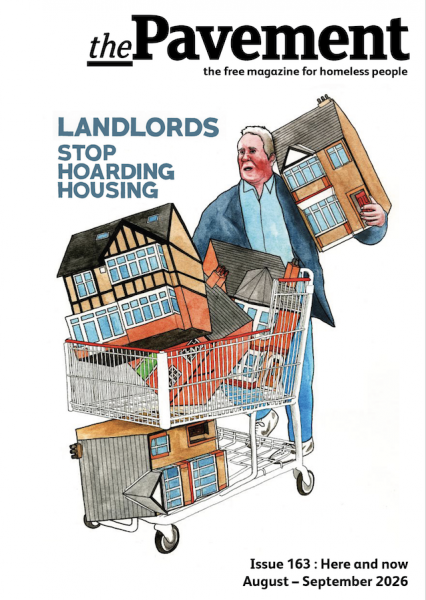
August – September 2026 : Here and now
CONTENTS
BACK ISSUES
- Issue 163 : August – September 2026 : Here and now
- Issue 162 : June – July 2026 : Labels
- Issue 161 : April – May 2026 : Working together
- Issue 160 : February – March 2026 : Progress
- Issue 159 : December 2025 – January 2026 : Resolutions
- Issue 158 : October – November 2025 : Making a difference
- Issue 157 : August – September 2025 : Caring about care
- Issue 156 : June – July 2025 : Resilience
- Issue 155 : April – May 2025 : Second Chances
- Issue 154 : February – March 2025 : Time
- Issue 153 : December 2024 – January 2025 : Solidarity
- Issue 152 : October – November 2024 : Change
- Issue 151 : August – September 2024 : Being Heard
- Issue 150 : June – July 2024 : Reflections
- Issue 149 : April – May 2024 : Compassion
- Issue 148 : February – March 2024 : The little things
- Issue 147 : December 2023 – January 2024 : Next steps
- Issue 146 : October 2023 – November 2023 : Kind acts
- Issue 145 : August 2023 – September 2023 : Mental health
- Issue 144 : June 2023 – July 2023 : Community
- Issue 143 : April 2023 - May 2023 : Hope springs
- Issue 142 : February 2023 - March 2023 : New Beginnings
- Issue 141 : December 2022 - January 2023 : Winter Homeless
- Issue 140 : October - November 2022 : Resolve
- Issue 139 : August - September 2022 : Creativity
- Issue 138 : June - July 2022 : Practical advice
- Issue 137 : April - May 2022 : Connection
- Issue 136 : February - March 2022 : RESPECT
- Issue 135 : Dec 2021 - Jan 2022 : OPPORTUNITY
- Issue 134 : September-October 2021 : Losses and gains
- Issue 133 : July-August 2021 : Know Your Rights
- Issue 132 : May-June 2021 : Access to Healthcare
- Issue 131 : Mar-Apr 2021 : SOLUTIONS
- Issue 130 : Jan-Feb 2021 : CHANGE
- Issue 129 : Nov-Dec 2020 : UNBELIEVABLE
- Issue 128 : Sep-Oct 2020 : COPING
- Issue 127 : Jul-Aug 2020 : HOPE
- Issue 126 : Health & Wellbeing in a Crisis
- Issue 125 : Mar-Apr 2020 : MOVING ON
- Issue 124 : Jan-Feb 2020 : STREET FOOD
- Issue 123 : Nov-Dec 2019 : HOSTELS
- Issue 122 : Sep 2019 : DEATH ON THE STREETS
- Issue 121 : July-Aug 2019 : INVISIBLE YOUTH
- Issue 120 : May-June 2019 : RECOVERY
- Issue 119 : Mar-Apr 2019 : WELLBEING
- Issue 118 : Jan-Feb 2019 : WORKING HOMELESS
- Issue 117 : Nov-Dec 2018 : HER STORY
- Issue 116 : Sept-Oct 2018 : TOILET TALK
- Issue 115 : July-Aug 2018 : HIDDEN HOMELESS
- Issue 114 : May-Jun 2018 : REBUILD YOUR LIFE
- Issue 113 : Mar–Apr 2018 : REMEMBRANCE
- Issue 112 : Jan-Feb 2018
- Issue 111 : Nov-Dec 2017
- Issue 110 : Sept-Oct 2017
- Issue 109 : July-Aug 2017
- Issue 108 : Apr-May 2017
- Issue 107 : Feb-Mar 2017
- Issue 106 : Dec 2016 - Jan 2017
- Issue 105 : Oct-Nov 2016
- Issue 104 : Aug-Sept 2016
- Issue 103 : May-June 2016
- Issue 102 : Mar-Apr 2016
- Issue 101 : Jan-Feb 2016
- Issue 100 : Nov-Dec 2015
- Issue 99 : Sept-Oct 2015
- Issue 98 : July-Aug 2015
- Issue 97 : May-Jun 2015
- Issue 96 : April 2015 [Mini Issue]
- Issue 95 : March 2015
- Issue 94 : February 2015
- Issue 93 : December 2014
- Issue 92 : November 2014
- Issue 91 : October 2014
- Issue 90 : September 2014
- Issue 89 : July 2014
- Issue 88 : June 2014
- Issue 87 : May 2014
- Issue 86 : April 2014
- Issue 85 : March 2014
- Issue 84 : February 2014
- Issue 83 : December 2013
- Issue 82 : November 2013
- Issue 81 : October 2013
- Issue 80 : September 2013
- Issue 79 : June 2013
- Issue 78 : 78
- Issue 77 : 77
- Issue 76 : 76
- Issue 75 : 75
- Issue 74 : 74
- Issue 73 : 73
- Issue 72 : 72
- Issue 71 : 71
- Issue 70 : 70
- Issue 69 : 69
- Issue 68 : 68
- Issue 67 : 67
- Issue 66 : 66
- Issue 65 : 65
- Issue 64 : 64
- Issue 63 : 63
- Issue 62 : 62
- Issue 61 : 61
- Issue 60 : 60
- Issue 59 : 59
- Issue 58 : 58
- Issue 57 : 57
- Issue 56 : 56
- Issue 56 : 56
- Issue 55 : 55
- Issue 54 : 54
- Issue 53 : 53
- Issue 52 : 52
- Issue 51 : 51
- Issue 50 : 50
- Issue 49 : 49
- Issue 48 : 48
- Issue 47 : 47
- Issue 46 : 46
- Issue 45 : 45
- Issue 44 : 44
- Issue 43 : 43
- Issue 42 : 42
- Issue 5 : 05
- Issue 4 : 04
- Issue 2 : 02
- Issue 1 : 01
- Issue 41 : 41
- Issue 40 : 40
- Issue 39 : 39
- Issue 38 : 38
- Issue 37 : 37
- Issue 36 : 36
- Issue 35 : 35
- Issue 34 : 34
- Issue 33 : 33
- Issue 10 : 10
- Issue 9 : 09
- Issue 6 : 06
- Issue 3 : 03
- Issue 32 : 32
- Issue 31 : 31
- Issue 30 : 30
- Issue 29 : 29
- Issue 11 : 11
- Issue 12 : 12
- Issue 13 : 13
- Issue 14 : 14
- Issue 15 : 15
- Issue 16 : 16
- Issue 17 : 17
- Issue 18 : 18
- Issue 19 : 19
- Issue 20 : 20
- Issue 21 : 21
- Issue 22 : 22
- Issue 23 : 23
- Issue 24 : 24
- Issue 25 : 25
- Issue 8 : 08
- Issue 7 : 07
- Issue 26 : 26
- Issue 27 : 27
- Issue 28 : 28
- Issue 1 : 01