
Established 2005 Registered Charity No. 1110656
Scottish Charity Register No. SC043760

DONATE
RECENT TWEETS
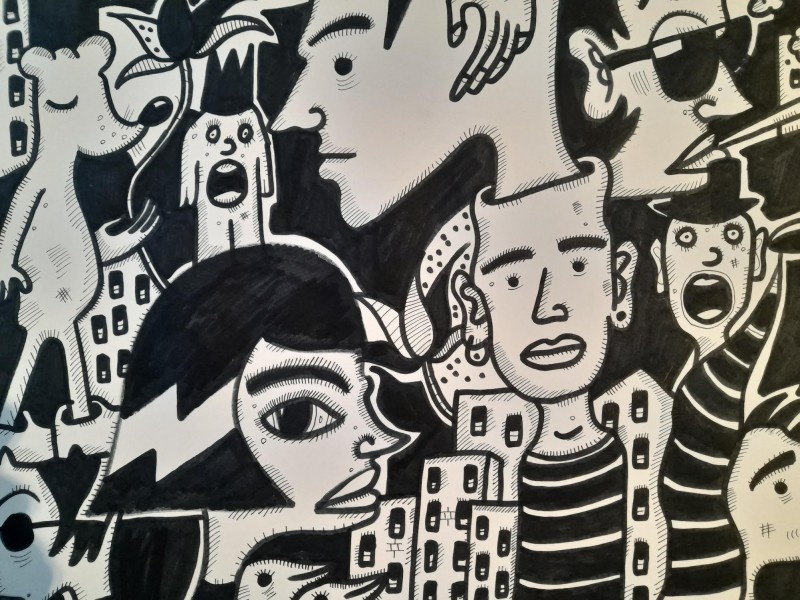 © Chris Bird
The final chapter of a story of power and order. Our protagonist, Elias, has had his behaviour influenced by a mysterious tower, but is slowly getting back control. By Joseph Hickman
Issue 160 and 161 published the first sections of The Watchtower, an atmospheric, mysterious story revolving around Elias and a tower.
The tower controls much of Elias’s behaviour in part I, before its influence begins to wane in part II.
You can read parts I and II on the website:
www.thepavement.org.uk/stories/2806
www.thepavement.org.uk/stories/2824
The Fissure Spreads
Elias returned to the tower, though “return” felt like a borrowed word. The walls recognised him, of course, but hesitated. Corridors paused mid-breath as if uncertain how to react. The ledger of his deviations quivered faintly in unseen spaces.
He carried no tools, no weapons, no manifesto. He carried only the knowledge that a fissure, once found, could be shared without ever being named. Small acts rippled outward: a gaze held too long, a question asked but not answered, a phrase allowed to drift into forbidden conclusion.
Others noticed. Some subtly, some as if sensing a tremor in the foundation of their own floors. Shadows shifted. Glances lingered. One child, smaller than Elias once was, dared to hum a tune the tower had never sanctioned. The bell-tone rang faintly, but no punishment followed. The corridor exhaled.
Elias discovered that the fissure was infectious. Not violently. Not loudly. But persistently. Each quiet defiance, each act of thinking without justification, bent the architecture slightly. Walls lost their rigidity. Ceilings hesitated. Floors breathed.
And yet the tower endured, as all bureaucracies do. It catalogued. It rearranged. It hummed. It waited for missteps. But now it waited in dialogue, not dominance. Its corridors were still watchful, but less certain of what was permitted.
Elias did not seek to destroy it. He had learned that destruction is easy, but perilous. He sought only to remind the tower – and himself – that it could be questioned, challenged and reshaped.
He walked among others now, silently encouraging fissures without announcing them. Some smiled faintly, sensing a possibility they had never named. Others pretended not to notice. Still, the air itself seemed to pulse with the tension of thought unmonitored.
There was no declaration. No revolution. No sudden collapse. Only a quiet, accumulating insistence: that freedom could exist even within walls, that choice could persist even under surveillance, that the weight of obedience could be lifted, however slightly.
Elias stood at a balcony once more. The sun dipped toward an indifferent horizon. The wind carried voices he could almost hear – whispers of courage, murmurs of defiance, the quiet laughter of minds beginning to reclaim themselves.
He realised that hope was not a promise. It was a fissure, small and fragile, that widened with care, attention and persistence.
It required no leaders, no permission, no architects. Only those willing to claim it.
And in that space, the tower – and the world beyond it – waited, imperfectly, for what might come next.
Elias smiled. Not because the path was clear, not because the walls had surrendered, but because for the first time, he could see the possibility of movement. The possibility of change. The possibility that, however small, resistance could endure.
The tower still hummed, still catalogued, still rearranged itself. But the hum no longer dictated the rhythm of his spine. The ledger no longer bound his choices. He was aware now of the weight of freedom and the responsibility it demanded. And he would bear it, step by step, corridor by corridor.
The fissure would spread. And in that slow, careful light, the tower was no longer invincible.
August – September 2026 : Here and now
CONTENTS
BACK ISSUES
- Issue 163 : August – September 2026 : Here and now
- Issue 162 : June – July 2026 : Labels
- Issue 161 : April – May 2026 : Working together
- Issue 160 : February – March 2026 : Progress
- Issue 159 : December 2025 – January 2026 : Resolutions
- Issue 158 : October – November 2025 : Making a difference
- Issue 157 : August – September 2025 : Caring about care
- Issue 156 : June – July 2025 : Resilience
- Issue 155 : April – May 2025 : Second Chances
- Issue 154 : February – March 2025 : Time
- Issue 153 : December 2024 – January 2025 : Solidarity
- Issue 152 : October – November 2024 : Change
- Issue 151 : August – September 2024 : Being Heard
- Issue 150 : June – July 2024 : Reflections
- Issue 149 : April – May 2024 : Compassion
- Issue 148 : February – March 2024 : The little things
- Issue 147 : December 2023 – January 2024 : Next steps
- Issue 146 : October 2023 – November 2023 : Kind acts
- Issue 145 : August 2023 – September 2023 : Mental health
- Issue 144 : June 2023 – July 2023 : Community
- Issue 143 : April 2023 - May 2023 : Hope springs
- Issue 142 : February 2023 - March 2023 : New Beginnings
- Issue 141 : December 2022 - January 2023 : Winter Homeless
- Issue 140 : October - November 2022 : Resolve
- Issue 139 : August - September 2022 : Creativity
- Issue 138 : June - July 2022 : Practical advice
- Issue 137 : April - May 2022 : Connection
- Issue 136 : February - March 2022 : RESPECT
- Issue 135 : Dec 2021 - Jan 2022 : OPPORTUNITY
- Issue 134 : September-October 2021 : Losses and gains
- Issue 133 : July-August 2021 : Know Your Rights
- Issue 132 : May-June 2021 : Access to Healthcare
- Issue 131 : Mar-Apr 2021 : SOLUTIONS
- Issue 130 : Jan-Feb 2021 : CHANGE
- Issue 129 : Nov-Dec 2020 : UNBELIEVABLE
- Issue 128 : Sep-Oct 2020 : COPING
- Issue 127 : Jul-Aug 2020 : HOPE
- Issue 126 : Health & Wellbeing in a Crisis
- Issue 125 : Mar-Apr 2020 : MOVING ON
- Issue 124 : Jan-Feb 2020 : STREET FOOD
- Issue 123 : Nov-Dec 2019 : HOSTELS
- Issue 122 : Sep 2019 : DEATH ON THE STREETS
- Issue 121 : July-Aug 2019 : INVISIBLE YOUTH
- Issue 120 : May-June 2019 : RECOVERY
- Issue 119 : Mar-Apr 2019 : WELLBEING
- Issue 118 : Jan-Feb 2019 : WORKING HOMELESS
- Issue 117 : Nov-Dec 2018 : HER STORY
- Issue 116 : Sept-Oct 2018 : TOILET TALK
- Issue 115 : July-Aug 2018 : HIDDEN HOMELESS
- Issue 114 : May-Jun 2018 : REBUILD YOUR LIFE
- Issue 113 : Mar–Apr 2018 : REMEMBRANCE
- Issue 112 : Jan-Feb 2018
- Issue 111 : Nov-Dec 2017
- Issue 110 : Sept-Oct 2017
- Issue 109 : July-Aug 2017
- Issue 108 : Apr-May 2017
- Issue 107 : Feb-Mar 2017
- Issue 106 : Dec 2016 - Jan 2017
- Issue 105 : Oct-Nov 2016
- Issue 104 : Aug-Sept 2016
- Issue 103 : May-June 2016
- Issue 102 : Mar-Apr 2016
- Issue 101 : Jan-Feb 2016
- Issue 100 : Nov-Dec 2015
- Issue 99 : Sept-Oct 2015
- Issue 98 : July-Aug 2015
- Issue 97 : May-Jun 2015
- Issue 96 : April 2015 [Mini Issue]
- Issue 95 : March 2015
- Issue 94 : February 2015
- Issue 93 : December 2014
- Issue 92 : November 2014
- Issue 91 : October 2014
- Issue 90 : September 2014
- Issue 89 : July 2014
- Issue 88 : June 2014
- Issue 87 : May 2014
- Issue 86 : April 2014
- Issue 85 : March 2014
- Issue 84 : February 2014
- Issue 83 : December 2013
- Issue 82 : November 2013
- Issue 81 : October 2013
- Issue 80 : September 2013
- Issue 79 : June 2013
- Issue 78 : 78
- Issue 77 : 77
- Issue 76 : 76
- Issue 75 : 75
- Issue 74 : 74
- Issue 73 : 73
- Issue 72 : 72
- Issue 71 : 71
- Issue 70 : 70
- Issue 69 : 69
- Issue 68 : 68
- Issue 67 : 67
- Issue 66 : 66
- Issue 65 : 65
- Issue 64 : 64
- Issue 63 : 63
- Issue 62 : 62
- Issue 61 : 61
- Issue 60 : 60
- Issue 59 : 59
- Issue 58 : 58
- Issue 57 : 57
- Issue 56 : 56
- Issue 56 : 56
- Issue 55 : 55
- Issue 54 : 54
- Issue 53 : 53
- Issue 52 : 52
- Issue 51 : 51
- Issue 50 : 50
- Issue 49 : 49
- Issue 48 : 48
- Issue 47 : 47
- Issue 46 : 46
- Issue 45 : 45
- Issue 44 : 44
- Issue 43 : 43
- Issue 42 : 42
- Issue 5 : 05
- Issue 4 : 04
- Issue 2 : 02
- Issue 1 : 01
- Issue 41 : 41
- Issue 40 : 40
- Issue 39 : 39
- Issue 38 : 38
- Issue 37 : 37
- Issue 36 : 36
- Issue 35 : 35
- Issue 34 : 34
- Issue 33 : 33
- Issue 10 : 10
- Issue 9 : 09
- Issue 6 : 06
- Issue 3 : 03
- Issue 32 : 32
- Issue 31 : 31
- Issue 30 : 30
- Issue 29 : 29
- Issue 11 : 11
- Issue 12 : 12
- Issue 13 : 13
- Issue 14 : 14
- Issue 15 : 15
- Issue 16 : 16
- Issue 17 : 17
- Issue 18 : 18
- Issue 19 : 19
- Issue 20 : 20
- Issue 21 : 21
- Issue 22 : 22
- Issue 23 : 23
- Issue 24 : 24
- Issue 25 : 25
- Issue 8 : 08
- Issue 7 : 07
- Issue 26 : 26
- Issue 27 : 27
- Issue 28 : 28
- Issue 1 : 01