
Established 2005 Registered Charity No. 1110656
Scottish Charity Register No. SC043760
DONATE
RECENT TWEETS
Behind the apparent success of Greece’s economic recovery, rising costs and a lack of social housing are pushing many into the shadows of the street. By Kostis Kotsonis
Greece is finally emerging from the turmoil of the 2008 economic crisis. However, GDP growth cannot mask increasing inflation. Numbers published by the Ministry of Development show food prices, over the last five years, have increased about 39% and housing costs have risen by 31%. As a result, the purchasing power of Greeks remains the second lowest in the European Union, according to Eurostat.
These facts, combined with a lack of social housing policy in the country, have made housing costs impossible for many people. Some of them lose their homes and find themselves on the street. Yet no one can say how many homeless people there are in the country, as there is not an organised state mechanism for documenting them.
The only organised effort by the Greek state to record homeless people took place in May 2018, through a pilot study. The study was conducted in seven urban districts and recorded a total of 1,645 homeless people – widely acknowledged to be an underestimate.
To learn more about homelessness in Greece, I contacted Klimaka, a non-profit organisation providing valuable support services to homeless people, such as soup kitchens, shelters, street outreach, psychosocial support. According to Eleftheria Koumalatsou, scientific coordinator of the Dipylon Day Center for Homeless People managed by Klimaka, service users are mainly Greek men over the age of 45, though there are also people from other countries.
Katerina (not their real name), who used to work at the homeless shelter run by the local city council in Thessaloniki, says the guests shared a common characteristic: they ended up homeless after an unfortunate “turning point”. Some were substance users, some had mental health issues, some lost family networks, or simply lost their jobs.
Maria (not their real name) became homeless due to some “very serious family problems” and has been living on the streets of Athens for about four years.
In winter, she sleeps at the airport or in indoor car parks; in summer, she stays in parks. She claims that many people who sleep outside end up in a vicious cycle of crime, including drug dealing and sex work. The city council of Athens operates a homeless shelter, but she prefers to sleep outside because the conditions there are not good. The most unbearable thing: the bedbugs.
There were also bedbugs at the Thessaloniki shelter, Katerina claims. Furthermore, she remembers that the facilities were old and often broke down: “Some days, only two showers worked for 30 people, and people would fight over who would bathe first.”
Refugees and migrants also face an increased risk of homelessness – alongside prejudice – in Greece. Katerina reports that some Greek residents at the shelter expressed racist views about their refugee or migrant roommates. She adds that many employees had no training in managing multicultural groups and held stereotypical views about these people too.
Shedia is the only street paper in Greece. Spyros Zonakis, a journalist for the paper, has encountered several stories of hidden homelessness, many of them in the idyllic landscapes of the Greek islands.
One remarkable case he recorded was in Santorini, where teachers ended up in tents or on sunbeds because landlords evicted them to rent the houses to tourists. In Mykonos, some newly appointed teachers were put up by colleagues, as it was impossible to find a decent home on a salary of just €770. On another Cycladic island, workers at a luxury hotel were forced to live in the pool’s machinery room.
“We come across cases of hidden homelessness more and more often in urban areas, mainly among women,” adds Koumalatsou.
All this uncertainty obviously has an impact on the psychology of homeless people.
Maria describes her mood as an emotional roller coaster. She might find a job for a short period and get back on her feet, but when her contract ends, she is back on the street. “Some friends of mine have simply accepted that they will live on the street forever,” she says. She also admits that she has become more solitary and finds it harder to forgive people. “After all, whatever bad happened to me, it was caused by people,” she comments.
Katerina observes that people staying at the Thessaloniki shelter often end up in a state of institutionalisation and don’t look for a job or a place to rent. “They are not provided with any specialised care or guidance to help them find work. The staff treat them in a purely procedural way,” she adds. “Most of the time our guests are not just deprived of these things. They are also deprived of something much more basic: hearing a kind word from someone.”
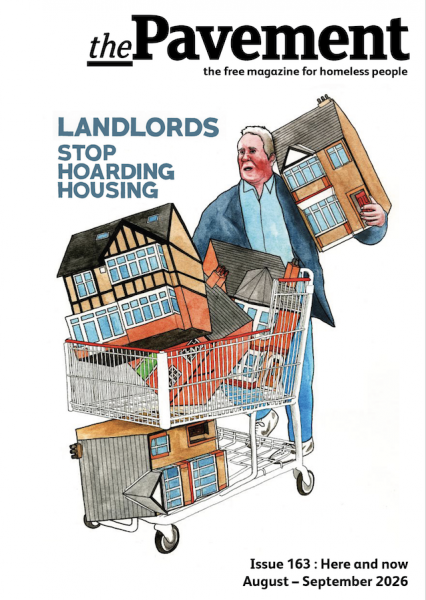
August – September 2026 : Here and now
CONTENTS
BACK ISSUES
- Issue 163 : August – September 2026 : Here and now
- Issue 162 : June – July 2026 : Labels
- Issue 161 : April – May 2026 : Working together
- Issue 160 : February – March 2026 : Progress
- Issue 159 : December 2025 – January 2026 : Resolutions
- Issue 158 : October – November 2025 : Making a difference
- Issue 157 : August – September 2025 : Caring about care
- Issue 156 : June – July 2025 : Resilience
- Issue 155 : April – May 2025 : Second Chances
- Issue 154 : February – March 2025 : Time
- Issue 153 : December 2024 – January 2025 : Solidarity
- Issue 152 : October – November 2024 : Change
- Issue 151 : August – September 2024 : Being Heard
- Issue 150 : June – July 2024 : Reflections
- Issue 149 : April – May 2024 : Compassion
- Issue 148 : February – March 2024 : The little things
- Issue 147 : December 2023 – January 2024 : Next steps
- Issue 146 : October 2023 – November 2023 : Kind acts
- Issue 145 : August 2023 – September 2023 : Mental health
- Issue 144 : June 2023 – July 2023 : Community
- Issue 143 : April 2023 - May 2023 : Hope springs
- Issue 142 : February 2023 - March 2023 : New Beginnings
- Issue 141 : December 2022 - January 2023 : Winter Homeless
- Issue 140 : October - November 2022 : Resolve
- Issue 139 : August - September 2022 : Creativity
- Issue 138 : June - July 2022 : Practical advice
- Issue 137 : April - May 2022 : Connection
- Issue 136 : February - March 2022 : RESPECT
- Issue 135 : Dec 2021 - Jan 2022 : OPPORTUNITY
- Issue 134 : September-October 2021 : Losses and gains
- Issue 133 : July-August 2021 : Know Your Rights
- Issue 132 : May-June 2021 : Access to Healthcare
- Issue 131 : Mar-Apr 2021 : SOLUTIONS
- Issue 130 : Jan-Feb 2021 : CHANGE
- Issue 129 : Nov-Dec 2020 : UNBELIEVABLE
- Issue 128 : Sep-Oct 2020 : COPING
- Issue 127 : Jul-Aug 2020 : HOPE
- Issue 126 : Health & Wellbeing in a Crisis
- Issue 125 : Mar-Apr 2020 : MOVING ON
- Issue 124 : Jan-Feb 2020 : STREET FOOD
- Issue 123 : Nov-Dec 2019 : HOSTELS
- Issue 122 : Sep 2019 : DEATH ON THE STREETS
- Issue 121 : July-Aug 2019 : INVISIBLE YOUTH
- Issue 120 : May-June 2019 : RECOVERY
- Issue 119 : Mar-Apr 2019 : WELLBEING
- Issue 118 : Jan-Feb 2019 : WORKING HOMELESS
- Issue 117 : Nov-Dec 2018 : HER STORY
- Issue 116 : Sept-Oct 2018 : TOILET TALK
- Issue 115 : July-Aug 2018 : HIDDEN HOMELESS
- Issue 114 : May-Jun 2018 : REBUILD YOUR LIFE
- Issue 113 : Mar–Apr 2018 : REMEMBRANCE
- Issue 112 : Jan-Feb 2018
- Issue 111 : Nov-Dec 2017
- Issue 110 : Sept-Oct 2017
- Issue 109 : July-Aug 2017
- Issue 108 : Apr-May 2017
- Issue 107 : Feb-Mar 2017
- Issue 106 : Dec 2016 - Jan 2017
- Issue 105 : Oct-Nov 2016
- Issue 104 : Aug-Sept 2016
- Issue 103 : May-June 2016
- Issue 102 : Mar-Apr 2016
- Issue 101 : Jan-Feb 2016
- Issue 100 : Nov-Dec 2015
- Issue 99 : Sept-Oct 2015
- Issue 98 : July-Aug 2015
- Issue 97 : May-Jun 2015
- Issue 96 : April 2015 [Mini Issue]
- Issue 95 : March 2015
- Issue 94 : February 2015
- Issue 93 : December 2014
- Issue 92 : November 2014
- Issue 91 : October 2014
- Issue 90 : September 2014
- Issue 89 : July 2014
- Issue 88 : June 2014
- Issue 87 : May 2014
- Issue 86 : April 2014
- Issue 85 : March 2014
- Issue 84 : February 2014
- Issue 83 : December 2013
- Issue 82 : November 2013
- Issue 81 : October 2013
- Issue 80 : September 2013
- Issue 79 : June 2013
- Issue 78 : 78
- Issue 77 : 77
- Issue 76 : 76
- Issue 75 : 75
- Issue 74 : 74
- Issue 73 : 73
- Issue 72 : 72
- Issue 71 : 71
- Issue 70 : 70
- Issue 69 : 69
- Issue 68 : 68
- Issue 67 : 67
- Issue 66 : 66
- Issue 65 : 65
- Issue 64 : 64
- Issue 63 : 63
- Issue 62 : 62
- Issue 61 : 61
- Issue 60 : 60
- Issue 59 : 59
- Issue 58 : 58
- Issue 57 : 57
- Issue 56 : 56
- Issue 56 : 56
- Issue 55 : 55
- Issue 54 : 54
- Issue 53 : 53
- Issue 52 : 52
- Issue 51 : 51
- Issue 50 : 50
- Issue 49 : 49
- Issue 48 : 48
- Issue 47 : 47
- Issue 46 : 46
- Issue 45 : 45
- Issue 44 : 44
- Issue 43 : 43
- Issue 42 : 42
- Issue 5 : 05
- Issue 4 : 04
- Issue 2 : 02
- Issue 1 : 01
- Issue 41 : 41
- Issue 40 : 40
- Issue 39 : 39
- Issue 38 : 38
- Issue 37 : 37
- Issue 36 : 36
- Issue 35 : 35
- Issue 34 : 34
- Issue 33 : 33
- Issue 10 : 10
- Issue 9 : 09
- Issue 6 : 06
- Issue 3 : 03
- Issue 32 : 32
- Issue 31 : 31
- Issue 30 : 30
- Issue 29 : 29
- Issue 11 : 11
- Issue 12 : 12
- Issue 13 : 13
- Issue 14 : 14
- Issue 15 : 15
- Issue 16 : 16
- Issue 17 : 17
- Issue 18 : 18
- Issue 19 : 19
- Issue 20 : 20
- Issue 21 : 21
- Issue 22 : 22
- Issue 23 : 23
- Issue 24 : 24
- Issue 25 : 25
- Issue 8 : 08
- Issue 7 : 07
- Issue 26 : 26
- Issue 27 : 27
- Issue 28 : 28
- Issue 1 : 01