
Established 2005 Registered Charity No. 1110656
Scottish Charity Register No. SC043760
DONATE
RECENT TWEETS
A day in the life of an outreach worker supporting homeless people’s access to mental health services. By Richard Wink
In a nutshell
- Richard works with the People Sleeping Rough Team in Great Yarmouth, Norfolk. The team does morning outreach connecting people sleeping rough with health services, especially ones providing mental health support.
- The team are proactive on outreach, aiming to reach as many under-served people within the community as possible. This is achieved through meeting people where they are, building trust, motivational interviewing and crisis intervention where necessary.
Under overcast skies and the persistent squawk of hungry seagulls, I walk along the promenade on Great Yarmouth’s seafront. It’s part of our team’s daily outreach work. My jaunty stride hits the pavement hard. At certain points I will stop and look out towards the sea. At the beginning of my walk, just past the Venetian Gardens near the promenade, I will occasionally spot a tent across the sand dunes. To check to see if I can see what I think I’ve seen, I’ll get out a pocket telescope that I picked up on a whim online.
Squinting through the lens, I’ve not seen this tent before, so I walk across the dunes. Sand fills my trainers. When I get closer, I can see that the tent door is open, but no one is inside. All I can see is a scrunched-up grey hoodie, a sleeping bag and a couple of cider bottles. The job is like this, chasing shadows, often missing meeting with a person. I tuck a leaflet with contact details for our team under the tent, it flaps a bit in the strong cross breeze.
I get out my phone, take a picture and mark the location. I’ll circulate this information to other teams who support homeless people in the local area to hopefully find out if anyone knows who is sleeping here, and then maybe visit again later in the week. Part of the job is sharing information, making sure this person is known and someone is checking they are ok.
I work for the People Sleeping Rough Team based at Northgate Hospital. Our role is to support homeless people, and those with a dual diagnosis presentation, to access mental health support. The team is me, a psychological therapist, two mental health nurses and a peer support worker.
We attempt to work using Levy’s pre-treatment model. The outreach work that the team does proactively engages the service user. We are happy to meet with people where they are, they are, including visiting the camping site of someone who is street homeless, seeing them at a hostel, or meeting somewhere in the community such as the local library.
We endeavour to work towards building a therapeutic relationship, initially through rapport building, trying to develop an understanding of our service user’s frame of reference. We aspire to build trust as we often work with people who are distrustful of services or organisations like the NHS.
When the relationship is established, we use motivational interviewing techniques to set goals and help encourage positive change. This work is sometimes shared with professionals in the third sector such as the local addiction support service Change Grow Live. We also promote safety by applying crisis intervention and harm reduction strategies in the hope of providing the opportunity for positive change.
Later in the afternoon I meet with a service user for a therapy session back at Northgate Hospital. I reflect with this person how far they’ve come over the last year since we first met. This person was sleeping rough in the same dunes where I was earlier in the day. We made initial contact, worked with them to find temporary accommodation over winter at a B&B, and then, with added support from the local council, they were able to rent a room in the town centre. It sounds so simple when we gloss over these events, but there were challenges, many missed appointments, lapses with substance misuse, issues with the police. Change is not a linear process, but it is now occurring for this person.
As a team we just try to be consistent, we attempt to put a framework around the chaos and help people to make positive changes in their lives. There are battles to fight, and bumps along the way, but I think we are building a reputation as a group of people who care in our community, and that improves trust and positive engagement.
- Richard Wink is a psychological therapist for the Rough Sleeping Team in Great Yarmouth, Norfolk.
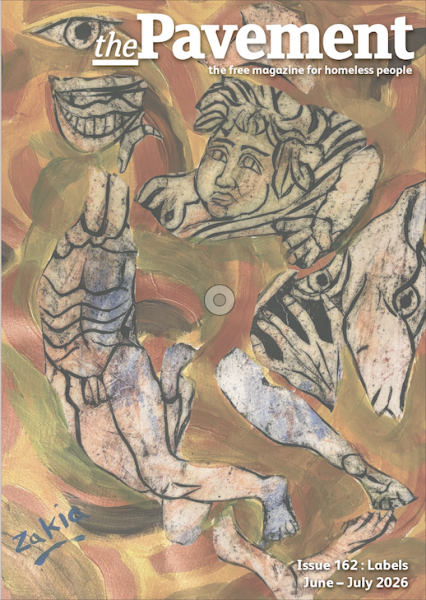
June – July 2026 : Labels
CONTENTS
BACK ISSUES
- Issue 162 : June – July 2026 : Labels
- Issue 161 : April – May 2026 : Working together
- Issue 160 : February – March 2026 : Progress
- Issue 159 : December 2025 – January 2026 : Resolutions
- Issue 158 : October – November 2025 : Making a difference
- Issue 157 : August – September 2025 : Caring about care
- Issue 156 : June – July 2025 : Resilience
- Issue 155 : April – May 2025 : Second Chances
- Issue 154 : February – March 2025 : Time
- Issue 153 : December 2024 – January 2025 : Solidarity
- Issue 152 : October – November 2024 : Change
- Issue 151 : August – September 2024 : Being Heard
- Issue 150 : June – July 2024 : Reflections
- Issue 149 : April – May 2024 : Compassion
- Issue 148 : February – March 2024 : The little things
- Issue 147 : December 2023 – January 2024 : Next steps
- Issue 146 : October 2023 – November 2023 : Kind acts
- Issue 145 : August 2023 – September 2023 : Mental health
- Issue 144 : June 2023 – July 2023 : Community
- Issue 143 : April 2023 - May 2023 : Hope springs
- Issue 142 : February 2023 - March 2023 : New Beginnings
- Issue 141 : December 2022 - January 2023 : Winter Homeless
- Issue 140 : October - November 2022 : Resolve
- Issue 139 : August - September 2022 : Creativity
- Issue 138 : June - July 2022 : Practical advice
- Issue 137 : April - May 2022 : Connection
- Issue 136 : February - March 2022 : RESPECT
- Issue 135 : Dec 2021 - Jan 2022 : OPPORTUNITY
- Issue 134 : September-October 2021 : Losses and gains
- Issue 133 : July-August 2021 : Know Your Rights
- Issue 132 : May-June 2021 : Access to Healthcare
- Issue 131 : Mar-Apr 2021 : SOLUTIONS
- Issue 130 : Jan-Feb 2021 : CHANGE
- Issue 129 : Nov-Dec 2020 : UNBELIEVABLE
- Issue 128 : Sep-Oct 2020 : COPING
- Issue 127 : Jul-Aug 2020 : HOPE
- Issue 126 : Health & Wellbeing in a Crisis
- Issue 125 : Mar-Apr 2020 : MOVING ON
- Issue 124 : Jan-Feb 2020 : STREET FOOD
- Issue 123 : Nov-Dec 2019 : HOSTELS
- Issue 122 : Sep 2019 : DEATH ON THE STREETS
- Issue 121 : July-Aug 2019 : INVISIBLE YOUTH
- Issue 120 : May-June 2019 : RECOVERY
- Issue 119 : Mar-Apr 2019 : WELLBEING
- Issue 118 : Jan-Feb 2019 : WORKING HOMELESS
- Issue 117 : Nov-Dec 2018 : HER STORY
- Issue 116 : Sept-Oct 2018 : TOILET TALK
- Issue 115 : July-Aug 2018 : HIDDEN HOMELESS
- Issue 114 : May-Jun 2018 : REBUILD YOUR LIFE
- Issue 113 : Mar–Apr 2018 : REMEMBRANCE
- Issue 112 : Jan-Feb 2018
- Issue 111 : Nov-Dec 2017
- Issue 110 : Sept-Oct 2017
- Issue 109 : July-Aug 2017
- Issue 108 : Apr-May 2017
- Issue 107 : Feb-Mar 2017
- Issue 106 : Dec 2016 - Jan 2017
- Issue 105 : Oct-Nov 2016
- Issue 104 : Aug-Sept 2016
- Issue 103 : May-June 2016
- Issue 102 : Mar-Apr 2016
- Issue 101 : Jan-Feb 2016
- Issue 100 : Nov-Dec 2015
- Issue 99 : Sept-Oct 2015
- Issue 98 : July-Aug 2015
- Issue 97 : May-Jun 2015
- Issue 96 : April 2015 [Mini Issue]
- Issue 95 : March 2015
- Issue 94 : February 2015
- Issue 93 : December 2014
- Issue 92 : November 2014
- Issue 91 : October 2014
- Issue 90 : September 2014
- Issue 89 : July 2014
- Issue 88 : June 2014
- Issue 87 : May 2014
- Issue 86 : April 2014
- Issue 85 : March 2014
- Issue 84 : February 2014
- Issue 83 : December 2013
- Issue 82 : November 2013
- Issue 81 : October 2013
- Issue 80 : September 2013
- Issue 79 : June 2013
- Issue 78 : 78
- Issue 77 : 77
- Issue 76 : 76
- Issue 75 : 75
- Issue 74 : 74
- Issue 73 : 73
- Issue 72 : 72
- Issue 71 : 71
- Issue 70 : 70
- Issue 69 : 69
- Issue 68 : 68
- Issue 67 : 67
- Issue 66 : 66
- Issue 65 : 65
- Issue 64 : 64
- Issue 63 : 63
- Issue 62 : 62
- Issue 61 : 61
- Issue 60 : 60
- Issue 59 : 59
- Issue 58 : 58
- Issue 57 : 57
- Issue 56 : 56
- Issue 56 : 56
- Issue 55 : 55
- Issue 54 : 54
- Issue 53 : 53
- Issue 52 : 52
- Issue 51 : 51
- Issue 50 : 50
- Issue 49 : 49
- Issue 48 : 48
- Issue 47 : 47
- Issue 46 : 46
- Issue 45 : 45
- Issue 44 : 44
- Issue 43 : 43
- Issue 42 : 42
- Issue 5 : 05
- Issue 4 : 04
- Issue 2 : 02
- Issue 1 : 01
- Issue 41 : 41
- Issue 40 : 40
- Issue 39 : 39
- Issue 38 : 38
- Issue 37 : 37
- Issue 36 : 36
- Issue 35 : 35
- Issue 34 : 34
- Issue 33 : 33
- Issue 10 : 10
- Issue 9 : 09
- Issue 6 : 06
- Issue 3 : 03
- Issue 32 : 32
- Issue 31 : 31
- Issue 30 : 30
- Issue 29 : 29
- Issue 11 : 11
- Issue 12 : 12
- Issue 13 : 13
- Issue 14 : 14
- Issue 15 : 15
- Issue 16 : 16
- Issue 17 : 17
- Issue 18 : 18
- Issue 19 : 19
- Issue 20 : 20
- Issue 21 : 21
- Issue 22 : 22
- Issue 23 : 23
- Issue 24 : 24
- Issue 25 : 25
- Issue 8 : 08
- Issue 7 : 07
- Issue 26 : 26
- Issue 27 : 27
- Issue 28 : 28
- Issue 1 : 01