
Established 2005 Registered Charity No. 1110656
Scottish Charity Register No. SC043760
DONATE
RECENT TWEETS
The government and press are misrepresenting the law and scapegoating vulnerable communities. We must fight back, write members of The Outside Project
For over eight years, The Outside Project has been providing crisis housing services for LGBTIQA+ people in London who are homeless and/or fleeing domestic abuse – people who are predominantly Trans+ (people who are transgender, non-binary, agender, genderfluid or elsewhere on the gender spectrum). This winter, we ran the UK’s first Trans+ winter night shelter in Hackney due to huge demand. The devastating abuse our community faces – fueled by LGBTIQA+ phobia and hatred from press and politicians – is only compounded by systemic failures to protect us. In recent years, this failure has transformed into serious harm: over the past five years, anti-Trans hate crimes have increased by 186%.
We are deeply concerned by April’s Supreme Court ruling on the Equality Act and subsequent statements made by the Equalities Minister and the Prime Minister. The ruling unconscionably permits the exclusion of Trans people from single-sex services under certain conditions. It does not require exclusion, however. Any service choosing to exclude Trans+ people must demonstrate that it is doing so as a “proportionate means of achieving a legitimate aim”. That means there must be a real, lawful and justifiable objective for a service to be Trans+ exclusive relating to a specific risk; that it is the least discriminatory and harmful option, and – crucially – that the benefit to others must outweigh the negative impact on the person excluded.
Press coverage and politicians’ statements are intentionally misleading the public on this detail, and on the legality of Trans+ exclusion overall. Statements that trans women should not use women’s toilets, for example, are extremely alarming and absolutely not supported by law. While we are reassured by Refuge’s public statement committing to continue supporting Trans+ people in their services, and by our continued protections under the Equality Act, widespread explicit support for Trans+ rights is urgently needed.
Scapegoats
There has been no mention of trans men, non-binary, or intersex people in statements following the ruling – and no guidance at all for services that support women. The manufactured outrage towards trans women specifically is just one of many ongoing strategic moral panics targeting marginalised groups, including Muslims, migrants and benefit claimants. All have been demonised in order to distract us from, or blame them for, harms caused by austerity and an economic system that oppresses us all.
In reality, there is no credible evidence that trans women pose a threat to cisgender women (people whose gender matches the gender they were assigned at birth) in single-sex services. To the contrary, records and data show that trans women experience disproportionately high rates of violence, abuse and sexual assault, particularly in institutional or gender-inappropriate settings. It shows that Trans+ migrants are subjected to exploitation and oppression in the form of the erasure and disbelief in the asylum system and barriers in accessing healthcare, housing and employment. The UN, Stonewall, Galop and the TransActual UK Trans Report further document harm, retraumatisation and disengagement from services when Trans+ people are misgendered or excluded. Frontline services consistently report that Trans+ inclusion does not compromise safety – but that exclusion does.
We are deeply concerned about the implications for trans women living in domestic abuse and homelessness services and those who will understandably fear approaching services at all. At The Outside Project, we categorically oppose referring trans women to men’s housing services, knowing that would endanger some of the most marginalised women in our community, including trans women seeking asylum, and damage trust built through our work. As a by-and-for, survivor-led organisation, we reaffirm our commitments to: provide trans-inclusive services and advocate for and with Trans+, non-binary, intersex and gender-diverse people across all our work and partnerships; challenge rhetoric and policies that endanger or isolate Trans+ people; and promote community-led, trauma-informed approaches.
We are urgently seeking clarity from local authorities on the protections they have in place for Trans+ individuals residing in single-sex services, and the provision they will make to ensure Trans+ people facing homelessness or fleeing domestic abuse are supported safely and appropriately. We are also publicly calling on local authorities to publicly affirm the safety and dignity of Trans+ service users and uphold protections for Trans+ people across their services, including by collaborating with LGBTIQA+ and Trans-led organisations and prioritising support for black, brown and migrant trans women.
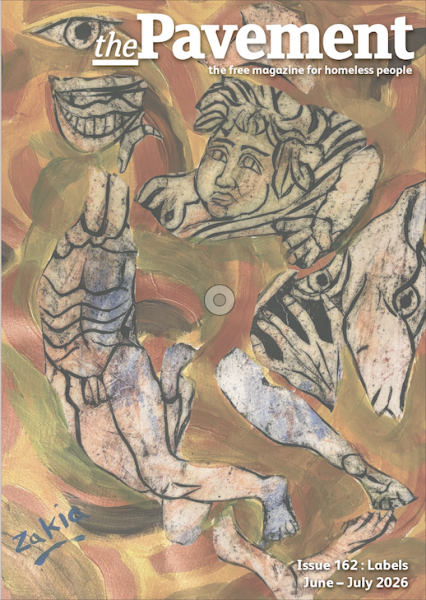
June – July 2026 : Labels
CONTENTS
BACK ISSUES
- Issue 162 : June – July 2026 : Labels
- Issue 161 : April – May 2026 : Working together
- Issue 160 : February – March 2026 : Progress
- Issue 159 : December 2025 – January 2026 : Resolutions
- Issue 158 : October – November 2025 : Making a difference
- Issue 157 : August – September 2025 : Caring about care
- Issue 156 : June – July 2025 : Resilience
- Issue 155 : April – May 2025 : Second Chances
- Issue 154 : February – March 2025 : Time
- Issue 153 : December 2024 – January 2025 : Solidarity
- Issue 152 : October – November 2024 : Change
- Issue 151 : August – September 2024 : Being Heard
- Issue 150 : June – July 2024 : Reflections
- Issue 149 : April – May 2024 : Compassion
- Issue 148 : February – March 2024 : The little things
- Issue 147 : December 2023 – January 2024 : Next steps
- Issue 146 : October 2023 – November 2023 : Kind acts
- Issue 145 : August 2023 – September 2023 : Mental health
- Issue 144 : June 2023 – July 2023 : Community
- Issue 143 : April 2023 - May 2023 : Hope springs
- Issue 142 : February 2023 - March 2023 : New Beginnings
- Issue 141 : December 2022 - January 2023 : Winter Homeless
- Issue 140 : October - November 2022 : Resolve
- Issue 139 : August - September 2022 : Creativity
- Issue 138 : June - July 2022 : Practical advice
- Issue 137 : April - May 2022 : Connection
- Issue 136 : February - March 2022 : RESPECT
- Issue 135 : Dec 2021 - Jan 2022 : OPPORTUNITY
- Issue 134 : September-October 2021 : Losses and gains
- Issue 133 : July-August 2021 : Know Your Rights
- Issue 132 : May-June 2021 : Access to Healthcare
- Issue 131 : Mar-Apr 2021 : SOLUTIONS
- Issue 130 : Jan-Feb 2021 : CHANGE
- Issue 129 : Nov-Dec 2020 : UNBELIEVABLE
- Issue 128 : Sep-Oct 2020 : COPING
- Issue 127 : Jul-Aug 2020 : HOPE
- Issue 126 : Health & Wellbeing in a Crisis
- Issue 125 : Mar-Apr 2020 : MOVING ON
- Issue 124 : Jan-Feb 2020 : STREET FOOD
- Issue 123 : Nov-Dec 2019 : HOSTELS
- Issue 122 : Sep 2019 : DEATH ON THE STREETS
- Issue 121 : July-Aug 2019 : INVISIBLE YOUTH
- Issue 120 : May-June 2019 : RECOVERY
- Issue 119 : Mar-Apr 2019 : WELLBEING
- Issue 118 : Jan-Feb 2019 : WORKING HOMELESS
- Issue 117 : Nov-Dec 2018 : HER STORY
- Issue 116 : Sept-Oct 2018 : TOILET TALK
- Issue 115 : July-Aug 2018 : HIDDEN HOMELESS
- Issue 114 : May-Jun 2018 : REBUILD YOUR LIFE
- Issue 113 : Mar–Apr 2018 : REMEMBRANCE
- Issue 112 : Jan-Feb 2018
- Issue 111 : Nov-Dec 2017
- Issue 110 : Sept-Oct 2017
- Issue 109 : July-Aug 2017
- Issue 108 : Apr-May 2017
- Issue 107 : Feb-Mar 2017
- Issue 106 : Dec 2016 - Jan 2017
- Issue 105 : Oct-Nov 2016
- Issue 104 : Aug-Sept 2016
- Issue 103 : May-June 2016
- Issue 102 : Mar-Apr 2016
- Issue 101 : Jan-Feb 2016
- Issue 100 : Nov-Dec 2015
- Issue 99 : Sept-Oct 2015
- Issue 98 : July-Aug 2015
- Issue 97 : May-Jun 2015
- Issue 96 : April 2015 [Mini Issue]
- Issue 95 : March 2015
- Issue 94 : February 2015
- Issue 93 : December 2014
- Issue 92 : November 2014
- Issue 91 : October 2014
- Issue 90 : September 2014
- Issue 89 : July 2014
- Issue 88 : June 2014
- Issue 87 : May 2014
- Issue 86 : April 2014
- Issue 85 : March 2014
- Issue 84 : February 2014
- Issue 83 : December 2013
- Issue 82 : November 2013
- Issue 81 : October 2013
- Issue 80 : September 2013
- Issue 79 : June 2013
- Issue 78 : 78
- Issue 77 : 77
- Issue 76 : 76
- Issue 75 : 75
- Issue 74 : 74
- Issue 73 : 73
- Issue 72 : 72
- Issue 71 : 71
- Issue 70 : 70
- Issue 69 : 69
- Issue 68 : 68
- Issue 67 : 67
- Issue 66 : 66
- Issue 65 : 65
- Issue 64 : 64
- Issue 63 : 63
- Issue 62 : 62
- Issue 61 : 61
- Issue 60 : 60
- Issue 59 : 59
- Issue 58 : 58
- Issue 57 : 57
- Issue 56 : 56
- Issue 56 : 56
- Issue 55 : 55
- Issue 54 : 54
- Issue 53 : 53
- Issue 52 : 52
- Issue 51 : 51
- Issue 50 : 50
- Issue 49 : 49
- Issue 48 : 48
- Issue 47 : 47
- Issue 46 : 46
- Issue 45 : 45
- Issue 44 : 44
- Issue 43 : 43
- Issue 42 : 42
- Issue 5 : 05
- Issue 4 : 04
- Issue 2 : 02
- Issue 1 : 01
- Issue 41 : 41
- Issue 40 : 40
- Issue 39 : 39
- Issue 38 : 38
- Issue 37 : 37
- Issue 36 : 36
- Issue 35 : 35
- Issue 34 : 34
- Issue 33 : 33
- Issue 10 : 10
- Issue 9 : 09
- Issue 6 : 06
- Issue 3 : 03
- Issue 32 : 32
- Issue 31 : 31
- Issue 30 : 30
- Issue 29 : 29
- Issue 11 : 11
- Issue 12 : 12
- Issue 13 : 13
- Issue 14 : 14
- Issue 15 : 15
- Issue 16 : 16
- Issue 17 : 17
- Issue 18 : 18
- Issue 19 : 19
- Issue 20 : 20
- Issue 21 : 21
- Issue 22 : 22
- Issue 23 : 23
- Issue 24 : 24
- Issue 25 : 25
- Issue 8 : 08
- Issue 7 : 07
- Issue 26 : 26
- Issue 27 : 27
- Issue 28 : 28
- Issue 1 : 01