
Established 2005 Registered Charity No. 1110656
Scottish Charity Register No. SC043760
DONATE
RECENT TWEETS
Spare change
In a first-of-its-kind trial that could shape the future of homelessness support in the UK, homeless people have been given a ‘significant’ amount of cash to spend. Using a model pioneered by an organisation called Greater Change, it provides personalised cash grants for specific purposes. Run by the Centre for Homelessness Impact (CFHI) and commissioned by the Ministry of Housing, Communities and Local Government, the randomised controlled trial saw former rough sleepers living in temporary accommodation randomly selected to receive financial support in August 2024. It is one of eight projects under a three-year programme, backed with £15m of government funding. Charity support workers were instructed on what to buy by participants of the scheme, meaning the cash didn’t jeopardise benefits. The money was used for such things as furnishing homes, starting civil law courses, paying off debts, driving lessons and even contributing to wedding costs.
Race and housing
Heriot-Watt University has published a three-year research project, the first major study into homelessness and racism in more than two decades, finding that black people in England are almost four times more likely to face homelessness as white people and substantially less likely to get social housing, the Guardian reported in July. The team from the university’s Institute for Social Policy, Housing and Equalities Research analysed 750,000 household outcome records from official homelessness data from 2019-20 to 2021-22, finding that 10% of Black families in the homelessness system gained access to social housing, compared with 24% of white families. With many experiencing “overt racism” from private landlords, recorded evidence showed people resorting to changing their name, accent and hairstyle to try to gain access to housing and other services.

© Beverley showcasing her dress designs. © Paul Williams
Hats off: Spotlight on a rough sleeper accommodation programme in Cornwall that has helped one guest recover her passion for design. Beverley Stratford-Johns enjoyed a successful career as a dress designer in west London, before leaving the industry to focus on her family. A series of unfortunate events led to her facing homelessness. She upped sticks and moved to Cornwall, and after putting her name forward through the Rough Sleeping Accommodation Programme she finally secured accommodation in the innovative housing pods project in Newquay, through Cornwall Council. Here her support worker, Liz, encouraged her to follow her dreams again. Staff sourced a sewing machine for Beverley so that she could begin to design again. She now creates hats and headbands, and has also trained as a photographer and taken a vehicle maintenance course through the supported housing scheme.
Final act?
The dreaded Vagrancy Act, a Victorian-era draconian act targeting people sleeping rough, is finally being repealed by the government. Déjà vu fans will enjoy this latest development, seeing as the Pavement has reported countless times on successive governments’ intentions to can the act. Still, the government is adamant they really mean it this time, and that the act will be repealed in spring 2026 via the Crime and Policing Bill currently before the UK Parliament. In a statement, Crisis labeled the move a “landmark moment that will change lives.”
Miscount
Over 10 times more women are sleeping rough in parts of England than official stats suggest, a report by Solace Women’s Aid and Single Homeless Project has revealed. The figure relates to the 1,777 recorded women individually identified in the multi-agency Local Insights meetings across 37 local authorities – a stark contrast to the official snapshot. Numbers from the Women’s Rough Sleeping Census, which is also supported by Crisis and Change Grow Live UK, indicate that the number of women sleeping rough in London is almost double official estimates.

The three artists (centre) with team members from the library and Arts & Homelessness International. © Shaz Alisha
Archive art: An exhibition was held at the LSE Alumni Centre in London in early July to showcase artwork produced by three artists working in collaboration with Arts & Homelessness International and LSE Library. Archives in Absentia featured new works by Amerah Saleh, Bengy Speer and Gemma Lees, drawing inspiration from the library’s archives and collections. The artists, working with LSE staff, produced work exploring homelessness through personal and historical lenses.
Village people
The Greater Manchester Combined Authority (GMCA) has contributed £1.4m for the Embassy Homeless Village on the city’s Bridgewater Canal. The £5m site, operated by homelessness support charity Embassy, will house up to 40 people at a time. Work on the project – which will include a village hall, outdoor green spaces and mini allotments – began in early 2025 and the first set of residents are scheduled to be welcomed in January 2026. Mayor of Greater Manchester Andy Burnham told the BBC: “This funding will be crucial in getting the project over the line and giving people the best support straight away.”
Picture perfect
The My Glasgow project by Simon Community Scotland has unveiled 24 photographs of Glasgow, all taken by people experiencing homelessness. Participants were given disposable cameras and asked to capture the city within one week. After the final 24 photographs were put on public display as part of the Merchant City Festival, the charity is now inviting the public to help choose 12 images to feature in the first My Glasgow Calendar, which will go on sale in October. All finalists received a cash prize, and the final 12 will receive a further prize for being part of the calendar. Funds raised from the sale of the calendars will go directly to helping people experiencing homelessness.
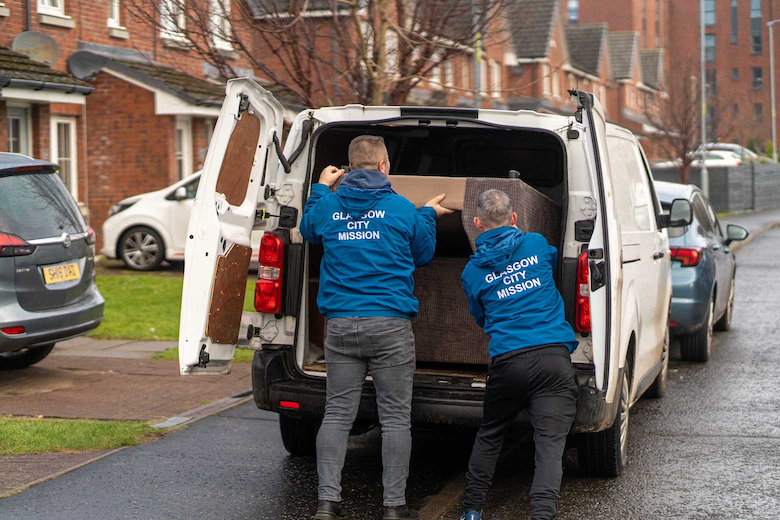
© Glasgow City Mission
Successful mission: This winter, after running for 15 years, Glasgow City Mission transitioned into its new Housing Settlement Officer (HSO) model, providing targeted, sustainable solutions to the homelessness crisis. From 1 December 2024 to 31 May 2025, HSO delivered practical support and assistance with local community integration, advocating for individuals in temporary accommodation and helping them transition into stable housing. Weekly drop-ins were hosted within its city centre project to assist with applications, healthcare access and housing navigation. The HSO team engaged with 619 guests, supporting 51 individuals into permanent tenancies and 21 into temporary furnished flats. Prioritising safety during winter, it facilitated 233 emergency hotel stays for vulnerable individuals.
Landlord woes
In an article published by STV News in June, it is reported that Edinburgh councillors have raised questions over the due diligence carried out into the award of homeless housing contracts worth up to £8m to a company run by a convicted landlord. William Lennie, director of Edinburgh housing firm Phoenix Properties Edinburgh Ltd, had pled guilty to charges of unregistered lets and unlicensed HMOs (houses of multiple occupation) in 2010. Previously Lennie was charged in 1985 for ghost tenants and DHS fraud, and had been charged with mortgage fraud around 2000. The two contracts, together worth almost £8m, are for households which “will be able to independently manage in their own accommodation”, and for those who will be able to receive a visiting service to help with “housing support skills”. The contracts were both signed on 1 May 2025, with the decisions being published on 30 May.
Law on your side
Amidst Scotland’s homelessness crisis, Law Society of Scotland posed in an article published in June that with a shortage of solicitors, “there is unmet legal need in the area of housing and homelessness,” suggesting this to be the greatest barrier to accessing justice for tenants and homeless people in Scotland. A report for the Scotland Housing and Property Chamber for 2022/23 records an 80% increase in applications for eviction since 2019/20 and that around 60% of landlords were represented in applications for eviction, in contrast to 7% of tenants. Although the Scottish Legal Aid Board runs several grant-funded programmes that provide legal advice and representation to tenants and homeowners, these are funded for 12 months at a time, meaning it provides little comfort by way of job security or business sustainability. The £2.3m grant-funding budget, used to fund 17 different services, has decreased over the years.
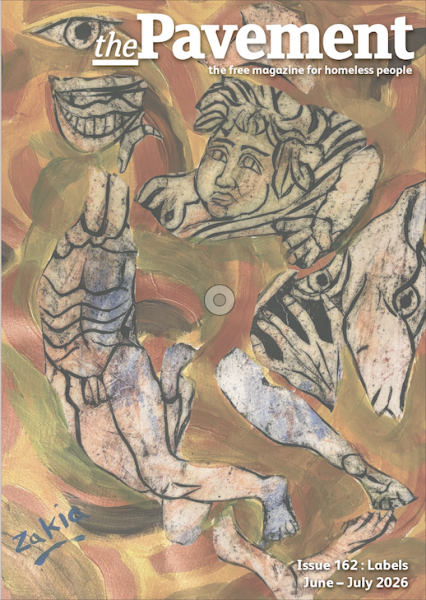
June – July 2026 : Labels
CONTENTS
BACK ISSUES
- Issue 162 : June – July 2026 : Labels
- Issue 161 : April – May 2026 : Working together
- Issue 160 : February – March 2026 : Progress
- Issue 159 : December 2025 – January 2026 : Resolutions
- Issue 158 : October – November 2025 : Making a difference
- Issue 157 : August – September 2025 : Caring about care
- Issue 156 : June – July 2025 : Resilience
- Issue 155 : April – May 2025 : Second Chances
- Issue 154 : February – March 2025 : Time
- Issue 153 : December 2024 – January 2025 : Solidarity
- Issue 152 : October – November 2024 : Change
- Issue 151 : August – September 2024 : Being Heard
- Issue 150 : June – July 2024 : Reflections
- Issue 149 : April – May 2024 : Compassion
- Issue 148 : February – March 2024 : The little things
- Issue 147 : December 2023 – January 2024 : Next steps
- Issue 146 : October 2023 – November 2023 : Kind acts
- Issue 145 : August 2023 – September 2023 : Mental health
- Issue 144 : June 2023 – July 2023 : Community
- Issue 143 : April 2023 - May 2023 : Hope springs
- Issue 142 : February 2023 - March 2023 : New Beginnings
- Issue 141 : December 2022 - January 2023 : Winter Homeless
- Issue 140 : October - November 2022 : Resolve
- Issue 139 : August - September 2022 : Creativity
- Issue 138 : June - July 2022 : Practical advice
- Issue 137 : April - May 2022 : Connection
- Issue 136 : February - March 2022 : RESPECT
- Issue 135 : Dec 2021 - Jan 2022 : OPPORTUNITY
- Issue 134 : September-October 2021 : Losses and gains
- Issue 133 : July-August 2021 : Know Your Rights
- Issue 132 : May-June 2021 : Access to Healthcare
- Issue 131 : Mar-Apr 2021 : SOLUTIONS
- Issue 130 : Jan-Feb 2021 : CHANGE
- Issue 129 : Nov-Dec 2020 : UNBELIEVABLE
- Issue 128 : Sep-Oct 2020 : COPING
- Issue 127 : Jul-Aug 2020 : HOPE
- Issue 126 : Health & Wellbeing in a Crisis
- Issue 125 : Mar-Apr 2020 : MOVING ON
- Issue 124 : Jan-Feb 2020 : STREET FOOD
- Issue 123 : Nov-Dec 2019 : HOSTELS
- Issue 122 : Sep 2019 : DEATH ON THE STREETS
- Issue 121 : July-Aug 2019 : INVISIBLE YOUTH
- Issue 120 : May-June 2019 : RECOVERY
- Issue 119 : Mar-Apr 2019 : WELLBEING
- Issue 118 : Jan-Feb 2019 : WORKING HOMELESS
- Issue 117 : Nov-Dec 2018 : HER STORY
- Issue 116 : Sept-Oct 2018 : TOILET TALK
- Issue 115 : July-Aug 2018 : HIDDEN HOMELESS
- Issue 114 : May-Jun 2018 : REBUILD YOUR LIFE
- Issue 113 : Mar–Apr 2018 : REMEMBRANCE
- Issue 112 : Jan-Feb 2018
- Issue 111 : Nov-Dec 2017
- Issue 110 : Sept-Oct 2017
- Issue 109 : July-Aug 2017
- Issue 108 : Apr-May 2017
- Issue 107 : Feb-Mar 2017
- Issue 106 : Dec 2016 - Jan 2017
- Issue 105 : Oct-Nov 2016
- Issue 104 : Aug-Sept 2016
- Issue 103 : May-June 2016
- Issue 102 : Mar-Apr 2016
- Issue 101 : Jan-Feb 2016
- Issue 100 : Nov-Dec 2015
- Issue 99 : Sept-Oct 2015
- Issue 98 : July-Aug 2015
- Issue 97 : May-Jun 2015
- Issue 96 : April 2015 [Mini Issue]
- Issue 95 : March 2015
- Issue 94 : February 2015
- Issue 93 : December 2014
- Issue 92 : November 2014
- Issue 91 : October 2014
- Issue 90 : September 2014
- Issue 89 : July 2014
- Issue 88 : June 2014
- Issue 87 : May 2014
- Issue 86 : April 2014
- Issue 85 : March 2014
- Issue 84 : February 2014
- Issue 83 : December 2013
- Issue 82 : November 2013
- Issue 81 : October 2013
- Issue 80 : September 2013
- Issue 79 : June 2013
- Issue 78 : 78
- Issue 77 : 77
- Issue 76 : 76
- Issue 75 : 75
- Issue 74 : 74
- Issue 73 : 73
- Issue 72 : 72
- Issue 71 : 71
- Issue 70 : 70
- Issue 69 : 69
- Issue 68 : 68
- Issue 67 : 67
- Issue 66 : 66
- Issue 65 : 65
- Issue 64 : 64
- Issue 63 : 63
- Issue 62 : 62
- Issue 61 : 61
- Issue 60 : 60
- Issue 59 : 59
- Issue 58 : 58
- Issue 57 : 57
- Issue 56 : 56
- Issue 56 : 56
- Issue 55 : 55
- Issue 54 : 54
- Issue 53 : 53
- Issue 52 : 52
- Issue 51 : 51
- Issue 50 : 50
- Issue 49 : 49
- Issue 48 : 48
- Issue 47 : 47
- Issue 46 : 46
- Issue 45 : 45
- Issue 44 : 44
- Issue 43 : 43
- Issue 42 : 42
- Issue 5 : 05
- Issue 4 : 04
- Issue 2 : 02
- Issue 1 : 01
- Issue 41 : 41
- Issue 40 : 40
- Issue 39 : 39
- Issue 38 : 38
- Issue 37 : 37
- Issue 36 : 36
- Issue 35 : 35
- Issue 34 : 34
- Issue 33 : 33
- Issue 10 : 10
- Issue 9 : 09
- Issue 6 : 06
- Issue 3 : 03
- Issue 32 : 32
- Issue 31 : 31
- Issue 30 : 30
- Issue 29 : 29
- Issue 11 : 11
- Issue 12 : 12
- Issue 13 : 13
- Issue 14 : 14
- Issue 15 : 15
- Issue 16 : 16
- Issue 17 : 17
- Issue 18 : 18
- Issue 19 : 19
- Issue 20 : 20
- Issue 21 : 21
- Issue 22 : 22
- Issue 23 : 23
- Issue 24 : 24
- Issue 25 : 25
- Issue 8 : 08
- Issue 7 : 07
- Issue 26 : 26
- Issue 27 : 27
- Issue 28 : 28
- Issue 1 : 01