
Established 2005 Registered Charity No. 1110656
Scottish Charity Register No. SC043760
DONATE
RECENT TWEETS
 © John Sheehy
In a parallel universe, a scientist has taken the poor people on earth to a new dimension to start afresh. How would the two dimensions get on? By Chris Sampson
The United States military is rumoured to have spent millions of dollars trying to develop an invisibility cloak, the better to camouflage its soldiers from enemy combatants on the battlefield. In Britain, it has long been possible to conceal oneself from the middle and upper classes: just become homeless and you’re instantly invisible to those with money.
Now, scientists have managed to access the multiverse – and with it, long-theorised alternate realities. Some parallel universes differ from ours only by a single atom, others by vast differences.
There is probably a universe where Noel Edmonds is lauded as a great entertainer rather than reviled as a beardy git, as he of course is in our reality.
But I digress. The discovery of portals to parallel universes has opened up huge possibilities for humanity. All the resources currently in short supply in this dimension could be harnessed in others where there is an overabundance. Poverty and inequality could be ended, and the human race could live happily ever after. Fast forward five years…
Guess what? Those in power weren’t keen to share it! And so the old system prevailed, with the rich getting richer, and the poor? You guessed it: poorer. Until, that is, a ‘small L leftie’ scientist took pity on the poor, and whisked them all away to an empty dimension where they could start afresh, free from the inequities of our reality.
Initially, this exodus of the disadvantaged was welcomed by the middle classes who remained. After all, there were suddenly no more people scrounging benefits or clogging up the NHS with their penury-induced diseases, so taxes would surely come down! There were no more vulgarians employing incorrect grammar, nor using the wrong spoon at dinner parties in front of ones friends. Blue collar crime was a thing of the past, overcrowded prisons abruptly empty; all manner of proletarian drains on society were gone!
The euphoria lasted about a week. Then the middling sort started to notice the smell from unemptied wheelie bins, from unattended sewers, from unscrubbed floors and unweeded gardens. Of course! The cleaners, au pairs, labourers – all gone. A few brave chaps from suburbia looked things up in YouTube videos: how to fix this or clean that. After all, how difficult could it be? The plebs had done it for centuries, hadn’t they?
Yet the middle class found things more difficult than anticipated. There was, it seemed, an art to manual labour. Proles had previously to be trained and tested, apparently. They had had to have – gasp! – a teeny amount of intelligence to operate machinery. Even those who had worked, unseen, down the sewers below the level of the middle classes (in every sense) weren’t just dropped down a manhole with a shovel and told to clean the sewage away.
And now the petit bourgeoisie had to do the work they had previously delegated: drive buses and lorries, cleanse squalor and bring up their own children. This brought a shocking realisation: the middle classes could no longer command huge wages for doing very little! Rather, they got less wages for doing all the hard work – a system which had seemed fair enough when they were running it, but now that they were at the business end of it, wasn’t it a tad, you know, unfair?
“But I’ve got a degree!” was a common bleat from those formerly indulged. As if that should preclude them from changing a plug, being an Uber driver or zero hour-waged delivery driver on a crappy sub-Quadrophenia moped (with a perpetual ‘L’ plate. As they never intended to get a driving licence).
With lower wages, most middle-class folk were forced to move out of the suburban houses left to them by their parents, as their incomes could no longer stretch to pay ever-increasing utility bills. Some even had to relocate to the tower blocks and council sink estates recently vacated by the departed poor. Some even had to use foodbanks and claim benefits, despite being in work!
Soon, smugness was down 84%! That sense of others doing everything for them in exchange for a pittance was evaporating, it was them now doing the dirty work, the ‘hard graft’ as the vanished poor had termed it.
“One is put in mind of the Morlocks and their, erm, opposites in HG Wells’ The Time Machine,” quoth a former middle manager, who couldn’t even recall that the correct term for opposites was ‘Eloi’. Now that his intellect was being sapped by ITV3 and Channel 5-style dumbed-down TV content, he could no longer afford Netflix or other platforms, merely basic Freeview!
His fellow former pampered executives nodded in recognition: the split of society into two factions, as prophesied by HG Wells in his 1895 novel, was now apt for their own situation. And they, they realised with increasing horror, were now the Morlocks – the lower orders!
As for the poor, they had begun their new society afresh in their new dimension. All were equal, and not just all in the same boat as they had always been under the old system. At first, anyway. But, alas! Human beings always seem to impose a hierarchy to mess every society up, and soon the proles divided themselves into the clever and the thick, with the latter doing the bulk of the work while the former supervised, paid more despite doing less and began to see themselves as superior to the lowly thick heads.
Smugness levels soon rose to 84% among the emerging, superior class.
Back in the middle-class reality, the newly minimum waged could no longer afford holidays abroad, and even had to send their offspring to state schools! And there were no more cheats: no longer could they move to an area with a better education record or pretend to be religious just to get little
Jocaster and Auberon into religion-based schools that had superior exam scores in the league tables.
All too soon, all the advantages they had taken for granted had slipped away. Some were drafted into the army to fill the huge gaps left by the departed proles. Others had to sell The Big Issue and some were even forced to beg for small change outside tube stations and by cash machines, only to be ignored or kicked, or even pissed on by the more mean-spirited members of the emerging superior class in the new pecking order.
It wasn’t long before those on the receiving end yearned for the return of the proles who’d been whisked away to their Brave New Dimension. Some had wondered in the old days: “What would we do without the poor?” Now they knew, for they now had lived experience of what they had subjected others to.
Welcome to our world, folks. Please live carefully, and try to be kind to those less fortunate than yourself.
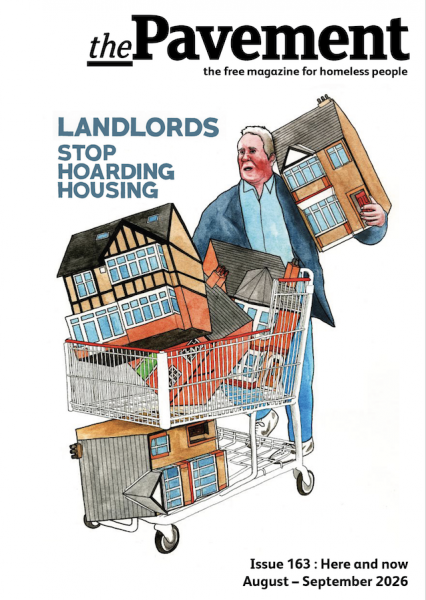
August – September 2026 : Here and now
CONTENTS
BACK ISSUES
- Issue 163 : August – September 2026 : Here and now
- Issue 162 : June – July 2026 : Labels
- Issue 161 : April – May 2026 : Working together
- Issue 160 : February – March 2026 : Progress
- Issue 159 : December 2025 – January 2026 : Resolutions
- Issue 158 : October – November 2025 : Making a difference
- Issue 157 : August – September 2025 : Caring about care
- Issue 156 : June – July 2025 : Resilience
- Issue 155 : April – May 2025 : Second Chances
- Issue 154 : February – March 2025 : Time
- Issue 153 : December 2024 – January 2025 : Solidarity
- Issue 152 : October – November 2024 : Change
- Issue 151 : August – September 2024 : Being Heard
- Issue 150 : June – July 2024 : Reflections
- Issue 149 : April – May 2024 : Compassion
- Issue 148 : February – March 2024 : The little things
- Issue 147 : December 2023 – January 2024 : Next steps
- Issue 146 : October 2023 – November 2023 : Kind acts
- Issue 145 : August 2023 – September 2023 : Mental health
- Issue 144 : June 2023 – July 2023 : Community
- Issue 143 : April 2023 - May 2023 : Hope springs
- Issue 142 : February 2023 - March 2023 : New Beginnings
- Issue 141 : December 2022 - January 2023 : Winter Homeless
- Issue 140 : October - November 2022 : Resolve
- Issue 139 : August - September 2022 : Creativity
- Issue 138 : June - July 2022 : Practical advice
- Issue 137 : April - May 2022 : Connection
- Issue 136 : February - March 2022 : RESPECT
- Issue 135 : Dec 2021 - Jan 2022 : OPPORTUNITY
- Issue 134 : September-October 2021 : Losses and gains
- Issue 133 : July-August 2021 : Know Your Rights
- Issue 132 : May-June 2021 : Access to Healthcare
- Issue 131 : Mar-Apr 2021 : SOLUTIONS
- Issue 130 : Jan-Feb 2021 : CHANGE
- Issue 129 : Nov-Dec 2020 : UNBELIEVABLE
- Issue 128 : Sep-Oct 2020 : COPING
- Issue 127 : Jul-Aug 2020 : HOPE
- Issue 126 : Health & Wellbeing in a Crisis
- Issue 125 : Mar-Apr 2020 : MOVING ON
- Issue 124 : Jan-Feb 2020 : STREET FOOD
- Issue 123 : Nov-Dec 2019 : HOSTELS
- Issue 122 : Sep 2019 : DEATH ON THE STREETS
- Issue 121 : July-Aug 2019 : INVISIBLE YOUTH
- Issue 120 : May-June 2019 : RECOVERY
- Issue 119 : Mar-Apr 2019 : WELLBEING
- Issue 118 : Jan-Feb 2019 : WORKING HOMELESS
- Issue 117 : Nov-Dec 2018 : HER STORY
- Issue 116 : Sept-Oct 2018 : TOILET TALK
- Issue 115 : July-Aug 2018 : HIDDEN HOMELESS
- Issue 114 : May-Jun 2018 : REBUILD YOUR LIFE
- Issue 113 : Mar–Apr 2018 : REMEMBRANCE
- Issue 112 : Jan-Feb 2018
- Issue 111 : Nov-Dec 2017
- Issue 110 : Sept-Oct 2017
- Issue 109 : July-Aug 2017
- Issue 108 : Apr-May 2017
- Issue 107 : Feb-Mar 2017
- Issue 106 : Dec 2016 - Jan 2017
- Issue 105 : Oct-Nov 2016
- Issue 104 : Aug-Sept 2016
- Issue 103 : May-June 2016
- Issue 102 : Mar-Apr 2016
- Issue 101 : Jan-Feb 2016
- Issue 100 : Nov-Dec 2015
- Issue 99 : Sept-Oct 2015
- Issue 98 : July-Aug 2015
- Issue 97 : May-Jun 2015
- Issue 96 : April 2015 [Mini Issue]
- Issue 95 : March 2015
- Issue 94 : February 2015
- Issue 93 : December 2014
- Issue 92 : November 2014
- Issue 91 : October 2014
- Issue 90 : September 2014
- Issue 89 : July 2014
- Issue 88 : June 2014
- Issue 87 : May 2014
- Issue 86 : April 2014
- Issue 85 : March 2014
- Issue 84 : February 2014
- Issue 83 : December 2013
- Issue 82 : November 2013
- Issue 81 : October 2013
- Issue 80 : September 2013
- Issue 79 : June 2013
- Issue 78 : 78
- Issue 77 : 77
- Issue 76 : 76
- Issue 75 : 75
- Issue 74 : 74
- Issue 73 : 73
- Issue 72 : 72
- Issue 71 : 71
- Issue 70 : 70
- Issue 69 : 69
- Issue 68 : 68
- Issue 67 : 67
- Issue 66 : 66
- Issue 65 : 65
- Issue 64 : 64
- Issue 63 : 63
- Issue 62 : 62
- Issue 61 : 61
- Issue 60 : 60
- Issue 59 : 59
- Issue 58 : 58
- Issue 57 : 57
- Issue 56 : 56
- Issue 56 : 56
- Issue 55 : 55
- Issue 54 : 54
- Issue 53 : 53
- Issue 52 : 52
- Issue 51 : 51
- Issue 50 : 50
- Issue 49 : 49
- Issue 48 : 48
- Issue 47 : 47
- Issue 46 : 46
- Issue 45 : 45
- Issue 44 : 44
- Issue 43 : 43
- Issue 42 : 42
- Issue 5 : 05
- Issue 4 : 04
- Issue 2 : 02
- Issue 1 : 01
- Issue 41 : 41
- Issue 40 : 40
- Issue 39 : 39
- Issue 38 : 38
- Issue 37 : 37
- Issue 36 : 36
- Issue 35 : 35
- Issue 34 : 34
- Issue 33 : 33
- Issue 10 : 10
- Issue 9 : 09
- Issue 6 : 06
- Issue 3 : 03
- Issue 32 : 32
- Issue 31 : 31
- Issue 30 : 30
- Issue 29 : 29
- Issue 11 : 11
- Issue 12 : 12
- Issue 13 : 13
- Issue 14 : 14
- Issue 15 : 15
- Issue 16 : 16
- Issue 17 : 17
- Issue 18 : 18
- Issue 19 : 19
- Issue 20 : 20
- Issue 21 : 21
- Issue 22 : 22
- Issue 23 : 23
- Issue 24 : 24
- Issue 25 : 25
- Issue 8 : 08
- Issue 7 : 07
- Issue 26 : 26
- Issue 27 : 27
- Issue 28 : 28
- Issue 1 : 01