
Established 2005 Registered Charity No. 1110656
Scottish Charity Register No. SC043760
DONATE
RECENT TWEETS
The rest of our interview with Patrick Markee, author of a new book on homelessness in the US. By Sheryle Thomas
The previous issue of the Pavement carried an interview with Patrick Markee, author of Placeless: Homelessness in the New Gilded Age, released in December 2025. Markee has worked with the homeless community in New York for two decades and his book, published by Melville House UK, describes homelessness in the US, the structural forces contributing to the crisis and how best to move forward. Below is the second half of the magazine’s talk with Markee in January.
In your opinion, how is homelessness solved?
The primary solution to homelessness is by addressing the housing affordability crisis. This would involve the government creating more affordable housing – ideally on the social housing model – and providing aid like rental assistance for low-income households. For homeless people living with mental illness and other disabilities, the government should create more supportive housing, including the ‘Housing First’ model that targets street homelessness.
What is the historical context to homelessness in New York?
The US has only had two historical periods of mass homelessness: the Great Depression of the 1930s; and the period that began in the late 1970s in New York City, spread nationwide in the early 1980s and has persisted to the present day. In the early 20th century, in fact, New York City had been the birthplace of vigorous, progressive and successful housing movements that led to the creation of public housing (the American version of social housing), rent control and other reforms. That is one reason that, from the end of the Great Depression until the 1970s, there was no mass homelessness in New York or other American cities. But the capitalist economic crises of the 1970s, which led to the loss of hundreds of thousands of jobs (most of them in manufacturing) and the right-wing politics that emerged in the Reagan era created and fueled a worsening housing affordability crisis – which itself set the stage for the emergence of mass homelessness.
What do you think of Donald Trump's homelessness policy?
Trump is doubling down on the disastrous right-wing policies that have caused homelessness to persist for decades – and his dangerous proposals will lead to more homelessness. Already his administration has enacted policies that threaten to eliminate funding for successful ‘Housing First’ programmes that provide supportive housing; some 170,000 formerly homeless people could lose their homes as a result of that policy. Trump has also proposed cutbacks to federal housing programmes that could force four million poor Americans to lose their housing aid. He is calling for a more punitive approach to criminalise homelessness.
Describe New York mayor Zohran Mamdani's homelessness policy.
There is optimism in New York City that Mamdani will take a different, more progressive approach than Trump and the previous mayor, Eric Adams. Mamdani, who became mayor in January 2026, has not yet laid out detailed plans on homelessness and housing, but the early signs are hopeful. He has proposed halting rent increases on one million rent-regulated apartments, building more supportive housing and creating a new “community safety” unit to address the problems of homeless people living with mental illness on the streets, in place of the failed criminalisation approach.
What are the unique problems the US faces addressing its housing crisis?
The US government plays only a small and deeply inadequate role in providing affordable housing for low-income households. This comes out of a uniquely American hostility to government’s role in addressing economic and social problems – far too many Americans blame poverty on poor individuals themselves, or think the private market is the only solution. While the US developed a nascent welfare state apparatus in the wake of the Great Depression, it never went as far as in other countries; for example, the US has never had a national health care system. Since the ascendency of right-wing politics in the 1980s under Reagan and continuing through to Trump, even the woefully underfunded welfare state programmes have been slowly dismantled. Thus, while there are ample, proven solutions to the problem of homelessness, what is needed in the US is a forceful, progressive organising effort to overcome the politicians and institutions that oppose those housing-based solutions.
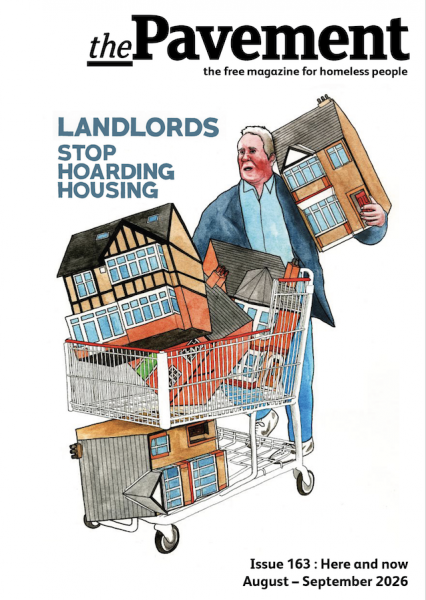
August – September 2026 : Here and now
CONTENTS
BACK ISSUES
- Issue 163 : August – September 2026 : Here and now
- Issue 162 : June – July 2026 : Labels
- Issue 161 : April – May 2026 : Working together
- Issue 160 : February – March 2026 : Progress
- Issue 159 : December 2025 – January 2026 : Resolutions
- Issue 158 : October – November 2025 : Making a difference
- Issue 157 : August – September 2025 : Caring about care
- Issue 156 : June – July 2025 : Resilience
- Issue 155 : April – May 2025 : Second Chances
- Issue 154 : February – March 2025 : Time
- Issue 153 : December 2024 – January 2025 : Solidarity
- Issue 152 : October – November 2024 : Change
- Issue 151 : August – September 2024 : Being Heard
- Issue 150 : June – July 2024 : Reflections
- Issue 149 : April – May 2024 : Compassion
- Issue 148 : February – March 2024 : The little things
- Issue 147 : December 2023 – January 2024 : Next steps
- Issue 146 : October 2023 – November 2023 : Kind acts
- Issue 145 : August 2023 – September 2023 : Mental health
- Issue 144 : June 2023 – July 2023 : Community
- Issue 143 : April 2023 - May 2023 : Hope springs
- Issue 142 : February 2023 - March 2023 : New Beginnings
- Issue 141 : December 2022 - January 2023 : Winter Homeless
- Issue 140 : October - November 2022 : Resolve
- Issue 139 : August - September 2022 : Creativity
- Issue 138 : June - July 2022 : Practical advice
- Issue 137 : April - May 2022 : Connection
- Issue 136 : February - March 2022 : RESPECT
- Issue 135 : Dec 2021 - Jan 2022 : OPPORTUNITY
- Issue 134 : September-October 2021 : Losses and gains
- Issue 133 : July-August 2021 : Know Your Rights
- Issue 132 : May-June 2021 : Access to Healthcare
- Issue 131 : Mar-Apr 2021 : SOLUTIONS
- Issue 130 : Jan-Feb 2021 : CHANGE
- Issue 129 : Nov-Dec 2020 : UNBELIEVABLE
- Issue 128 : Sep-Oct 2020 : COPING
- Issue 127 : Jul-Aug 2020 : HOPE
- Issue 126 : Health & Wellbeing in a Crisis
- Issue 125 : Mar-Apr 2020 : MOVING ON
- Issue 124 : Jan-Feb 2020 : STREET FOOD
- Issue 123 : Nov-Dec 2019 : HOSTELS
- Issue 122 : Sep 2019 : DEATH ON THE STREETS
- Issue 121 : July-Aug 2019 : INVISIBLE YOUTH
- Issue 120 : May-June 2019 : RECOVERY
- Issue 119 : Mar-Apr 2019 : WELLBEING
- Issue 118 : Jan-Feb 2019 : WORKING HOMELESS
- Issue 117 : Nov-Dec 2018 : HER STORY
- Issue 116 : Sept-Oct 2018 : TOILET TALK
- Issue 115 : July-Aug 2018 : HIDDEN HOMELESS
- Issue 114 : May-Jun 2018 : REBUILD YOUR LIFE
- Issue 113 : Mar–Apr 2018 : REMEMBRANCE
- Issue 112 : Jan-Feb 2018
- Issue 111 : Nov-Dec 2017
- Issue 110 : Sept-Oct 2017
- Issue 109 : July-Aug 2017
- Issue 108 : Apr-May 2017
- Issue 107 : Feb-Mar 2017
- Issue 106 : Dec 2016 - Jan 2017
- Issue 105 : Oct-Nov 2016
- Issue 104 : Aug-Sept 2016
- Issue 103 : May-June 2016
- Issue 102 : Mar-Apr 2016
- Issue 101 : Jan-Feb 2016
- Issue 100 : Nov-Dec 2015
- Issue 99 : Sept-Oct 2015
- Issue 98 : July-Aug 2015
- Issue 97 : May-Jun 2015
- Issue 96 : April 2015 [Mini Issue]
- Issue 95 : March 2015
- Issue 94 : February 2015
- Issue 93 : December 2014
- Issue 92 : November 2014
- Issue 91 : October 2014
- Issue 90 : September 2014
- Issue 89 : July 2014
- Issue 88 : June 2014
- Issue 87 : May 2014
- Issue 86 : April 2014
- Issue 85 : March 2014
- Issue 84 : February 2014
- Issue 83 : December 2013
- Issue 82 : November 2013
- Issue 81 : October 2013
- Issue 80 : September 2013
- Issue 79 : June 2013
- Issue 78 : 78
- Issue 77 : 77
- Issue 76 : 76
- Issue 75 : 75
- Issue 74 : 74
- Issue 73 : 73
- Issue 72 : 72
- Issue 71 : 71
- Issue 70 : 70
- Issue 69 : 69
- Issue 68 : 68
- Issue 67 : 67
- Issue 66 : 66
- Issue 65 : 65
- Issue 64 : 64
- Issue 63 : 63
- Issue 62 : 62
- Issue 61 : 61
- Issue 60 : 60
- Issue 59 : 59
- Issue 58 : 58
- Issue 57 : 57
- Issue 56 : 56
- Issue 56 : 56
- Issue 55 : 55
- Issue 54 : 54
- Issue 53 : 53
- Issue 52 : 52
- Issue 51 : 51
- Issue 50 : 50
- Issue 49 : 49
- Issue 48 : 48
- Issue 47 : 47
- Issue 46 : 46
- Issue 45 : 45
- Issue 44 : 44
- Issue 43 : 43
- Issue 42 : 42
- Issue 5 : 05
- Issue 4 : 04
- Issue 2 : 02
- Issue 1 : 01
- Issue 41 : 41
- Issue 40 : 40
- Issue 39 : 39
- Issue 38 : 38
- Issue 37 : 37
- Issue 36 : 36
- Issue 35 : 35
- Issue 34 : 34
- Issue 33 : 33
- Issue 10 : 10
- Issue 9 : 09
- Issue 6 : 06
- Issue 3 : 03
- Issue 32 : 32
- Issue 31 : 31
- Issue 30 : 30
- Issue 29 : 29
- Issue 11 : 11
- Issue 12 : 12
- Issue 13 : 13
- Issue 14 : 14
- Issue 15 : 15
- Issue 16 : 16
- Issue 17 : 17
- Issue 18 : 18
- Issue 19 : 19
- Issue 20 : 20
- Issue 21 : 21
- Issue 22 : 22
- Issue 23 : 23
- Issue 24 : 24
- Issue 25 : 25
- Issue 8 : 08
- Issue 7 : 07
- Issue 26 : 26
- Issue 27 : 27
- Issue 28 : 28
- Issue 1 : 01