
Established 2005 Registered Charity No. 1110656
Scottish Charity Register No. SC043760

DONATE
RECENT TWEETS
News in brief by the Pavement Team
Rough figures
Government figures released in late February show England rough sleeping figures have reached a record high. The numbers, gathered by the Ministry of Housing, Communities and Local Government, reveal the number of people sleeping rough on a single night in England in November 2025 rose to a record high of 4,793, compared to 4,667 for the same period lin 2024. Bonnie Williams, Chief Executive of Housing Justice, commented: “The underlying pressures that drive homelessness have not disappeared and while rough sleeping is the most visible form of homelessness, it is only part of the picture. The record numbers of households in temporary accommodation show just how many families are living in limbo.” The figure tallied in November 2025 is 42 more people than England’s previous record high in 2017.
Footy fundraiser
The Street Soccer Foundation, a UK charity using football to help tackle youth homelessness, announced the start of the 2026 season of its flagship The Big Goal campaign in late February. The Big Goal is a national social impact campaign, directly funding places on the charity’s Street Soccer Academy through a fundraising football tournament, an initiative which enables young people experiencing homelessness, unemployment or disadvantage to access a 12-week programme combining football coaching with personal development, mentoring and employability support. This year, 60 businesses and organisations have signed up to take part in the campaign. In the previous two editions, The Big Goal has raised more than £250,000 to support the expansion of the Street Soccer Academy programme across the UK. The football fixtures take place over April and May, before culminating in a final held at St George’s Park (home to England’s national men's, women's and para football teams) on 11 June.
© the Pavement
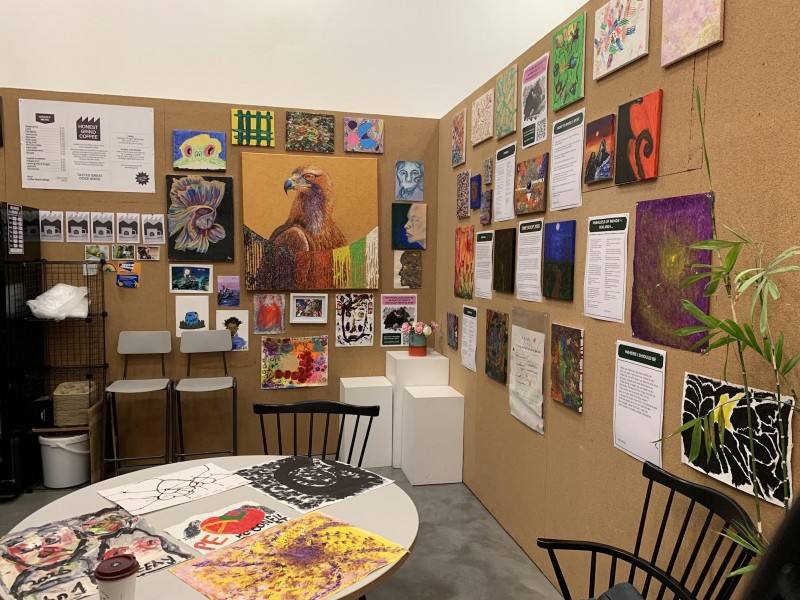
Festival news: One Roof, Old Diorama Arts Centre's (ODAC) jam-packed arts programme for artists with lived experience of homelessness, held its annual two‑week festival from 19th to 30th January, running Mondays to Fridays. This year’s festival, titled Bricks and Mortar, provided guests with a mix of arts workshops interwoven with mental health and wellbeing sessions, alongside an open studio. Artists worked on numerous projects, both individual and collective, before presenting works at the festival’s closing ceremony exhibition at ODAC, London on 27 February. Artworks including paintings and films were on show to visitors, alongside speeches by the artists and performances for One Roof’s regular scratch nights – nights dedicated to providing space for artists with lived experience of homelessness to present new works.
Hypocrisy corner
A London philanthropist, claiming to be committed to solving homelessness in the capital, moved to evict hundreds of people from their homes recently. In late February, London Centric learned that Asif Aziz’s Criterion Capital business planned to remove hundreds of Londoners – including some who were marking the holy month of Ramadan – from their homes. The mass “no-fault” evictions of private tenants, which sources say are scheduled to be handily finished before the government’s pesky Renters’ Rights Act comes into effect, are taking place on an unprecedented scale. The evictions are going ahead regardless of whether the residents are up-to-date with their rent or have kept the property in good condition. Aziz, who recently moved to low-tax Abu Dhabi, runs Criterion Capital alongside other members of his family and has courted controversy over recent years for the business’s landlord practices, which include trying to shut down historic London cinemas and renting properties to tax-evading American candy stores (currently blighting London’s West End).
Temporary pain
The Local Government Association (LGA) has projected the cost to councils of providing temporary accommodation for homeless people in England will more than double by 2029–30 to almost £4bn. According to the Guardian, the LGA also found that the annual cost to councils of temporary accommodation was set to grow by 65% in the next five years, rising from nearly £360m to £595m. Since 2017–18, local authorities across England had spent almost £1.5bn more on temporary accommodation than had been reimbursed in housing benefit from the government. That figure is predicted to jump to £3.9bn in the next four years, the LGA said. Tom Hunt, the chair of the LGA’s inclusive growth committee and leader of Sheffield city council, spelled out the alarming financial gaps local authorities face: “Councils are caught in a vicious cycle of ever-increasing temporary accommodation costs versus static rates they receive back to cover their costs.”
SWEPt up
New findings by the Museum of Homelessness show homeless people continue to be excluded from life-saving provision during extreme weather. On 5 March 2026, the Museum of Homelessness released the second edition of its investigation Severe Weather Emergency 2022–2024, which scrutinises how councils and services are adapting to increasingly extreme weather. The investigation found, among other revelations, that a form of gatekeeping by local authorities was common practice, with 42% of councils using a verification system as a pre-condition to access Severe Weather Emergency Protocol support.

© the Pavement
Town hall: On a mid February evening in Camden, London Streets Kitchen held a meeting to discuss to the council’s appraoch to homelessness and what local organisations, charities and individuals can do to effect change. The meeting was held at St Michael’s Church in Camden and was organised by the Streets Kitchen team with support from SK Legal. A panel presented the situation on the ground at 'Camden: a homeless and housing crisis intensifying', inviting guests present at the meeting to suggest ideas and discuss ways to move forward. Politicians, charity workers and people experiencing homelessness were all in attendance. The night ended on a positive note, a reaffirming of the commitment of local groups to work together and hold the local authorities to account, as well as support people on the streets and experiencing all forms of homelessness.
Dying homeless
Data from the National Records of Scotland (NRS), released in early March, revealed an estimated 231 people died while experiencing homelessness in Scotland in 2024. The NRS figures were slightly lower than the previous year, during which 242 deaths were recorded, but were higher than when records began in 2017. Before the records were released, the Scottish government had found there were 2,092 households reporting a household member experiencing rough sleeping between 1 April to 30 September 2025 across the country.
According to the NRS report, around half (49%) of the people experiencing homelessness who died in 2024 were aged under 45. Responding to the data, Maeve McGoldrick, head of policy and communications at Crisis Scotland, said: “we [Crisis Scotland] are calling on all political parties to commit to ending homelessness by 2040 in their upcoming manifestos.”
Housing news
The housing association Home Group Scotland, working with the local authorities in Edinburgh and Glasgow, has secured a batch of new homes for homeless families in Scotland. Altogether, 16 families are set to move into new homes in the cities: six families in South Queensferry, while 10 families have moved into homes in Tillycairn, Glasgow. An additional eight homes in Farrier Fields, Edinburgh, were scheduled to be made available to families in March 2026. The welcomed Scottish Housing News report comes amidst a severe housing crisis in Scotland. In Edinburgh, for example, homelessness among children and families had risen 148% in the five years leading up to 2024, Shelter Scotland figures show.
Complaints
The Glasgow Times reported in late February that the owner of the Scotsman Group has written to Glasgow City Council issuing a “strong formal objection” to Homeless Project Scotland's (HPS) retrospective planning application for the use of a building on Glassford Street as a homeless facility. HPS has applied for permission to run a 24-hour facility, with its application papers outlining plans to run a soup kitchen on the ground floor along with a night shelter in the basement. The formal complaint to the council had a redacted name at the end of the letter, however, it states it is from “the owner and operator of the Scotsman Group,” which runs several bars and restaurants in the Merchant City district. The letter’s listed reasons for objecting to the HPS application include: “harm to the economic function and commercial stability of the city centre”, “overconcentration of similar uses” and “adverse impact on business operations and staff safety”.
Firefighter
A homeless man who attempted to extinguish a fire in a Glasgow shop says the massive explosion from the inferno “nearly killed him.” Footage from the dramtic scene shows James Welch, 51, charging towards a blazing vape shop on Union Street armed with a fire extinguisher, with thick smoke pouring from the building. Two members of the public rushed to drag him away from the danger and moments later a huge explosion burst from the building. The fire raged from the evening of Sunday, 9 March into the next morning, with firefighters battling to contain the devastation. Smoke was seen billowing across the city centre, as the fire destroyed premises on Gordon Street, including historic Victorian buildings. Welch told the Daily Record: “I wasn't scared for my life, I couldn't let people die. I tried to get into the shop by which point I was dragged away from behind… Those men in turn saved my life."
Recovery plan
A trauma-informed recovery hub for people experiencing homelessness is scheduled to open in Glasgow. The Lighthouse Project will be based at Kingston Halls and offer guests counselling, structured activities and employability support to help rebuild lives. The Talbot Association, the city's largest provider of homeless accommodation, is behind the project, which is hoped to be open this year after fundraising is complete. In the meantime, The Talbot Association is inviting community support to help make the project a reality and extend its impact. A key feature of the hub will be a partnership with Glasgow Clyde College, which will see trainee counsellors working alongside structured activities The scheme will also offer arts, mindfulness and digital inclusion. Currently The Talbot Association operates six supported accommodation sites in Glasgow, serving approximately 200,000 meals each year, according to The National.
August – September 2026 : Here and now
CONTENTS
BACK ISSUES
- Issue 163 : August – September 2026 : Here and now
- Issue 162 : June – July 2026 : Labels
- Issue 161 : April – May 2026 : Working together
- Issue 160 : February – March 2026 : Progress
- Issue 159 : December 2025 – January 2026 : Resolutions
- Issue 158 : October – November 2025 : Making a difference
- Issue 157 : August – September 2025 : Caring about care
- Issue 156 : June – July 2025 : Resilience
- Issue 155 : April – May 2025 : Second Chances
- Issue 154 : February – March 2025 : Time
- Issue 153 : December 2024 – January 2025 : Solidarity
- Issue 152 : October – November 2024 : Change
- Issue 151 : August – September 2024 : Being Heard
- Issue 150 : June – July 2024 : Reflections
- Issue 149 : April – May 2024 : Compassion
- Issue 148 : February – March 2024 : The little things
- Issue 147 : December 2023 – January 2024 : Next steps
- Issue 146 : October 2023 – November 2023 : Kind acts
- Issue 145 : August 2023 – September 2023 : Mental health
- Issue 144 : June 2023 – July 2023 : Community
- Issue 143 : April 2023 - May 2023 : Hope springs
- Issue 142 : February 2023 - March 2023 : New Beginnings
- Issue 141 : December 2022 - January 2023 : Winter Homeless
- Issue 140 : October - November 2022 : Resolve
- Issue 139 : August - September 2022 : Creativity
- Issue 138 : June - July 2022 : Practical advice
- Issue 137 : April - May 2022 : Connection
- Issue 136 : February - March 2022 : RESPECT
- Issue 135 : Dec 2021 - Jan 2022 : OPPORTUNITY
- Issue 134 : September-October 2021 : Losses and gains
- Issue 133 : July-August 2021 : Know Your Rights
- Issue 132 : May-June 2021 : Access to Healthcare
- Issue 131 : Mar-Apr 2021 : SOLUTIONS
- Issue 130 : Jan-Feb 2021 : CHANGE
- Issue 129 : Nov-Dec 2020 : UNBELIEVABLE
- Issue 128 : Sep-Oct 2020 : COPING
- Issue 127 : Jul-Aug 2020 : HOPE
- Issue 126 : Health & Wellbeing in a Crisis
- Issue 125 : Mar-Apr 2020 : MOVING ON
- Issue 124 : Jan-Feb 2020 : STREET FOOD
- Issue 123 : Nov-Dec 2019 : HOSTELS
- Issue 122 : Sep 2019 : DEATH ON THE STREETS
- Issue 121 : July-Aug 2019 : INVISIBLE YOUTH
- Issue 120 : May-June 2019 : RECOVERY
- Issue 119 : Mar-Apr 2019 : WELLBEING
- Issue 118 : Jan-Feb 2019 : WORKING HOMELESS
- Issue 117 : Nov-Dec 2018 : HER STORY
- Issue 116 : Sept-Oct 2018 : TOILET TALK
- Issue 115 : July-Aug 2018 : HIDDEN HOMELESS
- Issue 114 : May-Jun 2018 : REBUILD YOUR LIFE
- Issue 113 : Mar–Apr 2018 : REMEMBRANCE
- Issue 112 : Jan-Feb 2018
- Issue 111 : Nov-Dec 2017
- Issue 110 : Sept-Oct 2017
- Issue 109 : July-Aug 2017
- Issue 108 : Apr-May 2017
- Issue 107 : Feb-Mar 2017
- Issue 106 : Dec 2016 - Jan 2017
- Issue 105 : Oct-Nov 2016
- Issue 104 : Aug-Sept 2016
- Issue 103 : May-June 2016
- Issue 102 : Mar-Apr 2016
- Issue 101 : Jan-Feb 2016
- Issue 100 : Nov-Dec 2015
- Issue 99 : Sept-Oct 2015
- Issue 98 : July-Aug 2015
- Issue 97 : May-Jun 2015
- Issue 96 : April 2015 [Mini Issue]
- Issue 95 : March 2015
- Issue 94 : February 2015
- Issue 93 : December 2014
- Issue 92 : November 2014
- Issue 91 : October 2014
- Issue 90 : September 2014
- Issue 89 : July 2014
- Issue 88 : June 2014
- Issue 87 : May 2014
- Issue 86 : April 2014
- Issue 85 : March 2014
- Issue 84 : February 2014
- Issue 83 : December 2013
- Issue 82 : November 2013
- Issue 81 : October 2013
- Issue 80 : September 2013
- Issue 79 : June 2013
- Issue 78 : 78
- Issue 77 : 77
- Issue 76 : 76
- Issue 75 : 75
- Issue 74 : 74
- Issue 73 : 73
- Issue 72 : 72
- Issue 71 : 71
- Issue 70 : 70
- Issue 69 : 69
- Issue 68 : 68
- Issue 67 : 67
- Issue 66 : 66
- Issue 65 : 65
- Issue 64 : 64
- Issue 63 : 63
- Issue 62 : 62
- Issue 61 : 61
- Issue 60 : 60
- Issue 59 : 59
- Issue 58 : 58
- Issue 57 : 57
- Issue 56 : 56
- Issue 56 : 56
- Issue 55 : 55
- Issue 54 : 54
- Issue 53 : 53
- Issue 52 : 52
- Issue 51 : 51
- Issue 50 : 50
- Issue 49 : 49
- Issue 48 : 48
- Issue 47 : 47
- Issue 46 : 46
- Issue 45 : 45
- Issue 44 : 44
- Issue 43 : 43
- Issue 42 : 42
- Issue 5 : 05
- Issue 4 : 04
- Issue 2 : 02
- Issue 1 : 01
- Issue 41 : 41
- Issue 40 : 40
- Issue 39 : 39
- Issue 38 : 38
- Issue 37 : 37
- Issue 36 : 36
- Issue 35 : 35
- Issue 34 : 34
- Issue 33 : 33
- Issue 10 : 10
- Issue 9 : 09
- Issue 6 : 06
- Issue 3 : 03
- Issue 32 : 32
- Issue 31 : 31
- Issue 30 : 30
- Issue 29 : 29
- Issue 11 : 11
- Issue 12 : 12
- Issue 13 : 13
- Issue 14 : 14
- Issue 15 : 15
- Issue 16 : 16
- Issue 17 : 17
- Issue 18 : 18
- Issue 19 : 19
- Issue 20 : 20
- Issue 21 : 21
- Issue 22 : 22
- Issue 23 : 23
- Issue 24 : 24
- Issue 25 : 25
- Issue 8 : 08
- Issue 7 : 07
- Issue 26 : 26
- Issue 27 : 27
- Issue 28 : 28
- Issue 1 : 01