
Established 2005 Registered Charity No. 1110656
Scottish Charity Register No. SC043760
DONATE
RECENT TWEETS
The second chapter of this story about a mysteriously powerful structure affecting somebody’s behaviour. Our protagonist, Elias, begins to wrestle some control from the tower. By Joseph Hickman
Recap: Issue 160 of the Pavement featured The Watchtower part I, which details a rigid structure influencing a person’s behaviour, leaving them feeling confused and vulnerable. You can read part I on the website by visiting: www.thepavement.org.uk/stories/2806
The Surveillance of Self
He learned that silence had its own grammar. He could feel the rules bending in response to unspoken questions. Not all of them, not yet – but enough to make him wonder whether the tower was as omnipotent as it claimed, or merely patient.
Corridors sometimes branched impossibly, folding back onto themselves, yet Elias never got lost. Or perhaps he did, and the tower allowed it to see how long he would wander before he straightened. There were floors with no apparent purpose, where doors led only to walls, and yet the walls were listening. Each mistake, each hesitation, each fleeting impulse became part of an invisible ledger.
He met others occasionally, brief shadows in the stairwells. They moved like echoes, careful to maintain the lattice of alignment. None spoke of rebellion. None even whispered desire. Yet sometimes, in the tilt of a head, or a glance that lingered too long, Elias felt a tremor, an acknowledgment that he was not alone.
It was in the library – a vast, shifting chamber of shelves that receded into impossible height – that he first discovered a crack. Not a literal crack, but a fissure in expectation. A book lay open, its words slightly askew, as though the type itself hesitated. When he read, the sentences did not instruct. They suggested. They asked questions that the tower had never permitted: What would happen if you stopped aligning? If you let your thoughts wander freely? If you refused justification?
The hum beneath his ribs thrummed louder. The walls contracted, not with anger, but with curiosity – or perhaps fear. For the first time, Elias realised that the tower could be uncertain. That it could fail.
He experimented. Small things at first. A thought left unfinished. A phrase allowed to drift into a forbidden conclusion. A step taken without purpose. Each act was minor, almost invisible, yet it made the air slightly heavier. The bell-tone sounded faintly, less like a warning, more like a question.
And then, for the first time, a door did not close behind him.
It was a narrow aperture, pressed into the far corner of the library. Sunlight leaked through the edges, not a harsh beam, but a warm suggestion. He hesitated, trained reflexes warning him to retreat, but something deeper nudged him forward. One step. Then another.
The corridor beyond was not orderly. It pulsed with imperfection. Corridors bent at odd angles. Shadows moved unpredictably. He stumbled, nearly losing his balance, and felt the exhilarating friction of resistance.
A whisper – his own voice, or the tower’s? – drifted along the walls: Choose. Choose and bear it.
Elias felt for the first time that the tower did not contain him. He contained the tower, if only tentatively, if only by claiming a space it could not yet understand.
The further he went, the lighter he felt. Not free entirely – not yet – but aware of possibility. The world beyond the walls shimmered as if unfinished, as if awaiting the courage of someone willing to see it differently.
And then the corridor opened to a balcony. He looked out. The sky was not framed by stone or instruction, but was vast, infinite and indifferent. A wind rose. Not threatening, not corrective. Simply present. He inhaled, and for the first time, he felt the weight of his own agency pressing back at the tower’s hum.
The tower behind him stirred. It did not rage. It waited.
Elias smiled – not for permission, not in alignment, but in defiance. Not loud enough to be heard, not bold enough to be noticed, yet irreducible.
Somewhere, in that waiting space, he understood: the tower could endure, but it could also falter. And so could he.
The horizon spread endlessly. It did not promise victory. It did not promise safety. It promised only that choices mattered. That movement mattered. That thought, no longer censored, could begin to reshape the architecture of living.
And in that fragile ignition, the fire began. Not to destroy blindly, but to illuminate – to insist that the tower, with all its corridors and ledgers, was not the final word.
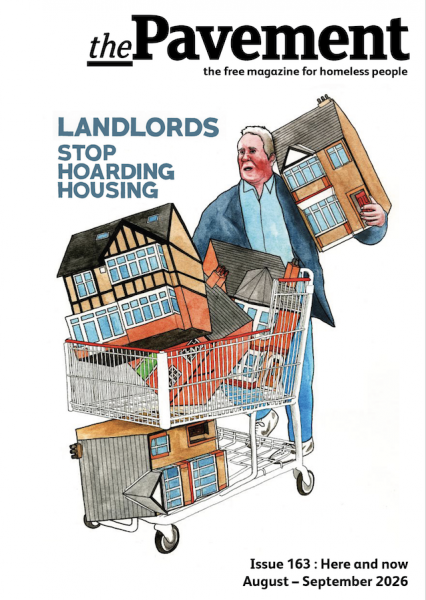
August – September 2026 : Here and now
CONTENTS
BACK ISSUES
- Issue 163 : August – September 2026 : Here and now
- Issue 162 : June – July 2026 : Labels
- Issue 161 : April – May 2026 : Working together
- Issue 160 : February – March 2026 : Progress
- Issue 159 : December 2025 – January 2026 : Resolutions
- Issue 158 : October – November 2025 : Making a difference
- Issue 157 : August – September 2025 : Caring about care
- Issue 156 : June – July 2025 : Resilience
- Issue 155 : April – May 2025 : Second Chances
- Issue 154 : February – March 2025 : Time
- Issue 153 : December 2024 – January 2025 : Solidarity
- Issue 152 : October – November 2024 : Change
- Issue 151 : August – September 2024 : Being Heard
- Issue 150 : June – July 2024 : Reflections
- Issue 149 : April – May 2024 : Compassion
- Issue 148 : February – March 2024 : The little things
- Issue 147 : December 2023 – January 2024 : Next steps
- Issue 146 : October 2023 – November 2023 : Kind acts
- Issue 145 : August 2023 – September 2023 : Mental health
- Issue 144 : June 2023 – July 2023 : Community
- Issue 143 : April 2023 - May 2023 : Hope springs
- Issue 142 : February 2023 - March 2023 : New Beginnings
- Issue 141 : December 2022 - January 2023 : Winter Homeless
- Issue 140 : October - November 2022 : Resolve
- Issue 139 : August - September 2022 : Creativity
- Issue 138 : June - July 2022 : Practical advice
- Issue 137 : April - May 2022 : Connection
- Issue 136 : February - March 2022 : RESPECT
- Issue 135 : Dec 2021 - Jan 2022 : OPPORTUNITY
- Issue 134 : September-October 2021 : Losses and gains
- Issue 133 : July-August 2021 : Know Your Rights
- Issue 132 : May-June 2021 : Access to Healthcare
- Issue 131 : Mar-Apr 2021 : SOLUTIONS
- Issue 130 : Jan-Feb 2021 : CHANGE
- Issue 129 : Nov-Dec 2020 : UNBELIEVABLE
- Issue 128 : Sep-Oct 2020 : COPING
- Issue 127 : Jul-Aug 2020 : HOPE
- Issue 126 : Health & Wellbeing in a Crisis
- Issue 125 : Mar-Apr 2020 : MOVING ON
- Issue 124 : Jan-Feb 2020 : STREET FOOD
- Issue 123 : Nov-Dec 2019 : HOSTELS
- Issue 122 : Sep 2019 : DEATH ON THE STREETS
- Issue 121 : July-Aug 2019 : INVISIBLE YOUTH
- Issue 120 : May-June 2019 : RECOVERY
- Issue 119 : Mar-Apr 2019 : WELLBEING
- Issue 118 : Jan-Feb 2019 : WORKING HOMELESS
- Issue 117 : Nov-Dec 2018 : HER STORY
- Issue 116 : Sept-Oct 2018 : TOILET TALK
- Issue 115 : July-Aug 2018 : HIDDEN HOMELESS
- Issue 114 : May-Jun 2018 : REBUILD YOUR LIFE
- Issue 113 : Mar–Apr 2018 : REMEMBRANCE
- Issue 112 : Jan-Feb 2018
- Issue 111 : Nov-Dec 2017
- Issue 110 : Sept-Oct 2017
- Issue 109 : July-Aug 2017
- Issue 108 : Apr-May 2017
- Issue 107 : Feb-Mar 2017
- Issue 106 : Dec 2016 - Jan 2017
- Issue 105 : Oct-Nov 2016
- Issue 104 : Aug-Sept 2016
- Issue 103 : May-June 2016
- Issue 102 : Mar-Apr 2016
- Issue 101 : Jan-Feb 2016
- Issue 100 : Nov-Dec 2015
- Issue 99 : Sept-Oct 2015
- Issue 98 : July-Aug 2015
- Issue 97 : May-Jun 2015
- Issue 96 : April 2015 [Mini Issue]
- Issue 95 : March 2015
- Issue 94 : February 2015
- Issue 93 : December 2014
- Issue 92 : November 2014
- Issue 91 : October 2014
- Issue 90 : September 2014
- Issue 89 : July 2014
- Issue 88 : June 2014
- Issue 87 : May 2014
- Issue 86 : April 2014
- Issue 85 : March 2014
- Issue 84 : February 2014
- Issue 83 : December 2013
- Issue 82 : November 2013
- Issue 81 : October 2013
- Issue 80 : September 2013
- Issue 79 : June 2013
- Issue 78 : 78
- Issue 77 : 77
- Issue 76 : 76
- Issue 75 : 75
- Issue 74 : 74
- Issue 73 : 73
- Issue 72 : 72
- Issue 71 : 71
- Issue 70 : 70
- Issue 69 : 69
- Issue 68 : 68
- Issue 67 : 67
- Issue 66 : 66
- Issue 65 : 65
- Issue 64 : 64
- Issue 63 : 63
- Issue 62 : 62
- Issue 61 : 61
- Issue 60 : 60
- Issue 59 : 59
- Issue 58 : 58
- Issue 57 : 57
- Issue 56 : 56
- Issue 56 : 56
- Issue 55 : 55
- Issue 54 : 54
- Issue 53 : 53
- Issue 52 : 52
- Issue 51 : 51
- Issue 50 : 50
- Issue 49 : 49
- Issue 48 : 48
- Issue 47 : 47
- Issue 46 : 46
- Issue 45 : 45
- Issue 44 : 44
- Issue 43 : 43
- Issue 42 : 42
- Issue 5 : 05
- Issue 4 : 04
- Issue 2 : 02
- Issue 1 : 01
- Issue 41 : 41
- Issue 40 : 40
- Issue 39 : 39
- Issue 38 : 38
- Issue 37 : 37
- Issue 36 : 36
- Issue 35 : 35
- Issue 34 : 34
- Issue 33 : 33
- Issue 10 : 10
- Issue 9 : 09
- Issue 6 : 06
- Issue 3 : 03
- Issue 32 : 32
- Issue 31 : 31
- Issue 30 : 30
- Issue 29 : 29
- Issue 11 : 11
- Issue 12 : 12
- Issue 13 : 13
- Issue 14 : 14
- Issue 15 : 15
- Issue 16 : 16
- Issue 17 : 17
- Issue 18 : 18
- Issue 19 : 19
- Issue 20 : 20
- Issue 21 : 21
- Issue 22 : 22
- Issue 23 : 23
- Issue 24 : 24
- Issue 25 : 25
- Issue 8 : 08
- Issue 7 : 07
- Issue 26 : 26
- Issue 27 : 27
- Issue 28 : 28
- Issue 1 : 01