
Established 2005 Registered Charity No. 1110656
Scottish Charity Register No. SC043760
DONATE
RECENT TWEETS

We need to learn how to hear, listen to and empower the voices of people experiencing homelessness. By Emdad Rahman
Homelessness is often described through statistics, sleeping bags, hostels and rough sleeping figures.
But behind every number is a person with a story, feelings, fears, hopes and, importantly, a voice.
Sometimes that voice becomes quiet through years of rejection, trauma, poverty, violence and simply being ignored.
That is why expression matters through talking, listening, sharing experiences, asking for help, making choices, laughing, becoming angry, drawing, writing, joining activities or simply having a conversation with somebody who genuinely cares.
For someone experiencing homelessness, being able to express themselves without judgement can be an important step towards rebuilding confidence, independence and wellbeing.
The latest figures underline how serious matters are, with an estimated 8,748 people experiencing rough sleeping during June 2026 in England, according to Inside Housing.
London continues to have the highest levels of rough sleeping.
These figures represent people we walk past, people we meet, people who may be frightened, unwell, isolated or struggling to trust others.
I have seen this through my own contact with Claire (not her real name), someone I have met through community outreach and gradually built a rapport with.
Claire has experienced many years of life on the streets, which has involved alcohol and substance abuse, violence, trauma and sexual assaults.
Understandably, she has been shy, distrustful and, at times, angry. When somebody has experienced so much hardship, expecting immediate trust is unrealistic.
Regular contact has helped break down some of those barriers.
A conversation does not magically solve homelessness. Neither does a food parcel. But consistent human contact can create the conditions in which somebody feels safe enough to speak.
Once a person can express what they need, what they fear and what they want, support can become more appropriate and more personal.
This is where community projects, volunteers and established organisations all have a role.
House of Giving is one example. Its volunteers run a community foodbank, providing practical support while also engaging with people experiencing hardship, including homeless friends. Food sharing is important, but so is the conversation around it. A meal can fill an empty stomach and a respectful conversation can remind somebody that they still matter.
There is a balance, however. Volunteers must never assume they know what somebody needs. Well-intentioned help can sometimes become disempowering if people are simply told what is best for them.
Good outreach listens first. It respects boundaries, protects dignity and encourages independence rather than creating dependency.
That is why home deliveries and street outreach can be so valuable. Meeting somebody where they are, whether on a pavement, at a community setting or through a share, creates opportunities for relationships to develop naturally.
A familiar face can become less threatening. A simple “how are you?” can eventually become a meaningful conversation.
Expression also helps volunteers understand the individual rather than seeing only the homelessness.
One person may need food, another may need clothing. Someone else may need help accessing accommodation, healthcare, benefits or specialist services. Another may simply need somebody to listen that day.
The answer cannot be one-size-fits-all.
Community action is at its strongest when compassion is combined with listening, partnership and patience. Volunteers cannot solve homelessness alone, just as charities, councils and professional services cannot do everything alone. Joined-up working creates stronger pathways from crisis towards stability.
Sometimes the first step is not a form, a referral or a service. Sometimes it is simply being heard.
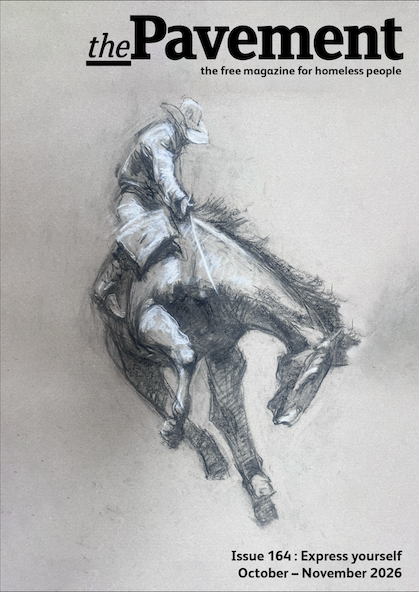
October – November 2026 : Express yourself
CONTENTS
BACK ISSUES
- Issue 164 : October – November 2026 : Express yourself
- Issue 163 : August – September 2026 : Here and now
- Issue 162 : June – July 2026 : Labels
- Issue 161 : April – May 2026 : Working together
- Issue 160 : February – March 2026 : Progress
- Issue 159 : December 2025 – January 2026 : Resolutions
- Issue 158 : October – November 2025 : Making a difference
- Issue 157 : August – September 2025 : Caring about care
- Issue 156 : June – July 2025 : Resilience
- Issue 155 : April – May 2025 : Second Chances
- Issue 154 : February – March 2025 : Time
- Issue 153 : December 2024 – January 2025 : Solidarity
- Issue 152 : October – November 2024 : Change
- Issue 151 : August – September 2024 : Being Heard
- Issue 150 : June – July 2024 : Reflections
- Issue 149 : April – May 2024 : Compassion
- Issue 148 : February – March 2024 : The little things
- Issue 147 : December 2023 – January 2024 : Next steps
- Issue 146 : October 2023 – November 2023 : Kind acts
- Issue 145 : August 2023 – September 2023 : Mental health
- Issue 144 : June 2023 – July 2023 : Community
- Issue 143 : April 2023 - May 2023 : Hope springs
- Issue 142 : February 2023 - March 2023 : New Beginnings
- Issue 141 : December 2022 - January 2023 : Winter Homeless
- Issue 140 : October - November 2022 : Resolve
- Issue 139 : August - September 2022 : Creativity
- Issue 138 : June - July 2022 : Practical advice
- Issue 137 : April - May 2022 : Connection
- Issue 136 : February - March 2022 : RESPECT
- Issue 135 : Dec 2021 - Jan 2022 : OPPORTUNITY
- Issue 134 : September-October 2021 : Losses and gains
- Issue 133 : July-August 2021 : Know Your Rights
- Issue 132 : May-June 2021 : Access to Healthcare
- Issue 131 : Mar-Apr 2021 : SOLUTIONS
- Issue 130 : Jan-Feb 2021 : CHANGE
- Issue 129 : Nov-Dec 2020 : UNBELIEVABLE
- Issue 128 : Sep-Oct 2020 : COPING
- Issue 127 : Jul-Aug 2020 : HOPE
- Issue 126 : Health & Wellbeing in a Crisis
- Issue 125 : Mar-Apr 2020 : MOVING ON
- Issue 124 : Jan-Feb 2020 : STREET FOOD
- Issue 123 : Nov-Dec 2019 : HOSTELS
- Issue 122 : Sep 2019 : DEATH ON THE STREETS
- Issue 121 : July-Aug 2019 : INVISIBLE YOUTH
- Issue 120 : May-June 2019 : RECOVERY
- Issue 119 : Mar-Apr 2019 : WELLBEING
- Issue 118 : Jan-Feb 2019 : WORKING HOMELESS
- Issue 117 : Nov-Dec 2018 : HER STORY
- Issue 116 : Sept-Oct 2018 : TOILET TALK
- Issue 115 : July-Aug 2018 : HIDDEN HOMELESS
- Issue 114 : May-Jun 2018 : REBUILD YOUR LIFE
- Issue 113 : Mar–Apr 2018 : REMEMBRANCE
- Issue 112 : Jan-Feb 2018
- Issue 111 : Nov-Dec 2017
- Issue 110 : Sept-Oct 2017
- Issue 109 : July-Aug 2017
- Issue 108 : Apr-May 2017
- Issue 107 : Feb-Mar 2017
- Issue 106 : Dec 2016 - Jan 2017
- Issue 105 : Oct-Nov 2016
- Issue 104 : Aug-Sept 2016
- Issue 103 : May-June 2016
- Issue 102 : Mar-Apr 2016
- Issue 101 : Jan-Feb 2016
- Issue 100 : Nov-Dec 2015
- Issue 99 : Sept-Oct 2015
- Issue 98 : July-Aug 2015
- Issue 97 : May-Jun 2015
- Issue 96 : April 2015 [Mini Issue]
- Issue 95 : March 2015
- Issue 94 : February 2015
- Issue 93 : December 2014
- Issue 92 : November 2014
- Issue 91 : October 2014
- Issue 90 : September 2014
- Issue 89 : July 2014
- Issue 88 : June 2014
- Issue 87 : May 2014
- Issue 86 : April 2014
- Issue 85 : March 2014
- Issue 84 : February 2014
- Issue 83 : December 2013
- Issue 82 : November 2013
- Issue 81 : October 2013
- Issue 80 : September 2013
- Issue 79 : June 2013
- Issue 78 : 78
- Issue 77 : 77
- Issue 76 : 76
- Issue 75 : 75
- Issue 74 : 74
- Issue 73 : 73
- Issue 72 : 72
- Issue 71 : 71
- Issue 70 : 70
- Issue 69 : 69
- Issue 68 : 68
- Issue 67 : 67
- Issue 66 : 66
- Issue 65 : 65
- Issue 64 : 64
- Issue 63 : 63
- Issue 62 : 62
- Issue 61 : 61
- Issue 60 : 60
- Issue 59 : 59
- Issue 58 : 58
- Issue 57 : 57
- Issue 56 : 56
- Issue 56 : 56
- Issue 55 : 55
- Issue 54 : 54
- Issue 53 : 53
- Issue 52 : 52
- Issue 51 : 51
- Issue 50 : 50
- Issue 49 : 49
- Issue 48 : 48
- Issue 47 : 47
- Issue 46 : 46
- Issue 45 : 45
- Issue 44 : 44
- Issue 43 : 43
- Issue 42 : 42
- Issue 5 : 05
- Issue 4 : 04
- Issue 2 : 02
- Issue 1 : 01
- Issue 41 : 41
- Issue 40 : 40
- Issue 39 : 39
- Issue 38 : 38
- Issue 37 : 37
- Issue 36 : 36
- Issue 35 : 35
- Issue 34 : 34
- Issue 33 : 33
- Issue 10 : 10
- Issue 9 : 09
- Issue 6 : 06
- Issue 3 : 03
- Issue 32 : 32
- Issue 31 : 31
- Issue 30 : 30
- Issue 29 : 29
- Issue 11 : 11
- Issue 12 : 12
- Issue 13 : 13
- Issue 14 : 14
- Issue 15 : 15
- Issue 16 : 16
- Issue 17 : 17
- Issue 18 : 18
- Issue 19 : 19
- Issue 20 : 20
- Issue 21 : 21
- Issue 22 : 22
- Issue 23 : 23
- Issue 24 : 24
- Issue 25 : 25
- Issue 8 : 08
- Issue 7 : 07
- Issue 26 : 26
- Issue 27 : 27
- Issue 28 : 28
- Issue 1 : 01