
Established 2005 Registered Charity No. 1110656
Scottish Charity Register No. SC043760
DONATE
RECENT TWEETS
A new photography project explores the realities of experiencing hidden homelessness. By Sam Singleton
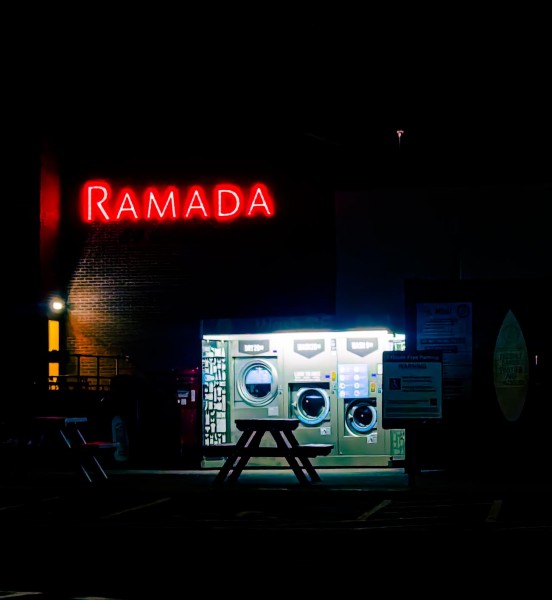
A self-service launderette at Portbury services. © Sam Singleton
The first picture that made No Fixed Address feel like a project came from Portbury services.
I’d showered, washed my clothes and gone back out. The launderette sat beneath the service station lights, bright and empty. I pulled out my phone and took the picture.
At that point, I was living in my car and still working full-time as a mechanic. Home had stopped being safe, so I left with a few clothes, my laptop, two cameras and whatever else I could carry. For five nights the car was my bedroom. After that, I recovered my camping equipment and moved into a tent.
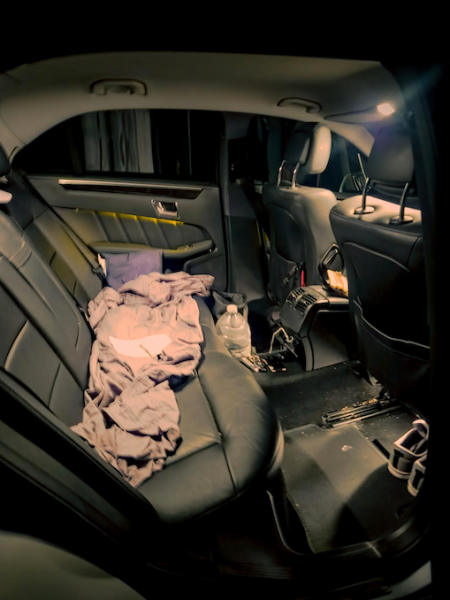
The backseat made into a bed. © Sam Singleton
The photography began before I’d fully decided what the project was.
I called it No Fixed Address because that was the simplest description available. The name was literal, but it gave me a direction: photograph what having no fixed address actually looked like.
I’d only taken photography seriously for a few months. Once I was homeless, it gave me something smaller to concentrate on than the whole situation.
Whenever I lifted the phone or camera, the question was simple: what is actually here?
Sometimes the answer was the back seat made into a bed. Sometimes it was washing up in a sink outside, a camping stove or a five-litre bottle of water in the footwell. None of it looked especially dramatic. That became important.
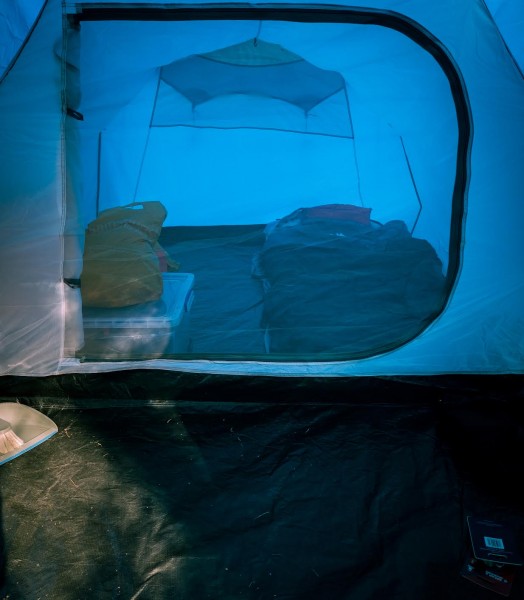
A tent as a temporary home. © Sam Singleton
Photos of homelessness often show it at its most visible: A doorway, a sleeping bag, a person carrying everything they own. My experience looked different. I still arrived at work in uniform. My clothes were clean. I had a car. For most of the day, nobody looking at me would’ve known I had nowhere to go when the workshop closed.
The photos had to hold that contradiction without turning it
into a slogan.
Many of the early pictures were taken on my phone because it was already in my hand and attracted less attention. Other times I used a camera, usually when I had enough privacy to slow down and think properly.
I took wider pictures to show where I was, then smaller details to show how I was living inside those places. The car beside the sea. An underground car park. The launderette beneath the service station lights. Cooking equipment on a campsite table. A folded sheet pushed away before daylight so the bedroom could become a car again.
Occasionally, I put myself in the frame. Mostly, I photographed the traces I left behind.
Taking pictures of yourself while trying not to advertise that you’re homeless is awkward. Sometimes people were nearby and I felt like an idiot setting up the shot. The useful response was usually the same: just take the picture.
I didn’t stage anything to make the situation appear worse. I also didn’t want to pretend I’d accidentally found a romantic creative retreat. The campsite had trees, quiet mornings and occasional moments of freedom, but it also had awful phone signal and very limited hot water.
One dramatic image didn’t properly define my experience. Hidden homelessness is repetitive. Sleeping, washing, charging, carrying, waiting. The same objects return because the same problems return. A bottle of water isn’t only a bottle of water when it has to cover drinking, brushing your teeth and washing before work. All of that needs to be seen to understand the daily routine.
Someone who’d lived through something similar might recognise those practical details without being told what to feel. Someone who hadn’t might see how easily homelessness can remain invisible.
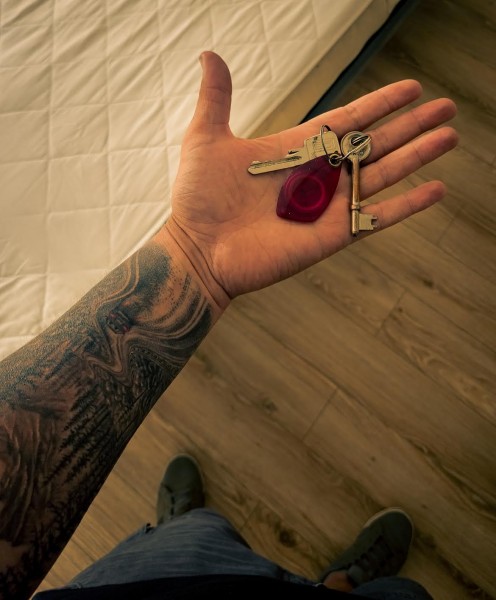
After 23 days, a fixed address. © Sam Singleton
After 23 nights, I paid the deposit and rent on a room. I had somewhere safe to sleep again, but that didn’t make everything feel normal straight away. On my first walk from the flat, I kept checking my pockets because I wasn’t carrying everything I might need to get through the day. Going back to a room felt odd in a good way.
The project didn’t end there. At first I’d been taking pictures to record where I was sleeping and how I was getting through each day. Once I had somewhere safe to sleep, I started documenting what the experience had changed: how strange it felt not to carry everything, how ordinary objects had another use, and how a temporary situation could start to feel normal.
Those details are getting quieter now, but I still notice them.
October – November 2026 : Express yourself
CONTENTS
BACK ISSUES
- Issue 164 : October – November 2026 : Express yourself
- Issue 163 : August – September 2026 : Here and now
- Issue 162 : June – July 2026 : Labels
- Issue 161 : April – May 2026 : Working together
- Issue 160 : February – March 2026 : Progress
- Issue 159 : December 2025 – January 2026 : Resolutions
- Issue 158 : October – November 2025 : Making a difference
- Issue 157 : August – September 2025 : Caring about care
- Issue 156 : June – July 2025 : Resilience
- Issue 155 : April – May 2025 : Second Chances
- Issue 154 : February – March 2025 : Time
- Issue 153 : December 2024 – January 2025 : Solidarity
- Issue 152 : October – November 2024 : Change
- Issue 151 : August – September 2024 : Being Heard
- Issue 150 : June – July 2024 : Reflections
- Issue 149 : April – May 2024 : Compassion
- Issue 148 : February – March 2024 : The little things
- Issue 147 : December 2023 – January 2024 : Next steps
- Issue 146 : October 2023 – November 2023 : Kind acts
- Issue 145 : August 2023 – September 2023 : Mental health
- Issue 144 : June 2023 – July 2023 : Community
- Issue 143 : April 2023 - May 2023 : Hope springs
- Issue 142 : February 2023 - March 2023 : New Beginnings
- Issue 141 : December 2022 - January 2023 : Winter Homeless
- Issue 140 : October - November 2022 : Resolve
- Issue 139 : August - September 2022 : Creativity
- Issue 138 : June - July 2022 : Practical advice
- Issue 137 : April - May 2022 : Connection
- Issue 136 : February - March 2022 : RESPECT
- Issue 135 : Dec 2021 - Jan 2022 : OPPORTUNITY
- Issue 134 : September-October 2021 : Losses and gains
- Issue 133 : July-August 2021 : Know Your Rights
- Issue 132 : May-June 2021 : Access to Healthcare
- Issue 131 : Mar-Apr 2021 : SOLUTIONS
- Issue 130 : Jan-Feb 2021 : CHANGE
- Issue 129 : Nov-Dec 2020 : UNBELIEVABLE
- Issue 128 : Sep-Oct 2020 : COPING
- Issue 127 : Jul-Aug 2020 : HOPE
- Issue 126 : Health & Wellbeing in a Crisis
- Issue 125 : Mar-Apr 2020 : MOVING ON
- Issue 124 : Jan-Feb 2020 : STREET FOOD
- Issue 123 : Nov-Dec 2019 : HOSTELS
- Issue 122 : Sep 2019 : DEATH ON THE STREETS
- Issue 121 : July-Aug 2019 : INVISIBLE YOUTH
- Issue 120 : May-June 2019 : RECOVERY
- Issue 119 : Mar-Apr 2019 : WELLBEING
- Issue 118 : Jan-Feb 2019 : WORKING HOMELESS
- Issue 117 : Nov-Dec 2018 : HER STORY
- Issue 116 : Sept-Oct 2018 : TOILET TALK
- Issue 115 : July-Aug 2018 : HIDDEN HOMELESS
- Issue 114 : May-Jun 2018 : REBUILD YOUR LIFE
- Issue 113 : Mar–Apr 2018 : REMEMBRANCE
- Issue 112 : Jan-Feb 2018
- Issue 111 : Nov-Dec 2017
- Issue 110 : Sept-Oct 2017
- Issue 109 : July-Aug 2017
- Issue 108 : Apr-May 2017
- Issue 107 : Feb-Mar 2017
- Issue 106 : Dec 2016 - Jan 2017
- Issue 105 : Oct-Nov 2016
- Issue 104 : Aug-Sept 2016
- Issue 103 : May-June 2016
- Issue 102 : Mar-Apr 2016
- Issue 101 : Jan-Feb 2016
- Issue 100 : Nov-Dec 2015
- Issue 99 : Sept-Oct 2015
- Issue 98 : July-Aug 2015
- Issue 97 : May-Jun 2015
- Issue 96 : April 2015 [Mini Issue]
- Issue 95 : March 2015
- Issue 94 : February 2015
- Issue 93 : December 2014
- Issue 92 : November 2014
- Issue 91 : October 2014
- Issue 90 : September 2014
- Issue 89 : July 2014
- Issue 88 : June 2014
- Issue 87 : May 2014
- Issue 86 : April 2014
- Issue 85 : March 2014
- Issue 84 : February 2014
- Issue 83 : December 2013
- Issue 82 : November 2013
- Issue 81 : October 2013
- Issue 80 : September 2013
- Issue 79 : June 2013
- Issue 78 : 78
- Issue 77 : 77
- Issue 76 : 76
- Issue 75 : 75
- Issue 74 : 74
- Issue 73 : 73
- Issue 72 : 72
- Issue 71 : 71
- Issue 70 : 70
- Issue 69 : 69
- Issue 68 : 68
- Issue 67 : 67
- Issue 66 : 66
- Issue 65 : 65
- Issue 64 : 64
- Issue 63 : 63
- Issue 62 : 62
- Issue 61 : 61
- Issue 60 : 60
- Issue 59 : 59
- Issue 58 : 58
- Issue 57 : 57
- Issue 56 : 56
- Issue 56 : 56
- Issue 55 : 55
- Issue 54 : 54
- Issue 53 : 53
- Issue 52 : 52
- Issue 51 : 51
- Issue 50 : 50
- Issue 49 : 49
- Issue 48 : 48
- Issue 47 : 47
- Issue 46 : 46
- Issue 45 : 45
- Issue 44 : 44
- Issue 43 : 43
- Issue 42 : 42
- Issue 5 : 05
- Issue 4 : 04
- Issue 2 : 02
- Issue 1 : 01
- Issue 41 : 41
- Issue 40 : 40
- Issue 39 : 39
- Issue 38 : 38
- Issue 37 : 37
- Issue 36 : 36
- Issue 35 : 35
- Issue 34 : 34
- Issue 33 : 33
- Issue 10 : 10
- Issue 9 : 09
- Issue 6 : 06
- Issue 3 : 03
- Issue 32 : 32
- Issue 31 : 31
- Issue 30 : 30
- Issue 29 : 29
- Issue 11 : 11
- Issue 12 : 12
- Issue 13 : 13
- Issue 14 : 14
- Issue 15 : 15
- Issue 16 : 16
- Issue 17 : 17
- Issue 18 : 18
- Issue 19 : 19
- Issue 20 : 20
- Issue 21 : 21
- Issue 22 : 22
- Issue 23 : 23
- Issue 24 : 24
- Issue 25 : 25
- Issue 8 : 08
- Issue 7 : 07
- Issue 26 : 26
- Issue 27 : 27
- Issue 28 : 28
- Issue 1 : 01